

 Chronicle Editor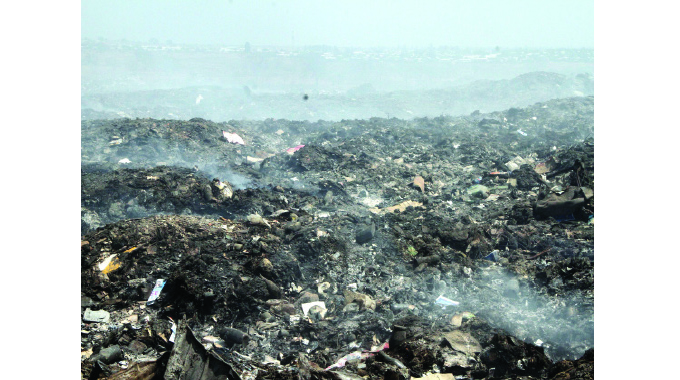
Patrick Chitumba, Midlands Bureau Chief
GWERU City Council has identified alternative land for a new dumpsite years after the local authority said it was working on modalities to decommission the current one located in Woodlands phase 2 suburb.
The decommissioning of McFaden Landfill, popularly known to the public as the Gweru dumpsite which is situated a few metres from Woodlands phase 2 suburb will come as a relief to residents who have endured years of air pollution .
The dumpsite has continued to be the single largest environmental health risk to more than 15 000 residents in the high-density suburb.
Residents have been calling for the decommissioning of the landfill, a dream that might be realised now as Gweru has identified alternative land for a new refuse dumpsite.
During a press conference at the town house yesterday, the city’s director of health services Mr Sam Sekenhamo said:
“Working with Government, with the District Development Co-ordinator and other stakeholders, I am glad to note that we identified alternative land for a new refuse dumpsite. We are working on modalities to decommission the current dumpsite located in Woodlands phase 2 suburb,” he said.
Mr Sekenhamo said they were working on a site plan for the dumpsite as well as the budget for setting it up.
“It is a work in progress but soon we will decommission the old dumpsite. We are working on the site plan that includes the engineering designs to suit the requirements of the Environmental Management Agency among other regulatory authorities,” he said.
Mr Sekenhamo said the local authority is working to involve community-based organisations in solid waste management (SWM).
SWM, the director said, has been traditionally a domain of the local authority.
“Residents have been recipients of solid waste management services without much of their input to the system. The economic meltdown resulted in the local authority struggling to provide an effective and efficient solid waste management service resulting in notable decrease in the cleanliness in the city,” said Mr Sekenhamo.
“In line with the involvement of community-based organisations in solid waste management we want to advocate for the reduction in the volume of SW streams through the implementation of waste reduction and recycling programmes. Maintain a balanced SWM system which benefits the community while adhering to regulatory requirements, provide an efficient and economic refuse collection, recycling and disposal services and provide facilities for the sanitary efficient and economical reception and transportation of solid waste in the city.”
Mr Sekenhamo said community participation shall be based on a council resolution that is already in place.
He said there would be community sweeping groups selected by councillors from their wards. The community groups will sign performance-based contracts which will be supervised by the director of health services.
“Council will pay the group an agreed monthly allowance. The groups will be responsible for the provision of PPE and all necessary tools,” said Mr Sekenhamo.
He said the objectives of community clean-up participation is to cut costs involved in refuse collection by more than 50 percent in labour, PPE and working tools.
“This will be so because we will have increased the number of workforce without increasing labour costs and this improves service visibility, improves environmental cleanliness and improves community policing,” said Mr Sekenhamo.
Under the community refuse removal project, council, he said, had received expressions of interest from community members with trucks.
“Prices per bin will be reached with truckers considering a number of factors to be discussed and agreed on by the parties involved,” said Mr Sekenhamo.
He said, if implemented, the measures could result in the reduction of refuse collection fees paid by residents.
“Council refuse collection trucks will just go to one point in these suburbs to collect waste and that will result in the cutting down of operational costs from wear and tear, fuel, labour costs and we expect that development to reduce refuse collection fees paid by residents and ratepayers,” said Mr Sekenhamo.



 Bongani Ndlovu
 Online Reporter