Liberty Dube
Tourism Correspondent
SOME mountains command attention through their sheer physical presence, while others hold stories that reach far beyond their rocky slopes, connecting generations through history, culture and ancestral memory.
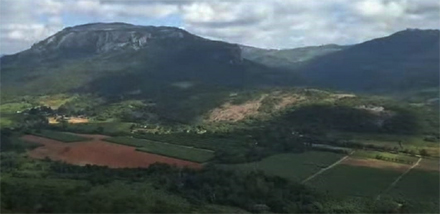
Gwindingwi Mountain in Makoni District, Manicaland, belongs to the latter category.
Rising approximately 942 metres (3,092 feet) above sea level and located about 21 kilometres northeast of Rusape, Gwindingwi offers visitors more than an opportunity to admire granite formations and surrounding vegetation.
It carries the history of the Makoni people, preserves memories of resistance against colonial occupation and remains closely connected to traditional leadership and ancestral heritage.
For travellers seeking experiences beyond conventional sightseeing, the mountain presents an opportunity to explore the relationship between Zimbabwe’s natural landscape and its cultural identity.
Its granite outcrops, rocky formations and caves give Gwindingwi a distinctive physical character.
The surrounding vegetation adds to the scenery, creating an environment where visitors can explore the landscape, take photographs and spend time away from the demands of everyday life. There is also something appealing about the experience of slowing down in such surroundings.
Visitors can take in expansive views, listen to the sounds of nature and walk through the rugged terrain while appreciating the mountain’s physical features. For people accustomed to busy urban environments, such experiences offer an opportunity to pause and reconnect with nature.
Yet Gwindingwi’s strongest tourism attraction may not lie in its scenery alone.
Behind its granite formations lies a significant chapter in the history of the Makoni people and Zimbabwe’s resistance against colonial rule.
The mountain holds a special place in the history of Chief Chingaira Makoni, also known as Mambo Chingaira, who emerged as one of the prominent figures in the First Chimurenga of 1896.
During the resistance against British South Africa Company colonial forces, Gwindingwi served as his fortified stronghold.
Historical accounts describe a settlement protected by a dry-stone wall topped with thorns. Approximately 300 thatched pole-and-dhaka huts stood within the defensive enclosure, creating a settlement designed to withstand attacks.
The mountain’s rugged granite formations and caves offered natural defensive advantages. Its physical landscape therefore formed part of the environment in which communities organised their resistance against colonial forces.
For visitors interested in Zimbabwean history, the mountain provides an opportunity to consider the conditions under which early resistance fighters defended their communities and challenged colonial occupation.
Rather than treating the First Chimurenga as a distant historical event, Gwindingwi offers a physical setting through which visitors can explore its local significance.
The mountain also connects the history of the Makoni people with Zimbabwe’s broader liberation narrative.
However, its significance extends beyond the events of 1896.
For the Makoni people, Gwindingwi represents a sacred ancestral landscape associated with traditional leadership, chieftainship and the relationship between communities and their land.
Its caves and granite formations carry associations with ancestral history and the burial traditions of Makoni chiefs. These connections give the mountain cultural significance that goes beyond its physical appearance.
They also strengthen its potential as a heritage-tourism destination.
Unlike conventional sightseeing attractions, heritage destinations invite visitors to understand the stories, beliefs and traditions attached to particular places.
At Gwindingwi, this means appreciating not only the mountain’s natural features but also its importance to the communities whose history and identity are connected to it.
That distinction matters.
A visitor who understands the mountain’s association with Chief Chingaira Makoni and the traditions of the Makoni people encounters a different experience from someone who simply visits to admire its granite formations.
The mountain could therefore offer valuable educational opportunities for schools, researchers, heritage enthusiasts and domestic tourists.
Students, in particular, could benefit from visiting a landscape connected to the history of their country and the resistance mounted by communities against colonial occupation. Such visits could bring historical lessons closer to younger generations while encouraging greater appreciation of local heritage.
There is also potential for surrounding communities to benefit from the development of heritage tourism.
Local participation in guided excursions, heritage interpretation and conservation initiatives could create opportunities for communities to contribute to tourism while preserving the mountain’s cultural importance.
Traditional custodians would have an important role in guiding how visitors experience the site, particularly where caves, burial traditions and other culturally significant areas require special consideration.
Tourism development must therefore respect Gwindingwi’s sacred status.
Visitors should seek guidance from traditional leadership, observe local customs and avoid disturbing places regarded as culturally significant.
This is particularly important because the mountain’s value cannot be measured solely through its potential to attract tourists.
Its historical and spiritual associations form part of the inheritance of the Makoni people. Any tourism development should recognise that responsibility and place conservation alongside visitor access.
For Manicaland, Gwindingwi also offers an opportunity to broaden the province’s tourism appeal.
Its location about 21 kilometres northeast of Rusape makes it a potential addition to itineraries exploring attractions in Makoni District and other parts of the province.
The destination brings together several interests that increasingly shape heritage-based travel: nature, history, cultural identity and opportunities for learning.
Its appeal lies in the ability to connect these elements without separating the natural landscape from the people and events that give it meaning.
Gwindingwi’s granite formations tell the story of its physical landscape. Its caves and defensive terrain recall an important period of resistance, while its ancestral associations preserve connections between present-day communities and earlier generations.
For visitors, the mountain offers more than a scenic escape.
It provides an opportunity to walk through a landscape shaped by nature and history, reflect on the experiences of those who came before and appreciate the cultural heritage that continues to define the Makoni people.
In Gwindingwi, the journey through nature becomes a journey through memory.
Gwindingwi brings Makoni heritage, nature together