Ray Bande
Senior Reporter
MUTARE City Council is using a sports levy paid by ratepayers to rehabilitate neglected sporting facilities across the city, restoring venues that can give young people opportunities to participate in sport, develop their talents and pursue constructive activities amid growing concerns over drug and substance abuse.
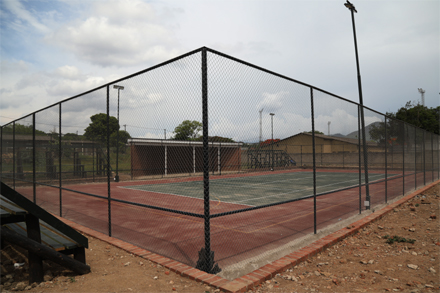
The rehabilitation programme covers Sakubva Stadium, Sakubva Tennis and Basketball Courts, Dangamvura Basketball and Tennis Courts and Chikanga Sports Complex, with council also completing renovations at Sakubva Swimming Pool.
The investment marks a shift from years of deterioration that left several sporting facilities in Mutare and other towns unable to serve their communities effectively.
For former basketball players, the improvements at Sakubva Community Court represent a significant change from the conditions they endured while trying to keep the sport alive.
Former Sakubva and Mercenary basketball player, Mike Machipanda, popularly known as Big Mike, said the court provided an important platform for young players despite its shortcomings.
He recalled beginning his basketball journey at Sakubva Community Court after receiving some training at Elise Gladhill High School.
“I personally started playing basketball at Sakubva Community Court though I had received some training at Elise Gladhill High School and Sakubva Courts by Clarence Nyagumbo, who moved to the UK,” he said.
Machipanda said Blessing Muparutsa later helped develop the skills of young players from Old Chisamba before coach, Levy Mukono, a former Hartzell learner, took charge of Sakubva Basketball Club.
Under Mukono, the team entered the National League and travelled to Harare to compete.
The squad included players from Old Chisamba, Manzini and Liberty, among them the Mashaya brothers, Lincorn and Lesly, Russell Nyazika, Nigel Mwaramba, Warren Muchichwa, Liberty Mafura, Made Made and Machipanda himself.
Although the court provided a home for basketball, its deteriorating surface created challenges for players.
Machipanda said potholes frequently caused injuries, while shortages of basketballs further restricted participation.
He said former players eventually decided to intervene when the condition of the court became increasingly difficult to manage.
“Then in recent years, five to six years ago, we decided that Sakubva Court had too many potholes. Former Sakubva players saw the need of resurfacing the court though the initiative was not well financed,” he said.
Former players mobilised young people to collect river sand and sought cement to repair sections of the playing surface.
Machipanda said Tatenda Manyika, Shingi Mkundu, Bally Garikai Nyamura and other former players contributed towards the initiative.
The group worked to make the court playable despite limited resources.
“So in short, it was tough. We were trying to have the game of basketball played. Until now, council announced the renovation of the court we saw a huge difference,” he said, adding that the renovated facility had improved lighting, playing surface and terraces, making it more suitable for basketball activities.
“Truly speaking, the lights, surface and terrace added value to the facility. Now the venue is truly the home of basketball for Mutare, thanks to the city fathers,” he said.
Machipanda also noted a change in participation, particularly among girls, who were rarely seen playing basketball at Sakubva during his early years.
He said the court now attracted both boys and girls, while coaching initiatives led by coach Dipher Munyanyi were helping develop young players.
The improvements come against a background of declining sporting infrastructure in other towns across Manicaland.
In Rusape, Vengere Multipurpose Tennis and Basketball Court deteriorated, while Makoni Country Club also fell into disrepair. Part of the local golf course has since become a residential area.
Chipinge experienced similar changes.
The community swimming pool in Gaza, which once provided residents with recreational opportunities, gave way to other developments. Tuckshops were erected at the site before their demolition, and the location is now earmarked for possible use as a bus terminus.
The town’s golf course also became residential land.
These developments highlight the importance of maintaining public sporting facilities and protecting recreational spaces for future generations.
In Mutare, the deterioration of sports infrastructure had also affected the city’s main football venue, Sakubva Stadium.
For close to two decades, the stadium struggled to maintain its position as a venue for top-flight football, repeatedly appearing among grounds barred from hosting Premier Soccer League matches.
Council eventually closed the stadium for renovations, which included an overhaul of its drainage system and installation of new turf.
The improvements persuaded football authorities to restore Sakubva Stadium’s eligibility to host Premier League matches.
Council has also completed renovations at Sakubva Swimming Pool and secured equipment for its football and netball teams competing in elite leagues.
Its next targets include Chikanga Sports Complex and additional sporting facilities in Dangamvura.
The rehabilitation programme also carries a social dimension as communities continue to confront drug and substance abuse, particularly among young people.
Improved access to basketball courts, swimming facilities and football grounds can provide structured recreational opportunities, encourage physical activity and help young people develop sporting abilities.
However, the facilities’ long-term contribution will depend on their continued maintenance and effective use by communities.
Mutare City Council Town Clerk Mr Blessing Chafesuka confirmed that council planned to hold a joint commissioning ceremony for several sporting facilities.
“For sports facilities, we are targeting to commission Chikanga Sport Complex, Sakubva tennis and basketball courts, Sakubva Swimming Pool and Sakubva Stadium bucket seats in one event.
“We hope by December everything will be set,” he said.
Chafesuka said the city introduced the sports levy following a Government directive requiring local authorities to allocate resources towards sporting activities in their 2025 budgets.
Presenting a half-year budget review report at a stakeholders’ meeting at Mutare Hall, formerly Queens Hall, in September last year, he said the local authority had complied with the directive. Following a Government directive requiring all local authorities to allocate funds for sports in the 2025 budget, the city of Mutare fully complied. It was made easy since residents had introduced a sports levy which received overwhelming support from rate payers,” he said.
The levy provides a funding mechanism for council’s sporting infrastructure programme, placing ratepayers at the centre of efforts to restore recreational facilities across the city.
Sports facilities: Council turns back hands of time