Tendai Gukutikwa
Post Reporter
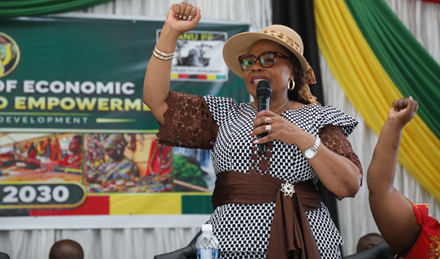
WOMEN Affairs, Community, Small and Medium Enterprises Development Minister, Senator Monica Mutsvangwa, has urged Manicaland’s small-scale miners to reinvest earnings from high gold prices into machinery, business expansion and value addition to create jobs and sustainable enterprises.
Addressing the Manicaland Empowered Groups and SMEs Leadership Economic Empowerment Interface in Mutare recently, Minister Mutsvangwa said small-scale producers account for more than 65 percent of Zimbabwe’s gold output, placing them in a strong position to expand the province’s mining sector.
Minister Mutsvangwa urged miners to learn from successful operators such as Shadhatar Mining through mentorship programmes and invest in competitive businesses.
She said miners should move beyond mineral extraction and establish enterprises that generate employment, create wealth and support national development.
“As SMEs in Manicaland Province, I want to commend you for the contribution that you are making to the country’s gold output where more than 65 percent is coming from small-scale producers. Let us take full advantage of the gold price bonanza and position the province as a mining giant through mentorship programmes with successful small-scale miners such as Shadhatar Mining.
“We have to build sustainable, competitive enterprises that create wealth, employ others and contribute to national development. This is consistent with the National Development Strategy 2 (NDS2) and His Excellency, the President, Dr E.D. Mnangagwa’s mantra, ‘Nyika inovakwa nevene vayo’,” said Minister Mutsvangwa.
Minister Mutsvangwa also said access to affordable finance, modern technology, machinery and mentorship remained critical to business growth.
“Without capital, businesses struggle to acquire machinery and raw materials, expand production, improve technology and access markets,” she said.
Minister Mutsvangwa said her ministry is working with private financial institutions to develop financing products for micro, small and medium enterprises (MSMEs).
She urged entrepreneurs to seek support from the Small and Medium Enterprises Development Corporation (SMEDCO), Zimbabwe Women Microfinance Bank and EmpowerBank.
Minister Mutsvangwa also cited the Women Development Fund and Community Development Fund as initiatives supporting women entrepreneurs and community enterprises.
The Minister urged businesses to invest in processing local resources rather than relying solely on raw material extraction.
She cited the Hauna Fruit and Vegetable Processing Plant in Mutasa District as an example of how value addition can create jobs, reduce post-harvest losses, promote import substitution and support exports.
“These projects are promoting innovation, value addition and reducing post-harvest losses, creating jobs, promoting import substitution and supporting export growth. We must replicate such initiatives across the province, building on the resources and opportunities in each locality,” she said.
Minister Mutsvangwa also called for stronger partnerships between MSMEs and established companies, including mining houses, supermarkets and agricultural processors.
“We are also strengthening linkages between MSMEs and established businesses, including supermarkets, mining companies and agricultural processors, and I call on the private sector to support MSMEs through mentorship, supplier development and inclusive procurement,” she said.
Minister Mutsvangwa urged larger businesses to support smaller enterprises through mentorship, supplier development and inclusive procurement.
“Production without markets limits enterprise growth,” she said, urging entrepreneurs to participate in local, regional and international trade fairs.
Minister Mutsvangwa said her ministry had facilitated MSME participation in exhibitions and business networking platforms in Tanzania, Malawi, Zambia, China, Equatorial Guinea and India during the year.
She also urged entrepreneurs to formalise their businesses to improve access to finance, markets, partnerships and Government procurement opportunities.
“Formalisation should not be viewed as a regulatory burden but as a pathway to growth,” she said.
Minister Mutsvangwa said Government, private-sector players and other stakeholders needed to coordinate empowerment initiatives to build competitive enterprises and support Vision 2030.
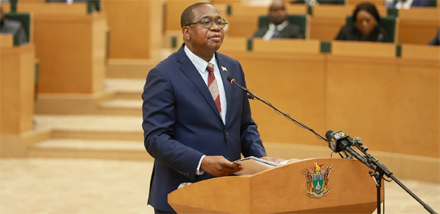
Minister of State for Manicaland Provincial Affairs and Devolution, Advocate Misheck Mugadza, echoed the call, urging investors and financiers to partner local businesses.
Minister Mugadza said investment agreements should translate into jobs and improved livelihoods rather than end with the signing of contracts.
ENDS
Miners urged to reinvest gold earnings