Online Reporter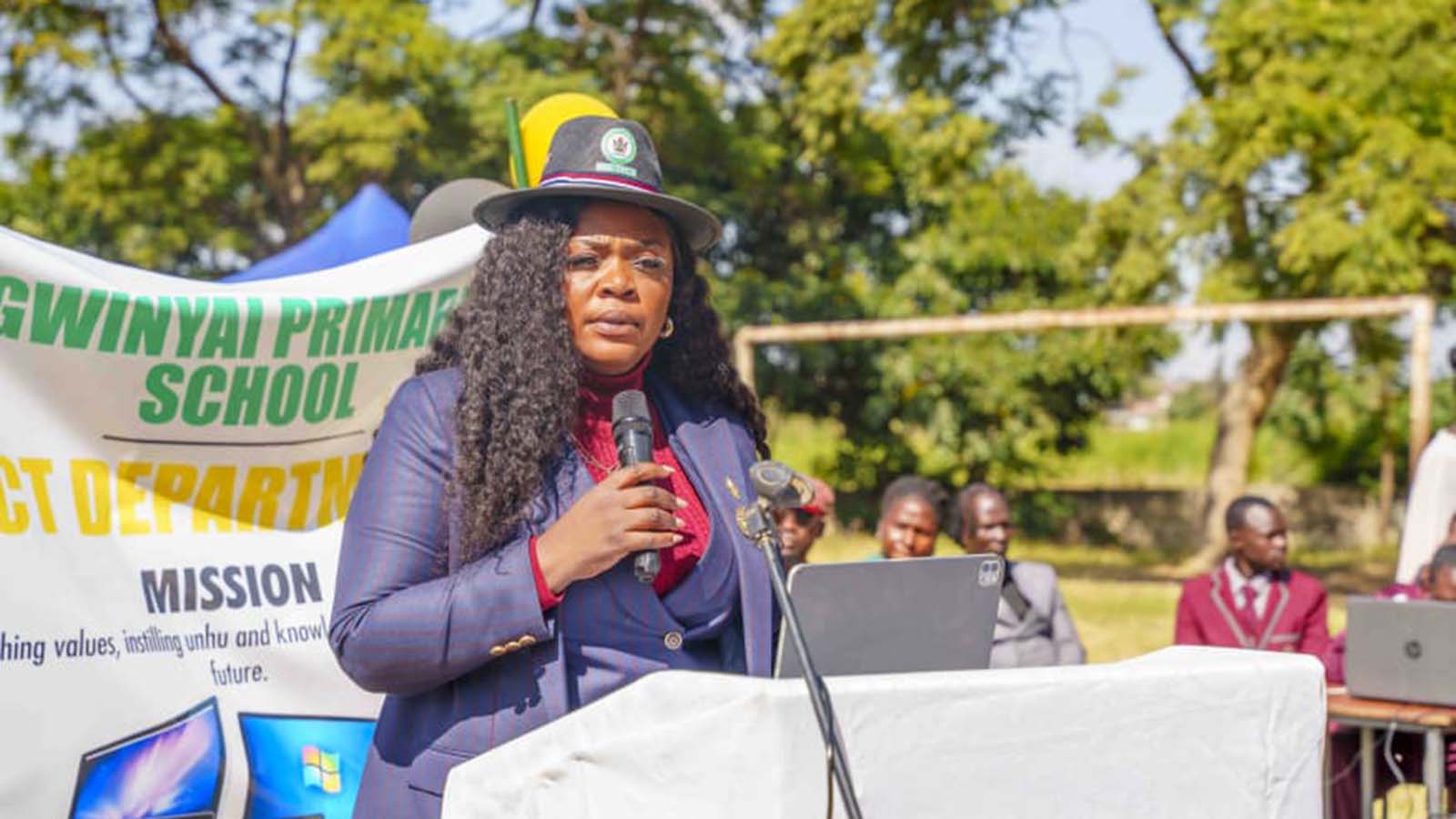
Remember Deketeke
THE Government has intensified efforts to bridge the digital divide in schools, with Gwinyai Primary School in Mbare receiving laptops and internet connectivity equipment aimed at preparing learners for the demands of the digital age.
Speaking during the handover of ICT equipment at the school today, ICT, Postal and Courier Services Minister Tatenda Mavetera said digital transformation remained central to Zimbabwe’s development agenda, and efforts were underway to ensure no child is left behind in the country’s technological revolution.
The donation saw the school receiving laptops, while the Ministry of ICT, Postal and Courier Services pledged an additional 10 laptops and a Starlink kit to enhance connectivity and digital learning.
Min Mavetera commended KudzaiDenga Trading and its representative, Mrs M Chuma, a former pupil at the school, for giving back to the institution that shaped her future.
“A daughter of this school, Mrs M Chuma, has returned to invest in the very institution that helped shape her journey. This donation of laptops is a powerful demonstration of patriotism in action,” she said.

“It shows that success is most meaningful when it is used to create opportunities for others. This is what nation-building looks like.”
The minister said empowering schools with digital tools was critical to unlocking Zimbabwe’s future potential.
“When we empower our schools, we are not only providing equipment. We are investing in the minds that will design our industries, build our technologies and drive our economy tomorrow,” she said.
Min Mavetera noted that digital skills had become essential in a rapidly evolving global economy.
“We are living in an era where digital skills are no longer optional. They are foundational skills that determine how effectively our young people participate in the global economy,” she said.
She said the Government was working closely with the Ministry of Primary and Secondary Education to reform the country’s education system and equip learners with future-oriented skills.
“Our two ministries are working together to reform our education system so that our learners are prepared for the future. We are moving towards an education system where subjects such as artificial intelligence, coding and robotics are introduced from as early as primary school,” said Min Mavetera.
“The child sitting in this classroom today must not only be a consumer of technology. They must become a creator, an innovator and a problem solver.”
She said the laptops would enhance digital literacy, research capabilities, coding skills and creativity among learners.
Hon Mavetera also highlighted the role being played by community organisations in promoting digital inclusion, applauding Mbare Renewal Projects for supporting digital literacy initiatives within local communities.
“Technology must not only reach institutions; it must reach people,” she said.
“When a young person learns computer skills, when a parent learns how to navigate digital platforms, and when communities gain confidence in using technology, we are building an inclusive digital society.”
The minister also announced that the Cabinet had approved the Zimbabwe National Child Online Protection Policy (2026-2030), which seeks to safeguard children as they increasingly engage with digital technologies.
“Yesterday, Cabinet approved the Zimbabwe National Child Online Protection Policy 2026-2030,” she said.
“This policy provides a national framework to safeguard children online while ensuring that they benefit from the opportunities created by information and communication technologies.”
Hon Mavetera warned that while the internet offered vast opportunities for education and innovation, it also exposed children to risks such as cyberbullying, harmful content, online exploitation, grooming and privacy violations.
“The Child Online Protection Policy establishes a coordinated framework among Government, the private sector, academia, communities, parents and guardians to ensure children’s safety online,” she said.
She said the Government would continue strengthening legal and institutional frameworks to protect children in cyberspace while promoting responsible use of technology.
Announcing the Ministry’s additional donation, Hon Mavetera said the gesture demonstrated the power of partnerships in accelerating development.
“This demonstrates what is possible when Government, regulators, communities and the private sector work together,” she said.
“I commend KudzaiDenga Trading for leading by example. Your contribution has shown that development is not only the responsibility of the Government. It is a shared national duty.”
She challenged companies, professionals and alumni across the country to support schools and communities through similar initiatives.
“Every school has learners who need an opportunity. Every community has potential waiting to be unlocked,” she said.
“The Government will continue to create the policy environment, infrastructure and partnerships needed to ensure that no child is left behind in the digital revolution.”
Hon Mavetera said the donation reflected the spirit of collective responsibility championed by President Mnangagwa’s philosophy of Nyika inovakwa nevene vayo.
“When we work together, we not only change schools. We change lives. We build Zimbabwe,” she said. Remember Deketeke
The Government has intensified efforts to bridge the digital divide in schools, with Gwinyai Primary School in Mbare receiving laptops and internet connectivity equipment aimed at preparing learners for the demands of the digital age.
Speaking during the handover of ICT equipment at the school today, ICT, Postal and Courier Services Minister Tatenda Mavetera said digital transformation remained central to Zimbabwe’s development agenda, and efforts were underway to ensure no child is left behind in the country’s technological revolution.
The donation saw the school receiving laptops, while the Ministry of ICT, Postal and Courier Services pledged an additional 10 laptops and a Starlink kit to enhance connectivity and digital learning.
Min Mavetera commended KudzaiDenga Trading and its representative, Mrs M Chuma, a former pupil at the school, for giving back to the institution that shaped her future.
“A daughter of this school, Mrs M Chuma, has returned to invest in the very institution that helped shape her journey. This donation of laptops is a powerful demonstration of patriotism in action,” she said.
“It shows that success is most meaningful when it is used to create opportunities for others. This is what nation-building looks like.”
The minister said empowering schools with digital tools was critical to unlocking Zimbabwe’s future potential.
“When we empower our schools, we are not only providing equipment. We are investing in the minds that will design our industries, build our technologies and drive our economy tomorrow,” she said.
Min Mavetera noted that digital skills had become essential in a rapidly evolving global economy.
“We are living in an era where digital skills are no longer optional. They are foundational skills that determine how effectively our young people participate in the global economy,” she said.
She said the Government was working closely with the Ministry of Primary and Secondary Education to reform the country’s education system and equip learners with future-oriented skills.
“Our two ministries are working together to reform our education system so that our learners are prepared for the future. We are moving towards an education system where subjects such as artificial intelligence, coding and robotics are introduced from as early as primary school,” said Min Mavetera.
“The child sitting in this classroom today must not only be a consumer of technology. They must become a creator, an innovator and a problem solver.”
She said the laptops would enhance digital literacy, research capabilities, coding skills and creativity among learners.
Hon Mavetera also highlighted the role being played by community organisations in promoting digital inclusion, applauding Mbare Renewal Projects for supporting digital literacy initiatives within local communities.
“Technology must not only reach institutions; it must reach people,” she said.
“When a young person learns computer skills, when a parent learns how to navigate digital platforms, and when communities gain confidence in using technology, we are building an inclusive digital society.”
The minister also announced that the Cabinet had approved the Zimbabwe National Child Online Protection Policy (2026-2030), which seeks to safeguard children as they increasingly engage with digital technologies.
“Yesterday, Cabinet approved the Zimbabwe National Child Online Protection Policy 2026-2030,” she said.
“This policy provides a national framework to safeguard children online while ensuring that they benefit from the opportunities created by information and communication technologies.”
Hon Mavetera warned that while the internet offered vast opportunities for education and innovation, it also exposed children to risks such as cyberbullying, harmful content, online exploitation, grooming and privacy violations.
“The Child Online Protection Policy establishes a coordinated framework among Government, the private sector, academia, communities, parents and guardians to ensure children’s safety online,” she said.
She said the Government would continue strengthening legal and institutional frameworks to protect children in cyberspace while promoting responsible use of technology.
Announcing the Ministry’s additional donation, Hon Mavetera said the gesture demonstrated the power of partnerships in accelerating development.
“This demonstrates what is possible when Government, regulators, communities and the private sector work together,” she said.
“I commend KudzaiDenga Trading for leading by example. Your contribution has shown that development is not only the responsibility of the Government. It is a shared national duty.”
She challenged companies, professionals and alumni across the country to support schools and communities through similar initiatives.
“Every school has learners who need an opportunity. Every community has potential waiting to be unlocked,” she said.
“The Government will continue to create the policy environment, infrastructure and partnerships needed to ensure that no child is left behind in the digital revolution.”
Hon Mavetera said the donation reflected the spirit of collective responsibility championed by President Mnangagwa’s philosophy of Nyika inovakwa nevene vayo.
“When we work together, we not only change schools. We change lives. We build Zimbabwe,” she said.