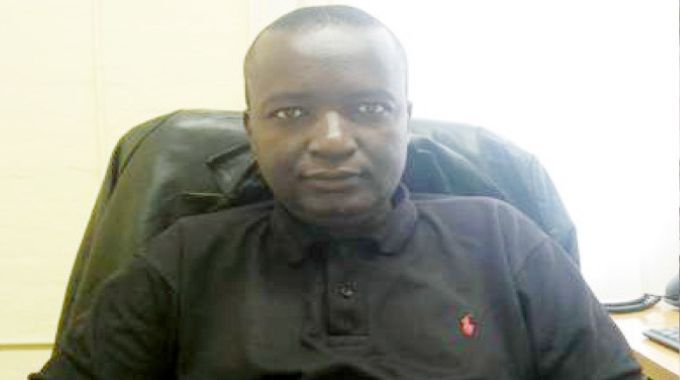
Bruce Ndlovu Sunday News Reporter
THE first time I met Mkhululi Sibanda, he tried to fire me before I had even been hired by this paper.
It was the winter of 2012 and as a student at Midlands State University, I was frantically searching for a place to do my attachment.
Then, out of the blue one otherwise ordinary afternoon, I received a call from the editor’s secretary at The Chronicle.
Together with a group of other hopefuls, I was to appear that Friday for an interview at the paper’s offices at the corner of 9th Avenue and George Silundika Street.
As thrilled as I was at the prospect of earning a placement at an institution of such repute, I immediately knew that I had a major problem looming.
“Come dressed smartly and formally,” the secretary, Ms Linje, reminded me gently before ending the call. I had never met her before, but somehow I could picture the smile that accompanied those words. Perhaps she knew my little secret.
The truth was that, stylish as I believed my wardrobe to be, not a single garment in it could honestly lay claim to being formal wear. I had T-shirts, ripped jeans and flashy sneakers in abundance, I owned neither a suit nor even a proper pair of dress shoes. To make matters worse, I wore a mane of long, unkempt hair that seemed determined to rebel against civilisation itself.
The evening before the interview, my brother, my cousin and I convened what could only be described as an emergency caucus meeting.
Surely, somewhere within our shared wardrobe, there had to be enough respectable clothing to stop me from looking like an impostor before my prospective mentors.
After hours of debate, outfit changes and fittings, we eventually settled on what I imagine today’s pubs and clubs would generously describe as “smart casual.”
I wore a stylish grey Markhams jacket, zipped all the way to the top to conceal the T-shirt underneath, a pair of tight khaki chinos and a pair of Carvella shoes — without socks, of course. As for my wild hair, we concluded that only a tennis racket might tame it. Cutting it was simply out of the question.
When I walked into The Chronicle newsroom the following morning, I attracted curious glances from almost everyone, not least the more than 20 prospective interns, all of whom looked every bit like young men and women who understood that only three attachment positions were up for grabs and had dressed accordingly.
As we waited to write the entrance examination, I thought I had successfully escaped scrutiny for my questionable fashion choices.
That was before Mkayz saw me.
At first, he just looked at me with what seemed like mild curiosity.
Then, as his eyes darted from my carvella shoes to the wild locks pointing at the ceiling, he asked whether I had also come for the interview like everyone else who had descended on the newsroom that morning. When I answered in the affirmative, the then Chronicle News Editor completely lost his composure.
He launched into a blistering verbal assault, loudly questioning my lack of respect and my complete failure to appreciate the importance of the occasion. As I stared helplessly at the floor, I could hear reporters, both senior and junior, chuckling quietly at their desks. I later found out that for them, this was hardly an unusual spectacle.
If you had told me then that, 13 years later, that same man would become someone I regarded as an elder brother, a mentor and a dear friend, I would have laughed you out of the room.
When I left the newsroom that day, after passing the written examination and being offered one of the coveted attachment positions, I carried two things with me. The first was immense relief. The second was a quiet determination that one day I would somehow get even with the man who had humiliated me before a room full of strangers. I was not the only one who would have felt that way over the years.
Mkayz, particularly during his years as The Chronicle news editor, was famous for what football people call the “hairdryer treatment.”
Popularised by legendary Manchester United manager Sir Alex Ferguson, the phrase describes those moments when a manager stands nose-to-nose with a player, unleashing a torrent of words with such force that it feels like having a hot hairdryer blasting directly into your face.
In those days, Mkayz himself a devoted Manchester United supporter, was our own Sir Alex Ferguson, not only in temperament but in spirit. He shared the great manager’s relentless pursuit of discipline, precision and excellence.
During one conversation while I was still on attachment, Mkayz remarked that one or two students needed to quit if he was to be truly satisfied with the training process. Not everyone was supposed to survive a year under his tutelage.
“Those who can’t take the heat shouldn’t be in the newsroom,” he said matter-of-factly.
It reminded me of something my father, a former soldier and liberation fighter, had once told me about military training. If one or two recruits did not die during training, he had said with a perfectly straight face, then the training had not been rigorous enough. Having never undergone military training myself, I could neither confirm nor dispute that rather alarming philosophy.
What I did know is that not a lot of students survived a nine-month attachment under Mkayz.
Many did not.
Years later, after he had moved to Sunday News, I would recount stories of the “old Mkayz” to younger journalists and students. They would accuse me of exaggerating, even inventing tales about a man they knew only as patient, approachable and almost fatherly.
In a sense, my generation was Mkayz’s lastborns, the last intakes to experience him before his promotion to Assistant Editor softened or perhaps simply redirected the fierce edge with which he moulded young journalists.
Like a child shocked at the soft treatment meted out by their once strict parents on their grandchildren, many of us thought that Mkyayz was not giving the younger generation a taste of what he used to give to us when he was the news editor.
However, as we matured in the profession, we gradually came to understand why Mkayz ran his newsroom with almost military precision.
If journalism is indeed the first draft of history, then there can be no room for carelessness.
Today, in the age of spellcheck, ChatGPT and artificial intelligence, it is easy to forget that not so long ago every comma, every spelling mistake and every factual error rested entirely on the shoulders of the reporter. There were no digital safety nets.
Sitting in his cubicle at The Chronicle and later in his cosy office at Sunday News, Mkayz would not hesitate to summon you from whatever corner of the newsroom you had tried to disappear into and make you correct every single mistake.
The first draft of history could never be littered with errors. Not under his watch.
You did not impress Mkayz with expensive clothes, fashionable hairstyles or polished shoes.
You impressed him with clean copy, perfect grammar, faultless punctuation, a sharp news angle and an instinctive understanding of the rhythm of a story.
If you cared about those things, then you belonged to Mkayz’s tribe. Over the last decade, we had forged a brotherly relationship that I treasured. Two weeks ago, when
I brought my daughter to the newsroom, she had warmly embraced Mkayz after rejected everyone else. This, he said with a radiant smile dancing on his eyes, was proof that his charm of old could still not be matched even in his 50s. It was also proof that everyone else was an impostor, while he was a true son of Matobo, District 39, from where we both hail from.
For months, we had made plans. At the end of July we would go to St Joseph’s, in the nether regions of district 39, for celebrations there. We would sleep there, drink and make merry among our kin.
I did not know that our one and only trip together to District 39 would be a lot more sombre and only one of us would be alive. The journalism profession has lost a consummate professional, a walking library and a mentor. I have lost a brother.
May his soul rest in peace.