Business Reporter
ZIMBABWE’s push to attract large-scale industrial investments is significantly stimulating the growth of downstream industries, creating new business opportunities for small and medium enterprises (SMEs) as they generate demand for locally supplied goods and services.
According to the Government, the focus is shifting from simply attracting investment to ensuring that large industrial projects generate broad-based economic benefits through stronger local supply chains and SME participation.
The strategy reflects a growing emphasis on ensuring that foreign direct investments create domestic industrial linkages rather than operating as isolated projects, with policymakers seeking to maximise local value addition and industrialisation.
The Government says strengthening linkages between large industrial investors and local SMEs will be critical to ensuring that the benefits of foreign direct investment translate into inclusive economic growth, stronger value chains and sustainable industrial development.

The Confederation of Zimbabwe Industries (CZI) 2025 Manufacturing Sector Survey reveals that the manufacturing sector exhibits very low levels of vertical integration, with only 7 percent of firms reporting strong linkages with major suppliers or customers.
This suggests that most firms still operate in fragmented value chains, undermining the very policy objective being pursued.
Speaking on the impact of major investments, the Minister of Women Affairs, Community, Small and Medium Enterprises Development, Monica Mutsvangwa, said the establishment of large companies was creating new markets for SMEs, while improving access to locally produced raw materials.
“We need big investments because the establishment of big companies is propelling the growth of the SME economy,” she said.
“Our SMEs are now producing goods that feed into large corporate companies, and we want them to take advantage of the significant investments coming into the country.
“The Government’s objective is to ensure that SMEs become integral participants in the value chains created by large-scale investments.”
At the centre of this development is the Dinson Iron and Steel Company (DISCO), a subsidiary of Tsingshan Holdings, in Manhize, one of the largest integrated steel plants in sub-Saharan Africa.
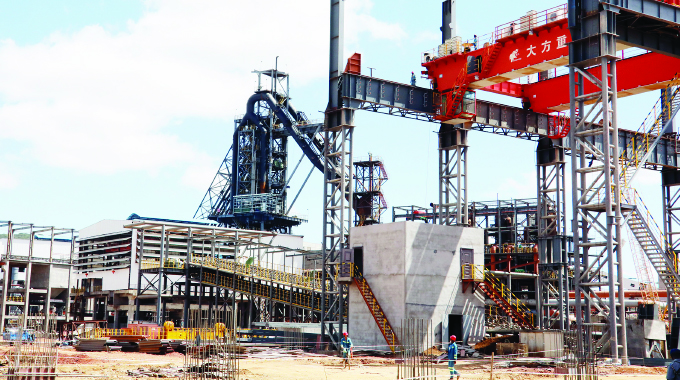
When fully operational, the plant is expected to produce up to 1,2 million tonnes of steel annually, creating a reliable domestic supply of a key industrial input that has traditionally been imported at high cost.
According to Minister Mutsvangwa, the commencement of local steel production is expected to lower input costs for thousands of small manufacturers operating in industrial clusters such as Harare’s Siyaso Industrial Area.
She noted that industrial clusters such as Harare’s Siyaso Industrial Area, where thousands of SMEs manufacture gates, window frames, agricultural equipment, trailers and other steel products, are likely to benefit from the increased availability of locally produced steel.
“Producing steel in the country will go a long way in enhancing the efficiency of downstream companies in the steel industry,” said Minister Mutsvangwa.
“Go to Siyaso, where many SMEs use steel every day. Local steel production has made steel more readily available and cheaper.
“As such, we are now expecting SMEs to produce better quality products at more competitive prices. These downstream benefits of major investments will always benefit our SMEs,” Minister Mutsvangwa said.
The Government believes the opportunities extend beyond engineering and fabrication, as downstream industries’ benefits include automotive component manufacturing, mining equipment, construction materials, irrigation systems, agricultural machinery, packaging, transport services and industrial maintenance.
It also expects the revival of foundries and metal working industries in Bulawayo and Gweru, cities that once formed the backbone of Zimbabwe’s industrial economy.
Encouragingly, the CZI 2025 survey indicates that the fabricated metal products subsector was among the top five performers in 2025, recording output growth of 21,2 percent and turnover growth of 12,5 percent, which signals strong potential for downstream SME participation.
The SME Association of Zimbabwe (SMEAZ) chief executive officer, Mr Farai Mutambanengwe, said there have generally been synergies between big and small companies and that they would like to see momentum grow.
“Generally, large companies from various sectors have been sourcing goods and services significantly from small-scale industries,” he said.
“There has been significant momentum in this area and we would like to see this trend expand further across more sectors of the economy.
“Strengthening these value chains will support the growth of small businesses, enhance local industrialisation and generate broader economic benefits for the country as a whole.”
Zimbabwe’s SME sector represents one of the country’s largest economic pillars, contributing an estimated 60 percent of gross domestic product and employing more than 70 percent of the productive workforce, making the sector central to the country’s industrialisation agenda.
To support this integration, the Government has launched the Industrial Development Fund (IDF), capitalised with ZWG100 million, to strengthen domestic value chains in critical sectors such as pharmaceuticals, agro-processing, cotton and leather.
In parallel, the National Venture Capital Company of Zimbabwe (NVCCZ) has been recapitalised with ZWG108 million to provide equity finance and tailored support for start-ups and MSMEs
The sector spans agriculture and agro-processing, manufacturing, mining, wholesale and retail trade, transport and logistics, tourism, renewable energy, information technology and professional services.
If properly integrated into emerging industrial value chains, SMEs could move beyond survivalist operations to become specialised suppliers of components, machinery, maintenance services, logistics, fabricated products and industrial consumables.
The broader manufacturing sector is showing tangible signs of recovery that could benefit SMEs.
According to the CZI survey, overall manufacturing sector capacity utilisation increased to 55,9 percent in 2025, up from 52,3 percent in 2024, with firm output growing by an average of 13 percent and turnover rising by 12 percent.
Notably, medium-scale firms, which align closely with SME definitions, led the way, achieving the highest output growth (21,2 percent) and turnover growth (18,4 percent) among all firm size categories.
However, the survey also highlights persistent structural weaknesses that could constrain SME growth.
Manufacturers sourced approximately 54 percent of their raw materials from external markets in 2025, up from 52 percent in 2023, indicating that import dependence remains entrenched.
The textiles and paper products subsectors rely on imports for 75 percent and 72 percent of their inputs respectively, which undermines the development of local value chains and limits the ability of downstream SMEs to source affordable, locally produced raw materials.
The Government says encouraging signs are already emerging across the broader manufacturing sector, with capacity utilisation improving across several productive sectors, including food and beverage processing, dairy, grain milling, cement production and construction materials, signalling broader momentum in domestic manufacturing.
These gains are expected to translate into sustainable industrialisation through stronger linkages between multinational investors, local manufacturers and SMEs.
However, access to affordable finance, modern technology and technical skills will be essential if smaller businesses are to fully exploit the opportunities created by Zimbabwe’s new wave of industrial investment.
The CZI survey reinforces this concern, identifying financial constraints as the most significant barrier to technology adoption, with 54 percent of firms citing cost as a major impediment to upgrading.
Moreover, while technology upgrading boosts performance, firms that upgraded saw turnover growth 9,95 percentage points higher than those that did not, only 34 percent of firms actually undertook such upgrades in 2025, highlighting a critical gap in SME competitiveness.
Furthermore, the survey reveals a worrying trend of rising casualisation that could undermine the quality of employment generated by SME growth.
The proportion of casual employees in the manufacturing sector has risen steadily from 28 percent in 2023 to 36 percent in 2025, with women disproportionately affected.
Female participation in casual work increased from 22 percent to 24 percent over the same period, while women hold only 21 percent of board positions and 10 percent of CEO roles in the sector, suggesting that employment growth is not translating into inclusive, secure livelihoods for all.
This will position SMEs as beneficiaries and critical drivers of Zimbabwe’s next phase of industrial growth.