

 admin
admin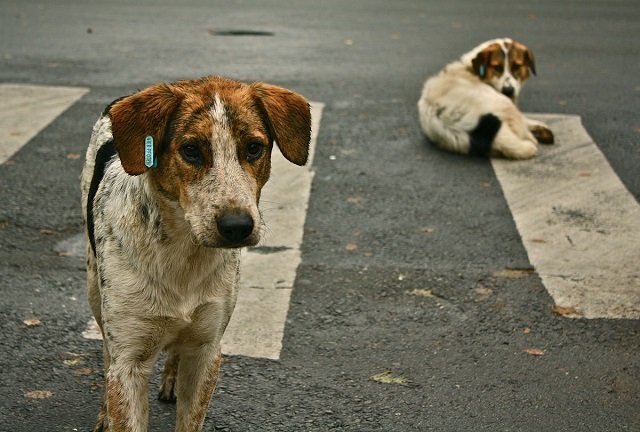
Leroy Dzenga:Features Writer
Both in dogs and human beings, testing positive for rabies could spell imminent death unless a miracle occurs.According to the Global Alliance for Rabies Control, the virus has a 99.9 percent fatality in humans and animals.With the World Rabies Day set for this month, Harare becomes the latest addition to the cities directly affected by the viral disease across the globe.
So far this year, the three recorded rabies human deaths in Zimbabwe have occurred in Harare.
The uncontrolled breeding of dogs has been cited as a major cause for this rise in rabies cases.
The Zimbabwe National Society for Prevention of Cruelty to Animals (ZNSPCA) cites the relaxed legislation governing the breeding of dogs in the capital as a major cause.
Glynis Vaughan, a ZNSPCA chief inspector called for the quick implementation of dog by-laws by the city to curb the rabies scourge.
“Over the years, there has been an increase in illegal breeding of dogs and the unlawful selling of puppies on the roadside,” she said.
Over the last few years the municipal by-laws, she said, had not been enforced.
“This has allowed owners to have numerous animals, dogs straying off their property and unvaccinated animals which carry a high rabies risk,” Vaughan said.
Undocumented dogs are seldom vaccinated because their owners will be avoiding questions about the legality of their pets.
“This increase in the number of dogs coupled with the irresponsible ownership has resulted in vast numbers of unvaccinated animals roaming the streets, thus allowing the rabies disease to be spread quickly,” Vaughan said.
Vaughn believes that the problem can only be tackled by including technology into the fight against rabies.
“Our recommendations for the city by-laws soon to be implemented were that every dog as well as being vaccinated, must be micro-chipped.
“This chip implanted in the animal contains all the information of the owner so if the dog strays, a facility can check the chip and find the owner immediately.
“Any dog not micro-chipped will not be licensed hence action can be taken against the owner.”
A household with an unsterilised female dog may give birth to between four to eight puppies in its perennial mating season.
Without a legitimate breeder`s license on the owner`s part, there is no guarantee that the puppies will be properly taken care of within that or another household.
In some cases, the puppies are sold on the black market while in some unfortunate instances they are left to wander the streets to become feral dogs.
These feral dogs living without any vaccination increase the risk of spreading the deadly rabies disease.
Government has gazetted a statutory instrument declaring Harare a high rabies zone.
Statutory Instrument 98 of 2016 added Harare to a list of 10 provinces which were identified as high rabies areas.
Harare became the 11th rabies area to be added to the rabies areas list in Zimbabwe, the first to be added in 21 years when the Statutory Instrument was last amended.
Some of the areas are Gokwe North and South, Gweru, Manicaland, Manicaland Central, Mashonaland Central, East, West, Masvingo, Matabeleland North and South provinces.
Experts point to an array of variables, which could have led to the increasing prevalence of this highly infectious disease.
Of major concern is the ignorance or lack of comprehension of the grave dangers associated with contracting rabies.
Veterinary Services Department director Dr Josephat Nyika said with the adequate resources in place the rabies threat can be reduced.
“Rabies is preventable through vaccination and human cases can be eliminated completely with sustained high vaccination coverage in dogs and cats,” Dr Nyika said.
Over the past five years, the Veterinary Services Department has not been able to reach its vaccine targets due to funding constraints.
“Dog population in Zimbabwe is estimated to be 700 000 and the Veterinary Services division had plans to reach out and vaccinate this population at least twice a year,” Dr Nyika added.
The whole process would cost around $1 million per annum.
Dr Nyika adds that his department needs assistance from the Ministry of Finance to give meaning to their efforts of running a smooth rabies vaccination.
Treasury has over the years not catered for rabies vaccinations amid rising rabies cases.
A report from the rabies management meeting held at Harare Central Hospital recently noted that dogs, though dominant, are not the sole cause of rabies.
Lack of knowledge in handling rabies cases also has the same detriment.
Health workers who handle rabies cases need to be well trained and equipped to guarantee their safety.
“It was noted that in general, human health workers at most referral institutions lacked knowledge on clinical management and post mortem handling of suspect rabies cases,” read part of the report.
Community health workers are also exposed as they do not have adequate information needed to deal with cases of suspected rabies infection.
The same report said that there was a lack of coordination in carrying out rabies campaigns by key stakeholders like the Ministry of Health and Child Care, the Department of Veterinary Services and the Harare Municipality.
A Mbare resident, Mr Josh Gumbo, said in the past, there was mobile vaccination of dogs in most residential areas.
“I would take my dogs to Stodart Hall when the mobile dog vaccination teams came. This was quite effective as most residents would take their dogs there. I am not sure if the same is still being done since I no longer have dogs and do not require the service,” he said.
Traditionally, dogs were kept for security reasons but the tide seems to have turned as they now represent a stylus denoting social class.
Dogs, like a mag wheeled car is to a middle aged urbanite, have become a status symbol in Zimbabwe`s capital, Harare.
The increased demand for canines has led to the proliferation of backyard breeders who are cashing in on the craze.
Breeds like Pitbulls, Mastiff dogs and Boerboels are the most talked about with a puppy costing around $300 on the black market.
These dogs, like any other trend sent into overdrive comes with negative effects to the society.
The natural rise in dog population has presented the city with its newest of documented challenges, rabies.
In up to 99 percent of human cases, the rabies virus is transmitted by domestic dogs.
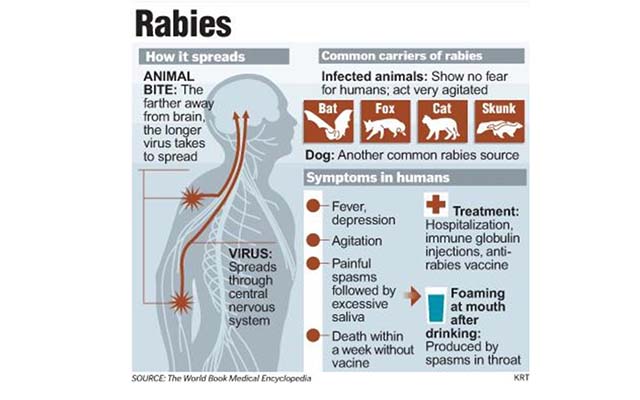
Rabies affects domestic and wild animals, and is spread to people through bites or scratches, usually via saliva.
Rabies is present on all continents with the exception of Antarctica, but more than 95 percent of human deaths occur in Asia and Africa.
Feedback: [email protected]



 Online Reporter
 dyton mupawaenda