Remember Deketeke-Municipal Correspondent
THE Government has approved an ambitious US$3 billion Harare Light Rail Project, paving the way for the development of a modern mass transit system that will connect the central business district (CBD) with major suburbs, Chitungwiza, the Robert Gabriel Mugabe International Airport (RGMIA) and the new city in Mt Hampden.
The project, which has been approved by the Zimbabwe Investment and Development Agency (ZIDA) and granted National Project Status, marks Zimbabwe’s largest planned urban public transport investment in decades and is expected to fundamentally transform mobility in Greater Harare while supporting preparations for the 2029 Intra-African Trade Fair (IATF).
National Project Status means the development has been designated as being of strategic national importance, allowing it to benefit from accelerated investment facilitation, coordinated Government support and streamlined regulatory approvals.
The railway will be implemented through a public-private partnership (PPP), with the investor currently mobilising about US$5 million for project preparation through support from the African Development Bank (AfDB).
Funding is expected to finance feasibility studies, engineering designs, environmental and social impact assessments, and transaction advisory services before construction begins.
In an interview with The Sunday Mail, Harare City Council acting director of town planning Engineer Samuel Nyabeza said the project is expected to be completed within five years.
“The project has already been approved by ZIDA and has been accorded National Project Status. It is being spearheaded through a partnership involving Government, local authorities and private sector players,” he said.
“The investor is currently mobilising approximately US$5 million required for project preparations, with funding support expected from the African Development Bank.”
Eng Nyabeza said the entire project is estimated to cost US$3 billion and will be implemented in five phases.
“The estimated cost of the entire project stands at approximately US$3 billion and will be implemented in five distinct phases.”
Phase one, estimated at US$1 billion, will witness the construction of the first rail corridor linking Harare’s CBD with Kuwadzana.
It will include elevated railway sections, battery-powered and solar-powered trains, modern stations and construction of the project’s main maintenance depot.
The second phase will extend the network to Highfield and Chitungwiza, while phase three will connect the city centre with Mabvuku-Tafara.
The fourth phase will run from Cranborne to the RGMIA.
The fifth and final phase will link Kuwadzana with the new city in Mt Hampden.
Once completed, the network will form the backbone of Harare’s future transport master plan by connecting residential suburbs with industrial areas, commercial centres, Government institutions and key economic corridors.
The railway is also expected to integrate with the expanding urban bus network, creating a seamless public transport system in which buses provide feeder services to rail stations while rail carries large volumes of passengers over longer distances.
The Government has already procured more than 200 buses under the public transport modernisation programme as part of efforts to develop an integrated urban transport network. (See Society Page 1)
Why light rail
Urban transport experts regard light rail as one of the most efficient forms of mass public transport for rapidly growing cities.
Unlike conventional commuter rail, light rail uses electric trains operating on dedicated corridors, enabling services to avoid traffic congestion while carrying significantly more passengers than buses.
The system offers faster journeys, lower emissions, improved road safety and reduced fuel consumption while stimulating commercial and residential development around stations.
For Harare, where rapid urbanisation has placed enormous pressure on roads, a modern rail network is expected to reduce congestion, shorten commuting times, improve productivity and lower the cost of doing business.
City of Harare Acting Town Clerk Advocate Warren Chiwawa said the municipality’s role is to ensure that the necessary planning framework is in place rather than directly constructing the railway.
“The proposed Harare Light Rail Network is part of the city’s long-term plan to improve urban transport and connect key parts of the city, including the CBD, residential areas, industrial zones and major economic corridors,” he said.
The railway, he added, is a national infrastructure project requiring collaboration between Government ministries, State entities and private investors.
“It is important to clarify that this is not a project that the City of Harare can implement on its own. The development of a light rail system is a national-level infrastructure project that will be undertaken in collaboration with relevant Government ministries and State entities responsible for rail transport and major infrastructure development, with possible participation from private sector partners through public-private partnerships.”
He said the city’s immediate responsibility was to safeguard transport corridors, align land-use planning with future rail routes, facilitate feasibility studies and process municipal approvals.
Preparing for Africa’s biggest trade fair
The light rail project forms part of a broader programme to modernise Harare ahead of the 2029 IATF, one of the continent’s largest business events.
The city expects to host more than 2 100 exhibitors and over 110 000 international delegates.
To support the event, the Government and the City of Harare are implementing an ambitious urban renewal programme under the coordination of the Office of the President and Cabinet.
Among the flagship projects is a new convention centre with a capacity of between 8 000 and 15 000 delegates to be developed at the Robert Mugabe Square.
Adv Chiwawa said preparations also include expanding hotel capacity, constructing modern exhibition facilities and encouraging private sector investment in retail, hospitality and mixed-use developments.
“The establishment of the IATFCO (Intra-African Trade Fair Company) Secretariat has exposed a critical gap: Harare currently faces a shortfall of approximately 11 000 hotel rooms,” he said.
“We also need high-end hospitality investment, including three-star and above hotels and a flagship 200-bed hotel with at least 10 presidential suites for Heads of State and dignitaries.”
He said PPPs would be central to financing much of the city’s transformation.
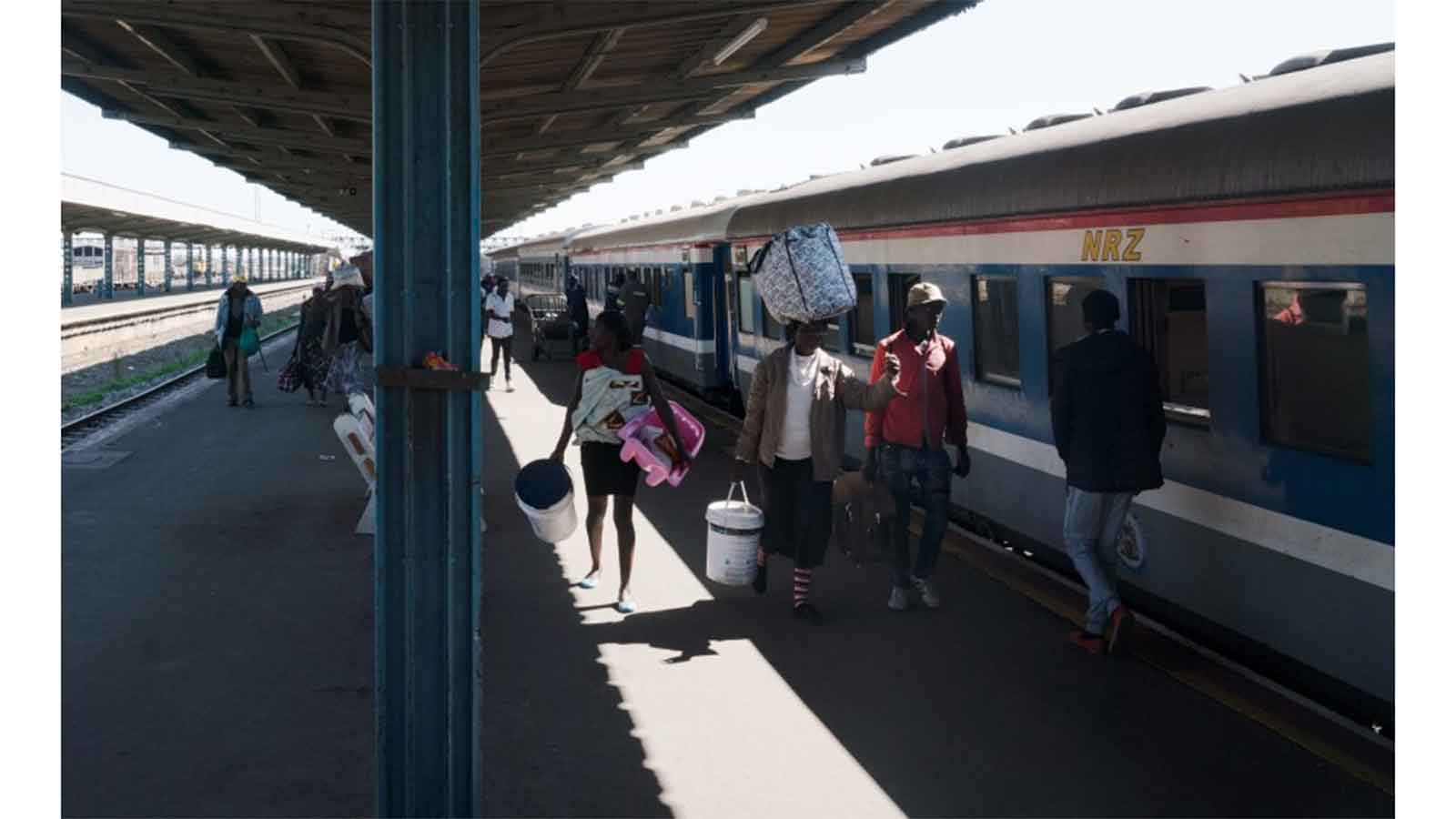
Harare once operated an extensive commuter rail system managed by the National Railways of Zimbabwe.
During the 1980s and much of the 1990s, suburban passenger trains linked the city centre with Ruwa, Tynwald, Dzivaresekwa, Norton and several surrounding communities.
However, years of underinvestment, ageing infrastructure, operational challenges and changing urban transport patterns led to the gradual collapse of commuter rail services.