Online Reporter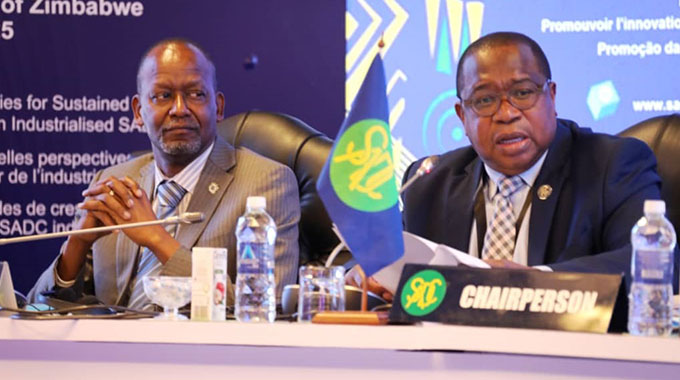
Rutendo Nyeve, Victoria Falls Reporter
THE Minister of Finance, Economic Development and Investment Promotion who is also the SADC Chairperson of the Minister of Finance, Professor Mthuli Ncube has said there is a need for regional collaboration to address pressing economic challenges facing the regional bloc.
He called for the harnessing of Artificial Intelligence (AI), financial technology and investment in agribusiness for employment creation and economic growth.
Speaking at the official opening of the SADC Committee of Ministers of Finance and Investment and the Peer Review Panel meetings in Victoria Falls yesterday, Prof Ncube urged policy collaboration to foster economic growth within SADC member states.
Held under the theme: “Promoting Innovation to Unlock Opportunities for Sustained Economic Growth and Development Towards an Industrialised SADC,” the meetings have brought together finance ministers, central bank governors and senior officials from SADC member states to deliberate on strategies to bolster economic resilience and integration.
Prof Ncube said the global and regional economic outlook poses some challenges as the International Monetary Fund’s (IMF) revised growth forecast for 2025 has been downgraded to 2,8 percent from 3,1 percent in 2024.
“Key factors influencing this adjustment include shifts in global trade and macroeconomic policies.
“This has also seen the escalating debt crisis as over 50 percent of developing countries are grappling with these rising debt levels, leading to significant debt distress and financial instability, with debt repayments having increased by 35 percent since 2023,” he said.
Prof Ncube said the region also faces severe climate-induced disruptions.
“The SADC region’s economic growth continued to be affected by El Niño-induced severe drought conditions characterised by delayed rainfall, prolonged dry spells and record-high temperatures,” he said.
Minister Ncube highlighted the devastating impact of climate change on agriculture and infrastructure, noting that floods have displaced thousands in Madagascar, Malawi and Mozambique while ongoing geopolitical tensions and trade disruptions are further compounding the challenges.
“The increased intensity of trade tensions characterised by reciprocal tariffs among advanced and emerging market economies could have direct and indirect effects on the export earnings of the SADC region,” he said.
Despite these hurdles, Prof Ncube outlined four critical opportunities to drive economic transformation and job creation that include high-growth sectors.
“Artificial Intelligence (AI), FinTech, renewable energy and agribusiness are poised to create jobs and foster innovation and member states should invest in these areas. Opportunities also lie in workforce development as there is a need for skills alignment,” he said.
Prof Ncube said other opportunities are in innovation and SMEs, where supporting entrepreneurship and private sector innovation can boost productivity and employment.
He said collaboration is essential as no one can do it alone.
“Governments, businesses, philanthropies and development banks each have a role, and only through collaboration can we achieve our goal,” said Prof Ncube.
Meanwhile, Minister Ncube said the meetings of the Minister of Finance will focus on several critical agenda items, including operationalisation of the SADC Regional Development Fund, with Zimbabwe already at the forefront of finalising the Fund’s structure, with plans to establish a Special Purpose Vehicle (SPV) to manage it.
Other issues to be discussed include anti-money laundering and combating terrorism financing through the review of Annex 12 of the Finance and Investment Protocol, now aligned with FATF recommendations, which he described as a key discussion point.
“We are also going to have peer review reports where the progress of Angola, the Democratic Republic of Congo and Zambia will be assessed to identify challenges and share best practices,” he said.
He called for stronger mechanisms to mitigate climate shocks, which have disrupted agriculture and infrastructure across the region.
As the meetings proceed over the next two days, the outcomes will be closely watched, with hopes pinned on actionable strategies to navigate the region’s complex challenges.
@nyeve14


 Blessing Chizhande