Online Reporter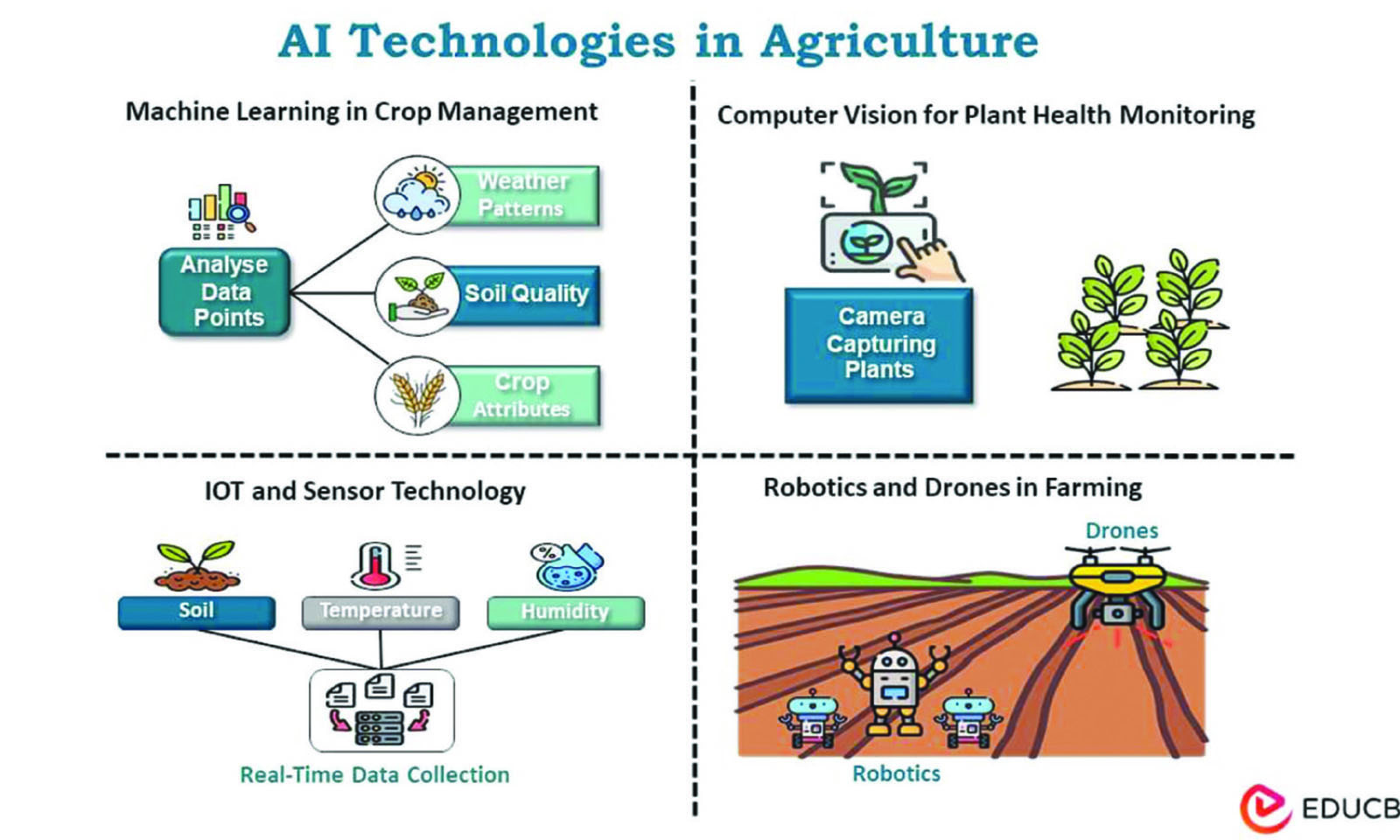
Wayne Matyukira
AS Zimbabwe continues to chart its path towards economic growth, the nation finds itself at a pivotal turning point.
With Vision 2030 setting an ambitious goal to become an upper-middle-income economy, the spotlight naturally falls on agriculture, an industry that has long been the backbone of Zimbabwe’s socioeconomic fabric.
Yet, as the world rapidly transitions into the digital age, the fusion of agriculture with Artificial Intelligence (AI) offers Zimbabwe an unprecedented opportunity to overcome historical barriers, boost productivity and engineer inclusive economic transformation.
According to the Food and Agriculture Organisation (FAO), agriculture remains the primary livelihood for nearly 70 percent of Zimbabweans.
The sector contributes between 11-14 percent of the Gross Domestic Product (GDP), supplies about 60 percent of industrial raw materials, and accounts for nearly 45 percent of national exports.
From tobacco and maize to cotton and livestock, Zimbabwe’s agricultural diversity has not only ensured food security, but has also provided a buffer against economic volatility.
However, for the sector to play its full role in achieving Vision 2030, it must transition from subsistence to a commercially viable, technology-driven industry.
This transformation is increasingly critical in the face of climate change, recurring droughts and fluctuating global commodity prices.
Historical legacy and
structural challenges
According to a top academic, Professor Stephen Mashingaidze, “Zimbabwe’s agricultural journey has been complex”.
Prof Mashingaidze noted that following the land reform, the redistribution of land from white commercial farmers to black Zimbabweans was politically significant, but economically disruptive.
“While the land reform addressed historical injustices, it also exposed structural weaknesses chief among them, the absence of capital, inadequate infrastructure and limited access to markets.
“For decades, Zimbabwean farmers have grappled with limited access to financing. Commercial banks and financial institutions, wary of risk and lacking appropriate collateral frameworks, have often been hesitant to extend credit to smallholder farmers.
“Historically, white commercial farmers received preferential credit allocation, a practice that has not been adequately restructured to benefit today’s landowners,” he noted.
The promise of AI
AI offers transformational potential for Zimbabwean agriculture. By integrating machine learning, big data analytics and satellite imagery, AI-driven solutions can help smallholder and commercial farmers alike to improve decision-making, reduce costs, and maximise yields.
Here’s how AI can and is already beginning to impact agriculture in Zimbabwe:
Precision agric and
smart crop management
AI algorithms analyse data from soil sensors, drones and weather patterns to optimise planting schedules, irrigation, and pesticide application. Zimbabwe’s Pfumvudza initiative has already demonstrated the power of small-scale, intensive farming.
AI can further enhance this model by advising farmers on best crop choices, nutrient requirements and disease control based on real-time data.
Notably, Zimbabwe recorded successive wheat harvests over the past three years. Enhanced irrigation and mechanisation played a role, but AI-driven precision farming can sustain and even amplify these gains. With projections of a further increase in wheat output this year, AI becomes a key enabler of food security and price stability.
Mechanisation and resource optimisation
Zimbabwe has received crucial support from countries such as Belarus in terms of agricultural mechanisation.
But beyond tractors and ploughs, AI can optimise equipment usage through predictive maintenance and smart deployment based on weather and crop cycle data.
Platforms that connect smallholder farmers with tractor owners using AI matchmaking systems already exist in other parts of Africa and could be replicated in Zimbabwe.
Moreover, AI-driven irrigation systems, which automatically adjust water flow based on moisture levels and weather forecasts, can help Zimbabwe counteract the effects of erratic rainfall. In an era of climate change, such innovations are not optional; they are essential.
Early warning systems & disaster mitigation
Climate-related events such as droughts, floods and pest infestations have historically disrupted Zimbabwe’s agricultural output.
AI can power early warning systems that analyse satellite and meteorological data to provide advanced alerts. These systems enable farmers and policymakers to take proactive measures, thereby minimising losses.
Financial inclusion via AI-driven credit scoring
One of the biggest barriers to agricultural productivity is a lack of access to finance. Traditional credit models are based on collateral; which most rural farmers lack.
AI offers an alternative by using alternative data such as mobile money transactions, input purchase history, and yield records to build farmer credit scores.
This allows financial institutions to extend loans with reduced risk.
Economic benefits of Smart Agric
Agriculture is not just about food; it is a powerful economic engine. Investments in AI-driven agriculture generate ripple effects across the economy:
Enhanced productivity leads to increased output, boosting GDP directly and indirectly through related sectors such as agro-processing and logistics. An increase in GDP reduces the chances of poverty in our economy and also reduces the prices of various goods and services.
In terms of job creation, AI adoption does not necessarily displace jobs, but changes them.
Farmers, agri-tech developers, drone operators, and data analysts become part of a new rural economy.
Zimbabwe is currently facing rapid growth of unemployment so it is high time to use AI in agriculture to reduce levels of unemployment.
Improved yields, especially in export-oriented crops like tobacco and horticulture, can increase Zimbabwe’s foreign currency reserves.
Zimbabwe will have more reserves to use on other sectors which are not doing well such as the health care industry.
Improved yields mean more exports and fewer imports, which improves the trade balance of our economy.
What needs to be done: A Strategic Roadmap
In terms of capacity building, farmers need training to use new technologies effectively. Agricultural colleges and extension services should be modernised to teach AI-based practices.
For infrastructure investments, electricity, internet connectivity, and transport networks in rural areas must be improved to support tech-enabled farming.
As the nation reflects on ongoing economic growth and ambition to become an upper-middle-income economy, it is time to reimagine agriculture as a dynamic, tech-enabled engine of growth.
AI offers the tools to overcome long-standing challenges climate variability, low productivity, and financial exclusion.
With strategic investments, policy alignment, and capacity building, Zimbabwe can transform its agricultural landscape.
By fusing tradition with innovation, Zimbabwe can not only feed its people but also become a regional leader in sustainable agriculture, fulfilling Vision 2030 of becoming a middle-income economy.
Wayne Matyukira is an Economic Analyst. For feedback, email: [email protected] or contact +263776954317