Online Reporter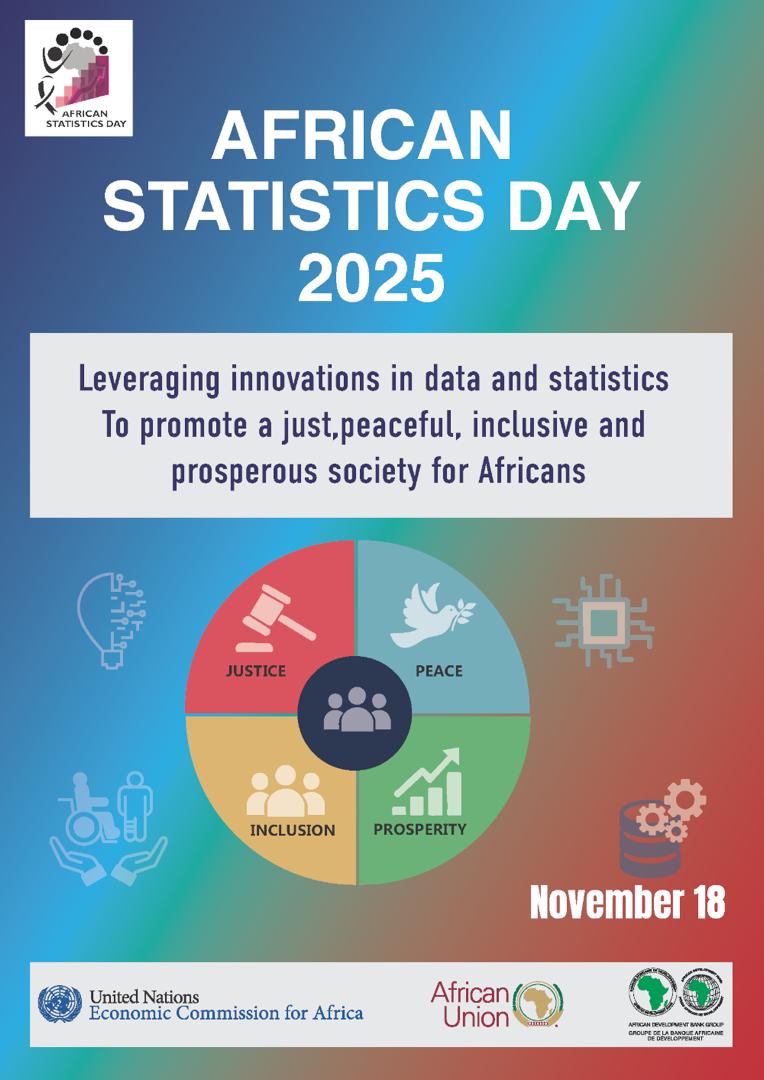
Joshua Muswere
ZIMBABWE today (Tuesday) joins the continent-wide commemoration of African Statistics Day, observed annually on 18 November to raise awareness of the vital role statistics play in driving socio-economic development.
The 2025 celebrations are held under the theme: “Leveraging innovations in data and statistics to promote a just, peaceful, inclusive, and prosperous society for Africans.”
This year’s theme aligns with the African Union’s 2025 theme, “Justice for Africans and people of African descent through reparations.”
In a press statement released by the Zimbabwe National Statistics Agency (ZIMSTAT), the impact of statistics in nation-building was highlighted.
“As Zimbabwe joins the continent in celebrating this important day, we reflect on the power of data in informing policy decisions, driving economic growth and improving the lives of citizens,” the statement reads.
“The African Statistics Day theme highlights the increasing need to embrace technological innovations to strengthen data systems and support evidence-based policymaking.”
Africa continues to face significant development challenges. In 2024, more than one in five Africans experienced hunger, and the continent remains the least peaceful according to the Global Peace Index 2025. Despite improvements since 2015, many countries still lack sufficient data to report effectively on Sustainable Development Goal 16, which focuses on peace, justice, and strong institutions.
“Like other African states, Zimbabwe is investing in modernizing its national statistical system through initiatives to adopt digital technologies, artificial intelligence, geospatial tools, big data sources, and citizen-generated data to produce official statistics.”
“Such innovations have already begun transforming the statistical ecosystem which is crucial for producing timely, reliable and accurate data.”
“Zimbabwe’s use of computer-assisted personal interviewing for all surveys has made it possible to produce data for monitoring the achievement of Sustainable Development Goals, the implementation of NDS1 and formulation of NDS2.”
At the continental level, initiatives such as the SDG 16 Survey Initiative and the Praia Group on Governance Statistics have supported the efficient production of reliable, comparable governance data.
Statistical innovations are not just technological advances; they also impact data collection, quality, efficiency, and the analytical capabilities of statistical endeavors. They are powerful tools that empower citizens, strengthen accountability, and promote inclusive development, ensuring no one and no place is left behind.
“As the National Statistical Office, we commit to scaling up investments in data and statistical innovation; develop new statistical products and digital platforms; and increase engagement with data users to strengthen trust in official statistics.”
“As the continent marks African Statistics Day 2025, Zimstat reaffirms its commitment to building strong, resilient, and innovative data ecosystems that advance peace, justice, and prosperity for all Zimbabweans.”
“Together, let us harness the power of statistics to build a prosperous and data-driven Zimbabwe.”