Online Reporter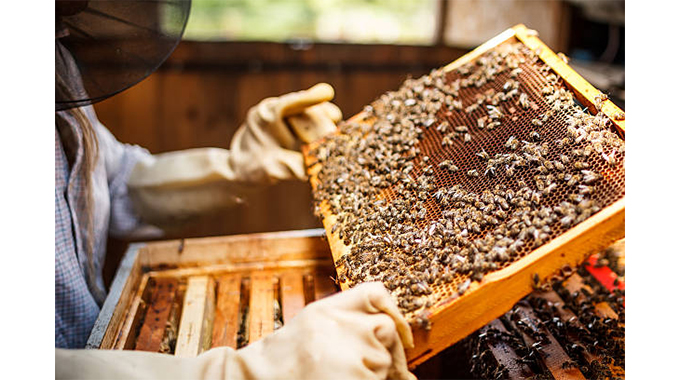
Fungai Lupande-Mash Central Bureau
Bindura University of Science Education (BUSE) recently launched a queen bee-rearing project aimed at artificially stimulating their production using specialised techniques.
The newly produced queens are then distributed to farmers, significantly improving hive colonisation rates and increasing honey production.
In an interview during the World Bee Day commemorations at the university, Dr Admore Mureva from the Department of Natural Resources said the initiative demonstrates how bees can be a powerful force for both agricultural innovation and community empowerment.
He added that the university collaborates with bee farmers and the Mazowe Bee Keepers’ Association to train farmers and develop sustainable, bee-centred solutions.
The institution is offering short courses to equip local farmers with essential bee-keeping knowledge.
“Local farmers have traditionally suffered from low hive colonisation rates. In Zimbabwe, it is not uncommon for a farmer to set up 200 or even 300 hives, only to have 10 successfully,” he explained.
“This discourages many from continuing in Apiculture. To tackle this challenge, the university has launched a queen-rearing project.
“But the innovation doesn’t stop there. We are also drawing on cultural heritage to produce market-unique goods like Masau juice, a locally inspired beverage made from the Masau fruit and sweetened with honey. It is a fusion of tradition and innovation.”
He explained how the university is creating products that are not found anywhere else on the market.
As Zimbabwe joined the global community to commemorate World Bee Day, observed annually on May 20, Minister of State for Provincial Affairs and Devolution Christopher Magomo emphasised the critical role bees play in Zimbabwe’s agricultural economy, biodiversity conservation, and rural livelihoods.
He said bees are far more than just insects.
“They are nature’s unsung heroes and indispensable allies in food systems, with their pollination supporting over 70 percent of global food crops,” he said.
“In Zimbabwe, bees empower women, youth, and smallholder farmers through the growing apiculture sector.”
Minister Magomo also highlighted the urgent threats that bees face, including climate change, habitat loss, and the excessive use of harmful pesticides.
He called for a renewed national commitment to environmental protection and climate-smart bee-keeping practices.
“Let us reduce the use of harmful chemicals, invest in organic farming, and create market opportunities for honey and bee-related products,” he urged.
This year’s World Bee Day was commemorated under the theme “Be Inspired by Nature to Nourish Us All.”
Professor John Surumasaka, Dean of the Faculty of Agriculture and Environmental Science at BUSE, expressed pride in the university’s pioneering role in bee-keeping research and education.
“Bindura University has launched a vibrant honey production project and is working with out-growers in the province and beyond. Plans are underway to establish a honey processing plant,” he said.
He noted that as Zimbabwe continues its journey toward a green and inclusive economy, bees have proven to be a symbol of unity, industry, and resilience.
Mr Timothy Matanga, the secretary of the Mazowe Bee-Keepers Association said they have 500 bee farmers from Chiweshe to Concession to Shamva.
He explained that the association facilitates training for farmers in honey production and the value addition of by-products.
“We supply blueberry farmers with bees for pollination,” he said.
“Without bees, we cannot be food secure. We are here to raise awareness about the preservation of bees.
“We are promoting afforestation because bees depend on forests. We encourage our farmers to construct standard fire-guards to protect the forests and the bees.”
As the province prepares to launch the fire season, Mr Maxwell Mupotsa, EMAs’ provincial environmental education and public relations officer, emphasised the importance of preserving bees and forests.
“We are encouraging communities to establish woodlots and refrain from cutting down trees.”
Mrs Patience Tapomwa, a bee farmer, noted that one of her flagship products is honey wine, a mild beverage with low alcohol content.
“We have a range of beauty products made from honey by-products. The honey wine is highly sought after, and we are unable to meet the market demand,” she shared.
“The wine has health benefits thanks to the honey, including antioxidants and anti-inflammatory properties.”
Tanatswa Goredema, representing Motso’s Honey Company, urged people to avoid wasting honey, as each bee only produces about a teaspoon of honey in its lifetime.