Engineer Creighton Chenzara
IN pursuit of Vision 2030 and in response to growing threats posed by climate change, the Government has launched a major initiative to ensure national food security.
A key part of this strategy is the expansion and modernisation of the country’s strategic grain reserves to guarantee at least three years’ worth of grain supplies, particularly during adverse weather seasons.
Historically, Zimbabwe has relied on 12 silo depots.
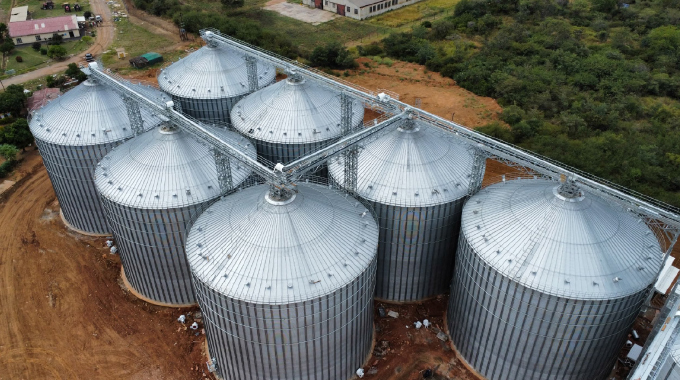
This number has now more than doubled, with the addition of 14 new technologically advanced silo complexes, bringing the national total to 26.
Some of these new silos are also strategically located in drier, less productive regions to act as holding hubs for grain transported from higher-yielding areas.
The new silos incorporate state-of-the-art technologies designed to address common post-harvest challenges.
These include advanced systems for pest control, moisture regulation and grain quality preservation.
Central to these capabilities are integrated sensors and internet of things (IoT) technologies, which enable real-time monitoring and automatic control of storage conditions.
The silos can autonomously regulate in-store temperature and humidity, helping to prevent mould, pest infestation and spoilage.
Authorised personnel can monitor conditions remotely using supervisory control and data acquisition (SCADA) systems or portable devices, improving oversight and reducing human error.
Artificial intelligence (AI) and automation are seamlessly woven into the operations of the new silo complexes.
AI monitors environmental parameters and triggers responsive actions — such as ventilation adjustments or grain flow modifications — to keep storage conditions optimal.
These features ensure long-term storage efficiency, reduce losses and enhance the Grain Marketing Board (GMB)’s throughput.
The new silo depots are designed and constructed with long-term storage in mind.
The overall design and makeup are geared at ensuring minimal post-harvest losses and improving storage efficiency.
The main components of the silo depots are the receiving, conveyancing, cleaning, weighing, drying, storage, ventilation and fire suppression systems.
The receiving area or grain intake mainly consists of an intake pit equipped with a dust extraction system, which ensures that unwanted materials in the form of dust do not enter the silos.
Removing dust is essential for safety, as it reduces the risk of fire and explosion, protects the mechanical components from premature wear and helps preserve the quality of the stored grain.
The dust extraction system is integrated in the design and incorporated everywhere where there is grain movement, like in the drying unit and the conveyors.
Sensors are an integral part of the whole system as they collect valuable information that is used to trigger the necessary system response.
Once received, the grain is moved through a conveyance system that uses drag chain conveyors and bucket elevators.
This system is also automated and controlled by sensors, ensuring efficient energy use and gentle handling of the grain to maintain its integrity.
The conveyance system operates during both intake and dispatch, ensuring smooth movement in and out of the silos.
Another notable feature that comes with the advanced silos is the inline automated weighing system.
This system continuously measures and records the weight of the grain as it moves along the channel.
This is very important for accurate inventory management, quality control and sales inventory.
This system will complement the traditional weigh bridge system, which will be installed as well at the silo depots.
The system comes with high precision and provides real-time data on grain flow and can self-adjust to maintain flow.
Another great improvement on the silo complexes is the integrated fumigation system. The integrated circulation fumigation system consists of phosphine generators, fans, air ducts and detection devices.
The system ensures even gas distribution, effectively killing pests while maintaining safety standards.
The silos also have modern ventilation systems.
These systems adjust temperature and humidity to keep the grain dry, cool and pest-free. Ventilation also supports fumigation by evenly dispersing gases and reducing conditions conducive to spoilage or infestation.
During high temperature seasons, the ventilation system dissipates the heat inside the grain silo, maintains a suitable temperature inside and prevents the grain from deteriorating due to heat.
The ventilation system lowers the temperature and humidity inside the silo, reducing conditions for pests to breed and reproduce, thereby prevent pests from invading the grain.
The new silo depots come with a fully fledged continuous drying system powered by coal and electricity.
This great improvement will come as a relief for the farmers who, at times, were turned away from the depots because of high moisture content in their grain.
A point to note though is that this drying service comes at a cost to the farmer.
AI governs this process as well, adjusting grain flow based on moisture content detected by sensors.
All components of the new silo complexes are driven by AI and automation to minimise post-harvest losses, improve operational efficiency and reduce reliance on manual processes. These innovations are expected to enhance national food security, reduce grain spoilage and deliver long-term savings to the Government.
Engineer Creighton Chenzara is the acting deputy director responsible for post-harvest and agro-processing technologies in the Ministry of Lands, Agriculture, Fisheries, Water and Rural Development.