admin
admin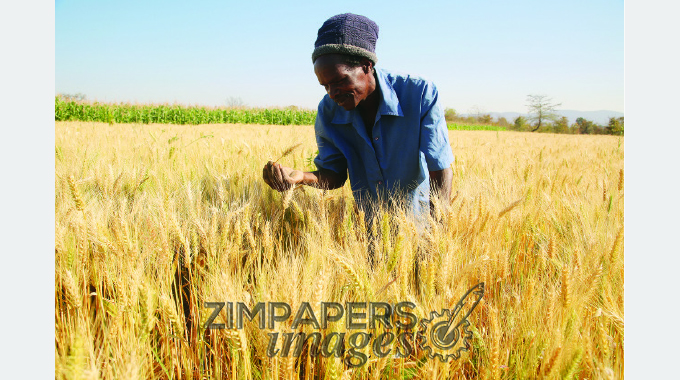
Precious Manomano-Herald Reporter
Harvesting of winter wheat has started around the country as farmers battle to beat the rains which usually compromise the quality of the crop.
Zimbabwe Commercial Farmers Union president (ZCFU) Dr Shadreck Makombe said harvesting by farmers, especially those who had an early crop, was in full swing.
“Farmers who planted their crop in April are already harvesting the crop, most of these farmers are in Marondera while those who planted late in June are still preparing to harvest.
“Harvesting started last week for the early planted crop but in most areas, the late planted crop is not yet ready for harvesting,” he said.
He said there was a possibility that all farmers would harvest before the rainy season if they made proper arrangements for acquiring combine harvesters in groups.
“For those farmers who are likely to harvest in October, they should get in clusters and make arrangements of getting combine harvesters so that they harvest before the rainy season. Moreover, we have pests which also affect these crop so farmers should harvest their crops before they are affected by rains and pests,” he said.
Zimbabwe Farmers Union (ZFU) secretary general Mr Paul Zakariya confirmed that combine harvesters have been commissioned in some areas adding that in the next two to three weeks all farmers will be harvesting.
“Most small scale growers were preparing for harvesting and were in the process of securing and large scale farmers were hiring combine harvesters. The activity will be at peak in the next two to three weeks and 95 percent of the crop will be expected to be harvested by that time,” he said.
More than 85 000 hectares were put under wheat during the 2022 winter season compared to 66 000 hectares last year and this is expected to produce self-sufficiency with a small surplus for the first time since wheat farming started in Zimbabwe in 1966.
Recently, Agriculture, Fisheries, Water and Rural Development Permanent Secretary Dr John Basera said Zimbabwe is likely to be self-sufficient in wheat, with zero imports, and even have a small carry-over stock.
The projected harvest is around 380 000 tonnes against a national annual requirement of about 360 000 tonnes. This gives the country a surplus of about 20 000 tonnes.
The Second Republic has been working hard to push agricultural output and farm incomes by going for self-sufficiency of most food products, since this gives the farmers guaranteed markets and ensures Zimbabwe can cope with any geo-political or global supply challenges. Last season, farmers produced wheat that is enough to cover nine months’ supply to meet domestic demand with GMB receiving 156 144 tonnes from the farmers it had under contract.



 Online Reporter