Online Reporter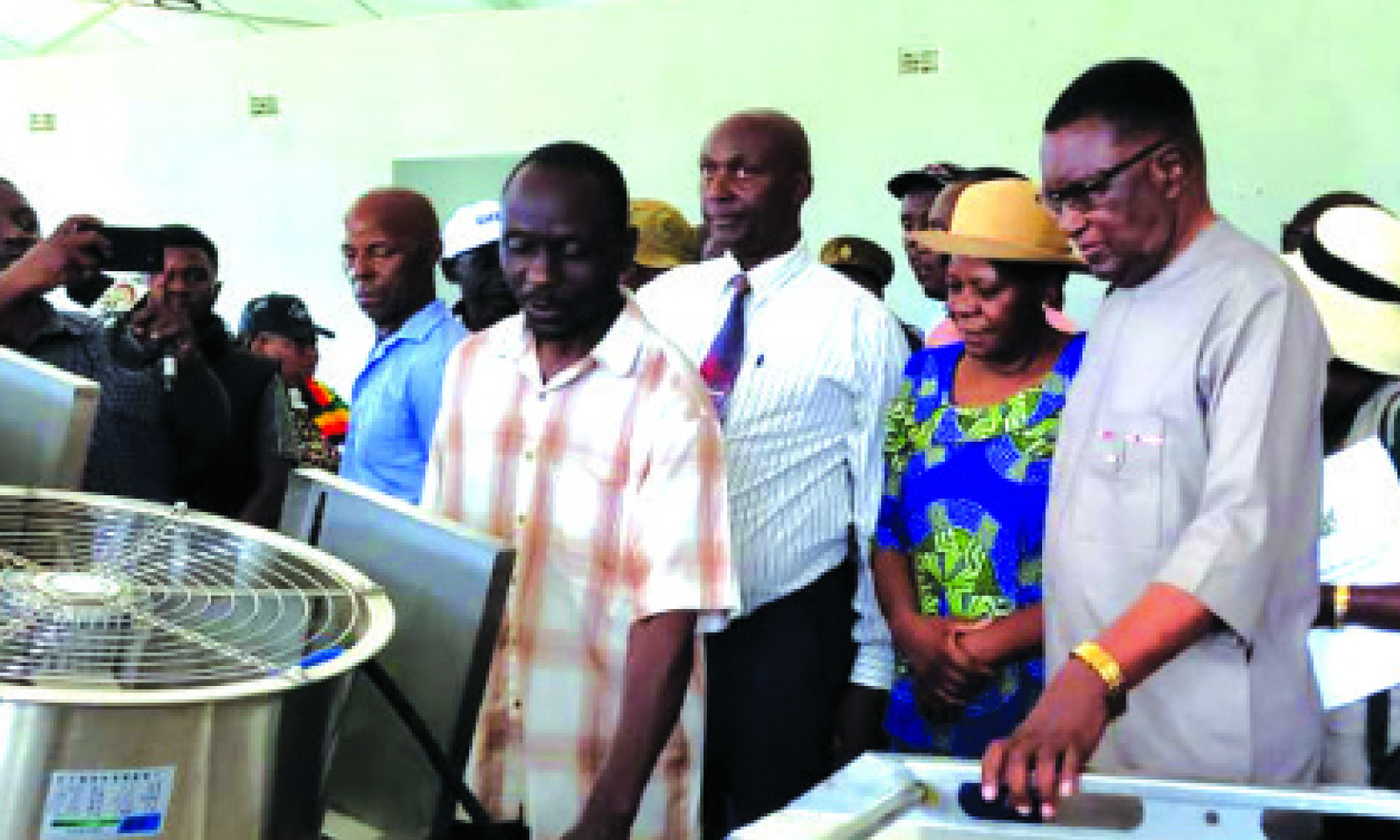
Mutare Bureau
FOR years, banana farmers in Honde Valley have struggled with a simple but costly problem.
By the time their fruit reached markets in Mutare or Harare, much of it was already overripe or spoiled.
With poor roads and limited transport, they were often forced to sell at whatever price middlemen offered — or let their harvest go to waste.
That is now beginning to change with the launch of the Hauna Fruit and Vegetable Processing Plant, a US$450 000 facility that will turn bananas and other local produce into value-added products like flour, chips and cooking oil right in the heart of the valley.
The plant, which is expected to begin full operations in the coming weeks, is seen as a practical step towards reducing post-harvest losses, securing fair prices for farmers and creating new income opportunities for women and the youth.
During a recent tour of the project, Special Adviser to the President on Monitoring Implementation of Government Programmes and Projects Dr Joram Gumbo described the plant as a “game-changer” that represents a paradigm shift in Zimbabwe’s rural economic model.
“This plant is far more significant than the steel and brick before us,” he said.
“It marks a transformative moment, not just for this valley, but for Zimbabwe’s entire rural industrialisation agenda.”
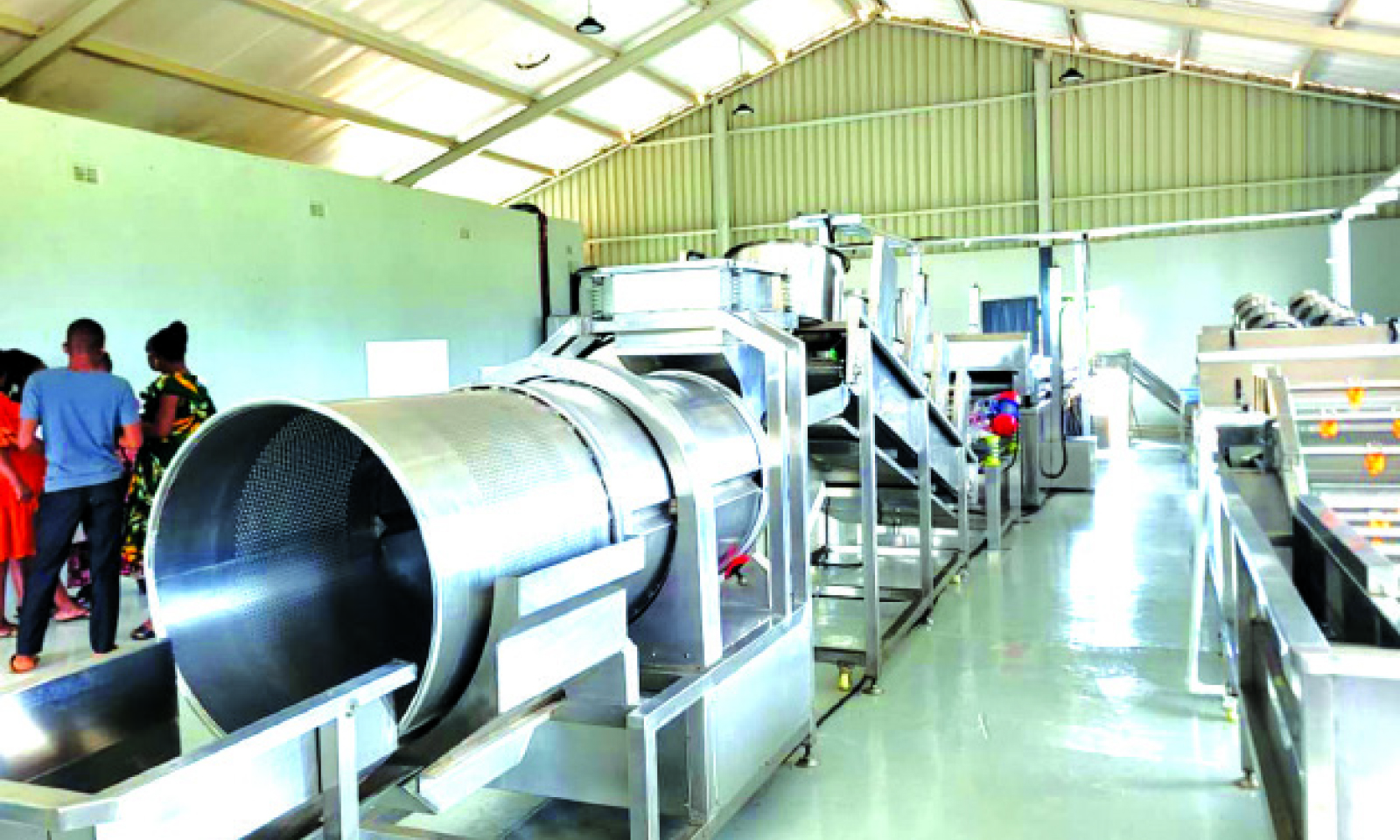
Equipped with modern technology, at full capacity, the plant can process up to 400 kilogrammes of bananas and other crops per hour, producing flour, chips and cooking oil — high-value products that will allow local farmers to earn more from their produce.
At least 600 farmers will directly benefit, while over 2 000 others — mostly women and the youth — in Mutasa and neighbouring Nyanga are expected to gain new income opportunities through contract farming, packaging and supply services.
“For too long, our banana growers and smallholder farmers have suffered huge losses and have been at the mercy of middlemen.
“Today, we confront that vulnerability head-on. By converting raw produce into high-value, market-ready products, this plant immediately eliminates those historical constraints,” he said.
The facility was developed through a partnership between the Government, the African Development Bank (AfDB) and the International Labour Organisation (ILO).
It is managed by the Valley Sharks Agricultural Cooperative Union, a local cooperative that ensures community ownership.
Dr Gumbo described the partnership as a blueprint for inclusive development, noting that such collaborations embody Zimbabwe’s developmental philosophy.
“This is the practical expression of our President’s doctrine that no one and no place shall be left behind,” he said.
“This collaboration is a robust blueprint for how Government, development partners and communities can co-create solutions that deliver verifiable, local impact.”
He added that the project directly contributes to job creation, food security and rural economic growth.
“Rural communities are not merely recipients of development; they are its drivers. Every district must unlock its comparative advantage: bananas here in Mutasa, pineapples in Chimanimani, marula in Mwenezi, and fish in Binga,” he said.
However, he emphasised that success would depend on maintaining high product standards and sustainable practices.
“All products from Hauna must meet global quality requirements. Sustainability is not optional; it is a necessity for long-term viability,” he said.
The Government, he added, will ensure strong financial management and ongoing capacity building so that the facility remains operational for future generations.
A new era for Honde Valley farmers
For farmers who have battled poor roads, high transport costs and low prices, the plant represents a long-awaited breakthrough.
Mrs Betty Masvanhise, Mutasa district head in the Ministry of Lands, Agriculture, Fisheries, Water and Rural Development, said the plant would address the long-standing challenge of post-harvest losses in the mountainous region.
“Honde Valley’s terrain makes it extremely costly and difficult for farmers to transport bananas to Mutare or Harare,” she said.
“By the time they arrive, most of the fruit has ripened, and farmers are forced to accept whatever price middlemen offer.
“This plant brings the market to the farmer. Losses will drop dramatically.”
The facility, she added, would also allow farmers to plan production around actual demand rather than depending on unpredictable buyers.
“We are entering a new era where farmers produce with certainty,” she said.
District development officer for the Ministry of Women Affairs, Community, Small and Medium Enterprises Development Mrs Sheila Mtetwa hailed the project as a major victory for women and young people in agribusiness.
“Markets have always been the biggest challenge,” she said.
“Women and young people would farm, but without buyers, their produce was wasted.
“This project is a dream realised.
“It gives them a guaranteed market and, more importantly, ownership of the value chain.”
For smallholder farmers like Mrs Mutsa Mutete, who has grown bananas for more than a decade, the plant offers hope after years of losses.
“I have thrown away tonnes of fruit because there were no buyers,” she said.
“Now, everything we grow will find a use.”
Another farmer, Mrs Nomore Nyagato, said the plant gives dignity to farmers who have felt used and forgotten.
How the plant works
The Hauna Fruit and Vegetable Processing Plant operates as a small- to medium-scale agro-processing facility designed to add value to fresh produce — primarily bananas — grown by local smallholder farmers in Honde Valley.
Here is how it works:
Farmers bring their harvested bananas (and other fruits) to the plant, eliminating the need for long, costly trips to distant urban markets.
The produce is sorted by quality and thoroughly washed to meet hygiene standards.
Using semi-automated, state-of-the-art equipment, the plant processes bananas in several ways:
Banana flour: Peeled and sliced bananas are dried (using solar or mechanical dryers) and milled into flour — a shelf-stable product used in baking and preparing porridge.
Banana chips: Sliced bananas are fried or dehydrated to produce crunchy, packaged snacks.
Cooking oil: From other oil-rich fruits or seeds (such as avocado or sunflower, when available), the plant can extract edible oil.
Finished products are weighed, sealed and labelled in compliance with national food safety standards, making them suitable for sale in local shops, schools, supermarkets and potentially export markets.
The cooperative manages marketing, ensuring farmers receive fair and prompt payment.
By cutting out middlemen and reducing post-harvest losses, the plant increases farmers’ incomes while stabilising supply.
The entire process is managed by the Valley Sharks Agricultural Cooperative Union, with technical support from the Ministry of Agriculture and development partners.
With a capacity of 400kg of produce per hour, the plant not only preserves food but transforms raw harvests into higher-value goods, giving rural farmers a reliable, dignified income stream.