Chronicle Editor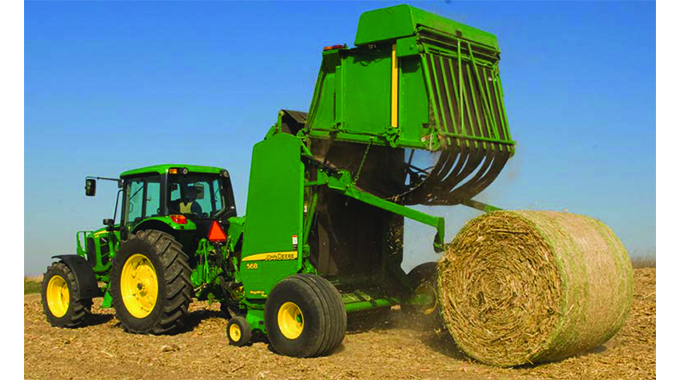
Yoliswa Dube-Moyo, Matabeleland South Bureau Chief
THE ongoing hay baling exercise by the Department of Agriculture and Livestock in Matabeleland South province is expected to reduce the impact of veld fires in addition to providing livestock with fodder.
A target of 30 000 bales has been set with farmers being urged to start hay baling in order to reduce poverty deaths.
Veld fires have over the years resulted in unnecessary material, environmental and economic losses.
Communities’ livelihoods and property have been destroyed, and the natural environment depleted.
Grazing land is also destroyed with Insiza, Matobo, Umzingwane, Mangwe and Bulilima being fire risk districts.
Environmental Management Agency (EMA) Matabeleland South provincial manager Mr Decent Ndlovu said hay baling mitigates the impact of veld fires
“Veld fires escalate where there is tall grass and we’re saying we shouldn’t let that grass be burnt by veld fires.
“When you bale the grass, it means you’re reducing biomass or the fuel load when fire comes.
“In a place where hay baling has happened, it means you can control the fire because there won’t be any tall grass.
But if the grass is tall and no bailing has taken place, it means you’re going to lose everything. So, hay baling is a mitigating measure, which reduces the intensity of fires and also assists us to stockpile fodder for livestock,” said Mr Ndlovu.
He said in most cases where a fireguard is close by, the fire won’t go beyond the boundaries as there will be less biomass.
According to the EMA 2021 veld fire report, 1 million hectares of land were destroyed last year compared to 2020 when 806 000 ha were destroyed, which translated to a 24 percent increase.
Property worth US$370 837 was destroyed by veld fires during last year’s fire season while eight lives were lost.
3 948 fire incidents were recorded last year while 1 178 were recorded during the 2020 fire season.
The agency opened 82 dockets for fire related incidents.
Mashonaland West accounted for most of the offences with 31 followed by Matabeleland South at 22 and Mashonaland East accounting for 17 dockets.
A total of 677 tickets were issued to property owners and farmers for failing to put in place standard fire management measures.
The fire season stretches from July 31 to October 31.
The 2021 fire season came against the backdrop of a normal to above normal rainfall season in the 2020/21 season.
This meant there was a lot of biomass and the country was therefore classified under extreme fire risk. – @Yolisswa



 Online Reporter