Online Reporter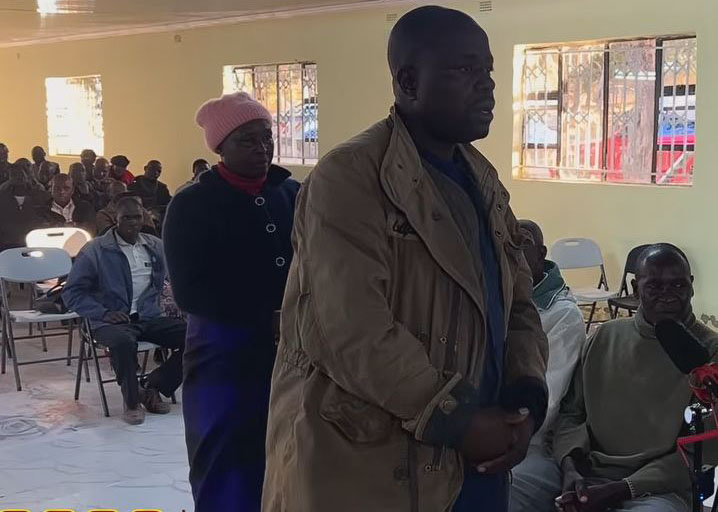
Tendai Gukutikwa
Weekender Reporter
A MAN from Mutasa is embroiled in a long-running family land dispute, accusing his late father of unlawfully selling land that had been bequeathed to him by his late uncle.
Ridzai Muponda claims that his father, the late Tobias Muponda, had no authority to dispose of three pieces of land that he inherited from his uncle and namesake, the late Ridzai Noah Muponda.
Ridzai said his uncle allocated him four pieces of land before his death because he had no biological son.
However, after the uncle’s passing, Tobias allegedly took control of the property and sold three of the four plots to the late Albert Mubari.
The dispute recently resurfaced before Chief Mutasa’s community court after Albert Mubari’s daughter, Junica Mubari, sought an order barring the Muponda family from reclaiming the land.
She argued that her late father legally purchased the property in 1997 and that the Mubari family had occupied it ever since.
Ridzai maintained that the land never belonged to his father and could therefore not have been lawfully sold.
“First of all, the person who should be suing me is Albert Mubari’s son and not her. I was given four pieces of land by my uncle Noah. The land did not belong to my father, it belonged to my uncle,” said Ridzai.
He said he was working in the city when his father allegedly sold the land and only learnt of the transaction afterwards.
“I was working in the city when my father gave them the land. I had already taken possession of it,” he said.
Ridzai said he later confronted his father over the issue.
“I asked my father why he had parcelled out my land. He told me he had only given it to them temporarily,” he said.
Ridzai said the land was handed over to the Mubari family after his uncle’s death, despite having already been designated as part of his inheritance.
“My father gave her father the land after my uncle died,” he said.
He further claimed that an aunt was aware of the inheritance arrangements and the circumstances under which the Mubari family came to occupy the land.
However, the aunt denied witnessing any agreement relating to the land, leaving the court with conflicting accounts over how the property changed hands.
Ridzai’s uncle, Ezekiel Muponda, provided background on the origins of the dispute.
He said Tobias was staying in Malawi before returning home and requesting land from his brother Noah.
“Ridzai’s father, Tobias, was in Malawi and when he came back he asked his brother Noah for a piece of land,” said Ezekiel.
He said Noah later allocated land to young Ridzai because he had no son of his own.
“Noah died, but before his death he gave Ridzai land because he did not have a son and his brother’s son, Ridzai, became like his own son,” said Ezekiel.
Ezekiel, however, confirmed that Tobias later sold part of the land to the Mubari family.
“Ridzai’s biological father then sold some of the land to the Mubari family,” he said.
For her part, Junica Mubari said her family purchased the land in good faith nearly three decades ago.
“Our father bought the land from Sekuru Muponda in Ngarura in 1997. He later died in 2003 and all our brothers moved abroad. We left tenants on the property,” she said.
She said the family only returned to the property last year intending to clear their late father’s homestead, only to be told that ownership of the land was being contested.
“When we went to clear our father’s homestead, Ridzai Muponda told us the matter had been taken before the headman,” she said.
“The headman told us that Ridzai claimed the land belonged to him and that he had inherited it from his uncle when it was sold to my father.”
Mubari said the dispute had initially been resolved with a proposal to divide the land between the two families.
After hearing submissions from both sides, Chief Mutasa questioned why the Muponda family was seeking to reverse a transaction that allegedly took place almost 30 years ago.
The traditional leader told Ridzai that he was primarily entitled to inherit from his biological father’s estate, while Noah’s children were equally entitled to benefit from their father’s estate.
Chief Mutasa further noted that it was difficult to revisit transactions concluded decades ago, especially when the principal parties involved were now deceased and unable to explain the circumstances surrounding the sale.