Online Reporter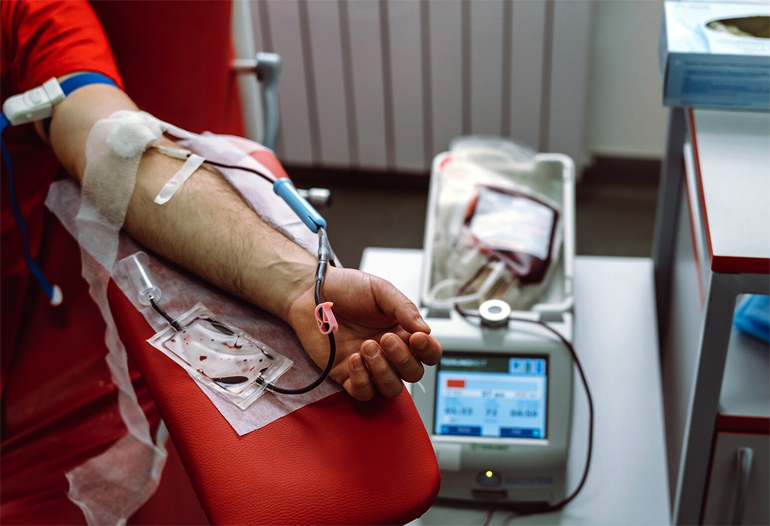
Tendai Gukutikwa
Health Reporter
THERE are gifts that can be wrapped, transferred into a bank account, carried in a bag or placed in someone’s hands.
Then there is blood, which cannot be bought from a supermarket or manufactured in a laboratory.
When someone needs it urgently, the only way to get it is from another human being willing to give. The donor may never know the recipient, their name, see their face or learn what became of them after transfusion.
Yet for someone lying on a hospital bed after an accident, undergoing surgery, battling severe anaemia or losing blood during childbirth – that anonymous gift can mean the difference between life and death.
It is this quiet exchange between strangers that has kept Miss Melatiah Mudzedze (25), Miss Ellen Panganai (27), and many other youthful donors returning to the blood-donation chair.
They are young and busy, yet still find time to donate the precious scarlet liquid year-after-year.
For Miss Panganai, the journey began with curiosity, and in her own amusing admission, an attraction to free biscuits and juice.
In 2018, while she was in Lower Sixth in Bulawayo, she watched other learners responding whenever mobile blood-collection teams came to her school.
Then she became curious.
“I would see other learners going to donate blood, and I also wanted to know what it felt like. There was another incentive, too – free biscuits and juice – so I thought it would not hurt since I would get that as free lunch anyway,” she said, laughing.
The beginning did not remain light-hearted for long.
She has since made about 15 donations.
However, it is not the title or the number of donations that she speaks about most passionately.
“It is the realisation that an ordinary person can possess something capable of helping another person survive. You may feel that you are not doing much, but once you donate, you realise that your blood can save someone,” she said, adding that such realisation is enough motivation.
“Just thinking that your blood is going to help someone is a good enough reason to start donating. You realise that something as simple as giving blood can make a difference in someone’s life,” said Miss Panganai.
For Miss Mudzedze, the inspiration came from watching her mother, Mrs Linah Mtetwa, donating blood.
Mrs Mtetwa started donating long back, and has since made more than 60 donations.
For her daughter, seeing her mother receive recognition for her commitment made a lasting impression.
“I saw my mother receiving her fifth-donation frame and certificate, and that inspired me to become a donor too. I followed her footsteps, and have now made more than 20 donations,” said Miss Mudzedze.
To her, what started as admiration for her mother has since developed into something much more personal.
She now sees blood donation as an uncomplicated expression of kindness, one that does not require the donor to know who will benefit.
“Kindness is in the heart. When you donate blood, you are thinking about the next person who may need it,” she said, adding that the satisfaction is not in receiving something in return.
“It is not about what you get after doing something good. It is about how you feel inside, knowing that you have done something good for someone. God gives us this blood freely. We eat food, but our bodies produce it naturally. So, if I have something that can help someone lying on a hospital bed, why would I withhold it?
“To me, donating blood is simply giving. If I take food or clothes to an orphanage, I do not give them expecting something in return.
“Blood donation should be viewed in the same way,” she said.
That philosophy is particularly important in Zimbabwe, where maintaining a reliable supply of safe blood depends heavily on people voluntarily coming forward to donate.
The history of blood transfusion is itself a story of how one person’s blood can become another person’s chance at survival.
The discovery of the ABO blood groups by Austrian physician, Karl Landsteiner, around the beginning of the 20th Century helped explain why some blood transfusions were successful, while others could be deadly.
Later advances in blood storage, testing and transfusion medicine made organised blood banking possible.
More than a century later, the basic principle has not changed. Blood still has to come from people.
The World Health Organisation identifies blood transfusion as an essential part of health systems, with donated blood needed in situations ranging from severe anaemia and major surgery to complications during pregnancy and childbirth, injuries and other medical emergencies.
And unlike many medical commodities, blood cannot simply be manufactured when stocks run low.
That reality gives the decisions of young donors a significance that extends beyond their own experiences.
In an interview, National Blood Service Zimbabwe chief executive officer, Ms Lucy Marowa, said one of the challenges is ensuring that young people who begin donating while still at school do not disappear from the system when they leave.
It was this gap that led to the establishment of the Pledge 25 Club in 1994, encouraging young people to commit to making 25 safe blood donations before turning 30.
Ms Marowa said the organisation has recorded more than 2 000 young people, who have gone through the programme since its establishment, with some continuing to donate long beyond the 25 donations.
“The challenge now is to bring more young people into the culture of voluntary donation and, importantly, to keep them there,” she said.
Perhaps, however, the most powerful motivation does not come in the form of a certificate, T-shirt, cup of juice or packet of biscuits incentive.
It is the knowledge that somewhere, at some point, another person may need what a donor was able to give.
Miss Mudzedze’s mother taught her that lesson without ever giving her a lecture while Miss Panganai discovered it after what began as teenage curiosity.
Their journeys began differently, but both eventually arrived at the same understanding that blood donation is an extraordinary act built around something ordinary.
A needle. A few minutes. A unit of blood and a stranger whose name you may never know. The donor walks away and returns to work, school, family and everyday life.
Somewhere else, however, another person may receive that small piece of generosity and their heart keeps beating. That quiet exchange sustains lives across Zimbabwe every single day today and tomorrow.