Moffat Mungazi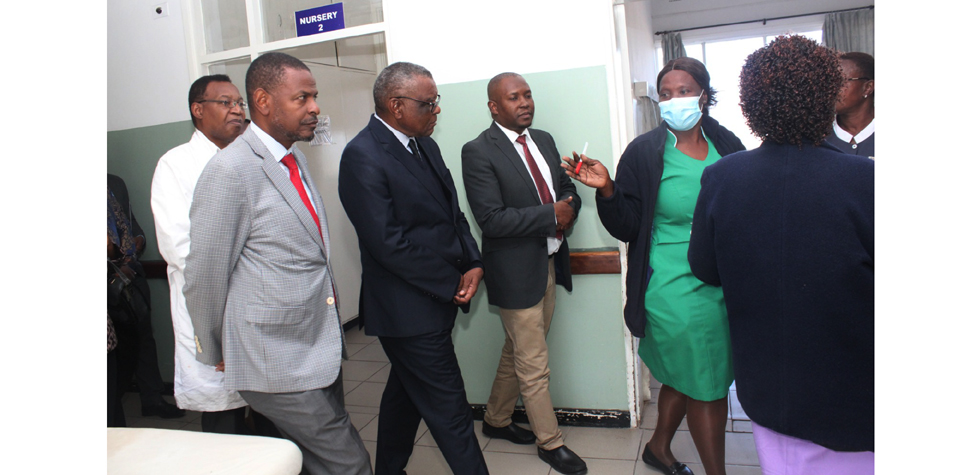
Tendai Gukutikwa
Post Reporter
THE Health Service Commission (HSC) has announced that it will commence implementing job evaluation outcomes for all public sector health workers with effect from July 1, 2025.
This move aims to enhance equity, transparency, and motivation within the health workforce.
Speaking at the official launch of the HSC’s institutional visits and stakeholder engagements in Manicaland held at Victoria Chitepo Provincial Hospital on Tuesday, HSC chairperson, Dr Vincent Hungwe said the comprehensive job evaluation exercise currently underway is part of a broader strategy to establish world-class health service that is responsive, efficient, and accessible to every citizen.
Dr Hungwe said the exercise will enable the Commission to regrade positions accurately, align salaries and working conditions with clearly defined job roles across the health sector.
This initiative will ensure that no individual or community is left behind as Government strengthens its public health infrastructure and retains skilled workforce.
“We are nearing completion of a rigorous and scientific job evaluation exercise for every health professional and support worker in the public health system. What we aim to achieve is a fair, transparent, and equitable grading system that reflects the true scope and demands of each job.
“The job evaluation is, not only about numbers or grades, but also ensuring that our system is anchored on fairness, and that every health worker sees the value of their contribution. We want to foster a competent workforce that is tech-responsive, passionately committed, and prepared to promote, protect, and defend the health of this nation,” said Dr Hungwe.
He said the resulting adjustments in remuneration and conditions of service are expected to take effect from July 1, 2025, and assured stakeholders that treasury has made the necessary budgetary provisions to cater for the outcome of the evaluation.
“This is a transformative process. We are implementing a structured framework, rather than improvising, to build a resilient and effective health system that meets the growing demands of our people. By doing so, we create an environment that motivates our workers and enables us to move towards a world-class health service,” said Dr Hungwe.
He explained that the ongoing institutional visits and stakeholder engagements across provinces are part of the HSC’s strategy to ensure inclusivity and responsiveness to the needs and concerns of health workers.
“Every province matters, and every voice counts. That is why we are engaging with stakeholders on the ground, listening to their concerns, and ensuring that our health professionals are part of this process. Our goal is to create a system that is not only competent but also compassionate,” he said.
Speaking on the sidelines of the meeting, Manicaland Provincial Medical Director, Dr Munyaradzi Mukuzunga welcomed the Commission’s initiative, describing it as timely and well-articulated.
“We appreciate the HSC’s clarity on its roadmap. The chairperson assured us that the job evaluation process will conclude by the end of June, with implementation commencing in July. Some concerns were raised regarding budgetary backing, given the mid-year timing, but he clarified that treasury has already accounted for this,” said Dr Mukuzunga.
He said the entire exercise aligns with the vision of having a workforce that is fit for purpose and capable of driving the country towards Vision 2030.
“The goal is to ensure that we are not merely filling positions, but that our staff is empowered and appropriately placed to meet the health needs of the nation. This initiative is certainly a step in the right direction,” he said.
Victoria Chitepo Provincial Hospital Acting Medical Superintendent, Dr Hillary Makiwa also commended the exercise, describing it as a necessary response to the evolving dynamics in the health sector.
“We are witnessing significant growth in the health sector, and the regrading and evaluation of job posts is essential for keeping pace with this momentum. It enables us to adapt, grow, and improve functionality,” he said.
Dr Makiwa added that staff motivation is a critical factor in service delivery, and that the job evaluation process will help address long-standing concerns.
“As health professionals, we strive to deliver the best possible service. When we know that our roles are clearly defined, our efforts recognised, and fairly rewarded, it drives performance and enhances outcomes,” he said.
Senior nursing officer, Sister Sheila Chimbetete expressed optimism about the forthcoming changes.
“We are excited about the implications of this development. Once job regrading begins, we anticipate improved working conditions, enhanced morale, and a greater sense of professional value. This is something many of us have eagerly awaited,” she said.
The HSC replaced the Health Services Board following the enactment of the Health Services Act in 2022.
The new Commission is mandated to oversee the management and development of the health workforce.
Since its inception, the HSC has been working to overhaul the human resources systems in the sector, aligning them with modern public administration standards and the national vision of a robust and inclusive health delivery system.



 Online Reporter