admin
admin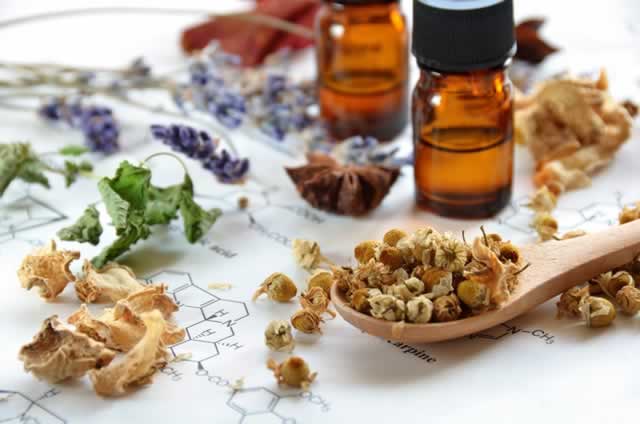

Trust Marandure
Your favourite article this week focuses on herbs and their therapeutic importance. According to the University of New Hampshire Health Services, herbs are widely used today, in teas, vitamins and natural supplements. They have played a major part in medicine for thousands of years. While the benefits of herbal medicine are vast, it is important to understand the basis of herbal medicine and to recognise that some herbs can have negative impacts on health.
Here are the five facts about herbs worth noting:
1] Purchasing Herbs
Try to locate the best source. Do you want the flowers, leaves, seeds, berries, barks, resins, or roots? What form do you want the herb in, whole form [all of the leaves together, not cup up, etc.], pieces, or powdered?
2] Gathering Herbs
Leaves — Gather the leaves as soon as they are fully matured, just before the flowers appear, just before they fade, or at the maturing of the fruit. [Biennials do not perfect their leaves until the second year]
Stems — Cut herbaceous stems after the foliage appears, but before the blossoms develop. Cut ligneous [wood] stems in the autumn, after the foliage falls.
Stalks — Collect stalks in the autumn.
Twigs — Collects twigs in the autumn.
Bulbs — Gather bulbs after the new bulb is developed, just before the leaves decay.
Rhizomes and Roots — Gather the roots of annual plants just before they flower. Gather the roots of biennial plants soon after the leaves have fallen in the autumn of the first year. Gather the roots of perennials in the autumn, after the leaves and flowers have fallen, or in the spring, before vegetation begins.
Barks — Gather barks in the spring, before flowering season begins, or in the fall, after the foliage has fallen. Separate and discard all decaying matter. Only use the inner bark of the slippery elm.
Flowers — Gather flowers when they are about to open the bud. But if it is the buds that you want, gather the buds when they are nicely formed.
Berries, Fruits, and Seeds — Gather them when they are fully mature and ripe.
Aromatic Plants –Peppermint, spearmint, penny-royal, etc, are best gathered after the flowers are formed and nearly open. Gather them in dry weather.
3] Drying Herbs
HOW TO DRY — Dry the various herb materials in a clean room which has no dust, away from sunlight and where it is not too hot or cold.
Do not dry them too fast, for too much heat spoils the herbs.
Guard them from mould — In order to protect them from becoming mouldy, turn them occasionally, so no mould will form. On hang the herbs, so they dry equally throughout.
Leaves — Dry aromatic leaves in the shade. Then place in the sun a short time to prevent fungus. Unscented leaves may be dried in the sunlight, but it is best to dry them in an airy, dry place.
Flowers —The strength of the flower can be judged by the intensity of its colour, so dry flowers carefully, but rapidly, in order to preserve the colour. Give special care to flowers which have volatile oils. Spread the flowers loosely on white paper [although some can be tied in loose bunches and hung with a string from a rafter, etc., in an airy room]. Dry the flowers only in the shade, but place them for a brief time, to prevent fungus growth.
Plants and tops-If the plants are not too juicy, they may be strung in bunches across the top of an airy, dry room.
Bulbs — Peel off the outer membranes. Then cut the bulbs into transverse [straight across] slices, each about half inch in length. Stir them every so often while they dry and move several times, to prevent mould from forming.
Barks, twigs, and woods — Dry in the sunlight or in thin layers in the open air. Do not dry wild cherry bark in the sun.
Fleshy roots and rhizomes — As you did with the bulbs, cut them in transverse slices, about half an inch in length. Stir and move several times during the drying process.
Fibrous roots — Dry these in the sunlight or artificially at temperatures between 65 degrees and 80 degrees F.
4] Storage of herbs
Once the herbs are dry, and as long as they remain in a dry place, they should be good for quite some time. It is generally best to store the herbs in paper sacks in a cool, dry area. The fruits and berries, of course, will be jarred or dried. They are all a blessing from God in heaven.
It is important that you store your herbs properly for longest shelf life. An alternative to storing them in brown paper sacks is to place them in a tight container, not made of plastic [which contains formaldehyde]. The container can be a waxed carton if it is given a wax seal, but glass bottles are best. Never store anything in aluminium.
The stored herbs should be labelled, dated, and well organised in the herbal medicine chest or cabinet. If the particular herb will not be used within a year, then fill the jar to the top, to crown out oxygen, and then seal it with wax.
Herbal oils must be stored in brown bottles, sealed tightly, and kept out of the sun and extreme heat. Powdered forms of herbs will keep up to a year or more and retain fairly full potency, when stored in cool place.
Powdered herbs generally do not need refrigeration. At room temperature, they will keep six months. When hermetically sealed with wax, they will keep two or three years. Herbal powders containing oils [such as cayenne] cannot be stored even a short time in paper, but must be wax sealed in a tight container. Tinctures are best kept in tightly capped 3-oz. coloured glass bottles.
Flowers may be stored in bunches in a dry, airy room or placed in labelled brown paper bags. Fold bags to prevent insect attacks.
5] The Preparation of Herbs
1- Infusion [steeping]. One pint boiling water is poured over 1 oz. dried herb. Cover it with a tight fitting lid, so steam will not escape. Let it stand [steep] 20 minutes. Strain off the clear liquid.
Immediately use or keep in the refrigerator a short time till used. Average dose. Take one tablespoon of the herb per tea cup.
Take three times a day. An infusion is used when the volatile oils in herbs are needed, as in peppermint and spearmint, or when the herb is composed of flowers or leaves.
A ’sun tea’ is made in this way. Put the 1 oz. of dried herb and a pint of water into a large glass jar. Place this in the sun for two to four hours, and the heat from the sun will extract the herb into the liquid leaves.
2- Decoction [Boiling].
a] Place 1 oz. dried herb [or 2 oz . fresh herb] in one and half pints of cold water. Boil for 20-30 minutes [or longer if roots are very hard].
Strain off the clear liquid. [2] Here is an alternative method [which requires more time]. Take 1 oz . dry herb or two. Fresh herb [pulverise for best results], soak for three to 12 hours in one and half pints of cool water. Then simmer in warm water for 30 minutes.
train liquid into a clean container. Allow to settle and cool slightly. Drink liquid while still warm. Average dose one tablespoon to 1 ounce water. Take three times a day. In order to extract the deeper healing qualities of stems, roots, and barks, the herbs must be simmered for 15-25 minutes.
Many times it is left uncovered during the simmering, to evaporate some of the water.
Infusions and decoctions require a brief period of time for their preparation, and both must be used before they sour or growth of the undesirable materials starts [ usually within 24-72 hours].
About the writer: Trust Marandure is a naturopathy practitioner based in Bulawayo. He can be contacted on 0772 482 382 or email [email protected].



 Online Reporter