admin
admin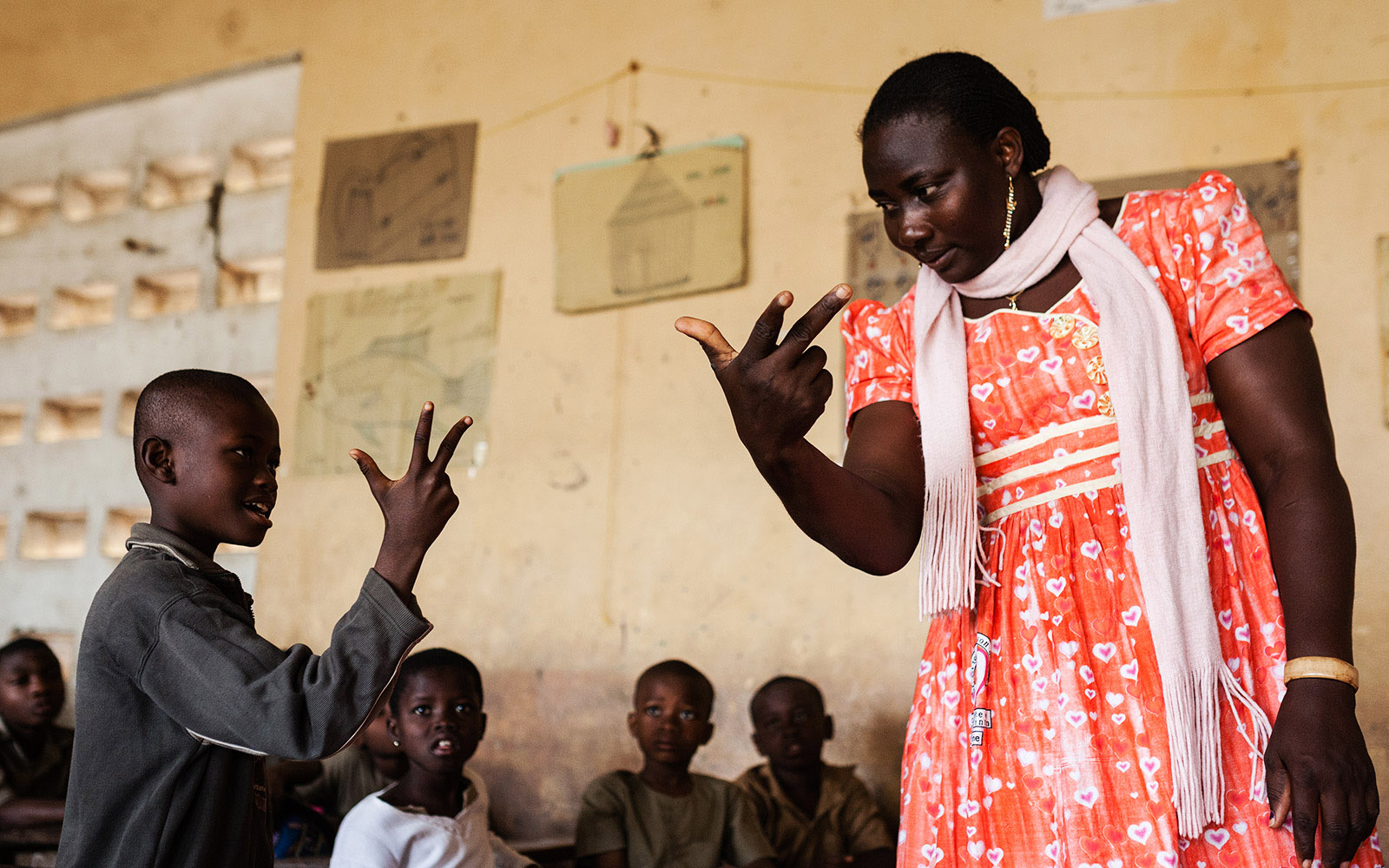
Shelton Mwanyisa
Emerging Issues in Education
Children come to school with abilities and challenges.
Children with hearing impairment are likely to require additional support if they are to make the same progress as other children of a similar age and cognitive ability.
With the right support, commitment and encouragement from families and professionals, these children can develop and achieve anything.
Welcome to the column Emerging Issues in Education.
This week we provide you with information on how schools can help children with hearing impairment to achieve good outcomes.
Adaptations and strategies will need to be put in place for the students to manage the impact of their hearing loss.
Understanding hearing impairment
Hearing impairment is a physical disability that ranges in severity from mild to profound.
The degree of hearing impairment is determined by measuring a person’s sensitivity to loudness.
It must be noted that hearing impairment is not a learning disability and affected have the potential to achieve anything, given the right support.
However, since most teaching and learning takes place through the senses of sight and hearing, children with hearing impairment face particular challenges when trying to learn.
The children have a diverse range of needs, including hearing technology.
It should be noted that there are individuals with hearing loss whilst there are people who prescribe to culture of the hearing impaired such that they use sign language as a means of communication.
Signs and symptoms of hearing impairment
Children may come to school without having been identified as having a hearing loss, or acquire a permanent hearing loss during the early years.
It is therefore important for school staff to look out for any of the possible signs of impairment.
Some of the signs that may indicate a potential hearing loss include failure to respond to instructions.
The child may have challenges with following simple instructions or follows instructions incorrectly.
Some may watch lips intently in order to read the lips.
In some instances, the child will ask the teacher to repeat what has been said.
Some may turn the head in order to hear.
As a result of the need to meet the rights of children and inclusivity the students with hearing impairment may need additional support in order to achieve full potential.
Parental involvement
In any case, parental involvement in the educational processes should be treated as a serious matter.
If the teacher is concerned that a child may have an undiagnosed hearing loss, the school should discuss the matter with parents and suggest that their child is taken to the hospital.
Parents will play a vital role in supporting their child’s communication and learning in general.
They therefore will also be able to provide useful information about their child’s development, their child’s hearing loss, its impact, and how their child is most effectively supported in their own home.
In some cases, the parent will be best placed to communicate the professional appointments, assessments and reports they have received to date.
Childhood impairment has a major impact on learning spoken language as language is acquired through hearing and vision combined.
Research shows that it is almost impossible for a child born with hearing impairment to develop speech.
The impact of hearing impairment on a child can be infuenced by factors such as the age at which they experienced hearing loss.
It is also not unusual that parents may not be aware of the condition of their child.
Assistive technology
Children with hearing impairment use different types of personal hearing technology such as hearing aids, bone conduction hearing systems or implants.
More information about the hearing technology that may be used can be accessed from specialists.
The audiologist will have assessed and recorded how much the child can hear with their hearing technology fitted.
However, it is important to understand that while the hearing technology used is set and programmed to enable the child to hear, it does not replace normal hearing.
Specialist services
A teacher of hearing impaired students acquires further mandatory qualification in working with them.
The children also need regular appointments with an audiologist, who will have assessed the level and type of their hearing loss and will also be involved in selecting the most appropriate hearing technology.
It is unlikely that the audiologist will visit schools but the school can advise the parents to visit audiologists with their child.
Children may also receive support from speech and language therapists who may assess and monitor their understanding and use of language, listening skills, speech production and vocal skills.
In some cases, the speech and language therapist may work directly with the child.
It is important for the school to work with the parents and to develop a transition plan that helps overcome potential challenges.
Sign language
The development of effective communication and language skills is at the heart of learning.
Effective communication also promotes the social and emotional development of all children.
It is important to know the child’s communication needs.
The use of gestures in classroom interaction will augment verbal communication.
Research shows that even a mild hearing loss can result in significant communication diffculties.
The teacher may also need information about different communication approaches that hearing impaired children may be using.
It is also important to ensure that affected students sit close to the source of sound in order to hear.
Collaborative activities
Discrimination and isolation of learners with hearing impairment from the other learners is an abuse of their right to belong to the group.
Successful communication with other children plays an important part in every child’s social and emotional development and inclusion.
Therefore, it is imperative that the school system use collaborative approaches.
Allow the students to participate in group work activities, discussions, drama as well as research.
This is a sure way of ensuring that the children are successfully integrated with their peers.
Collaboration helps to remove stigma and discrimination associated with hearing impairment.
Monitoring
Merely including learners with hearing impairment in the mainstream without attending to their needs and interests is not anywhere close to the meaning of inclusion.
The teachers can monitor how well the child is able to communicate with their peers and how well they respond.
It is important to provide information to other children so that they know how to help the affected child communicate and how to socialiase with them.
The environment
No technology can replace normal hearing and its effectiveness depends on the acoustic quality of the setting.
The listening environment in a typical learning space, such as a hall or a classroom, can make it difficult for hearing impaired children to make best use of their hearing technologies.
Children with hearing impairment will experience difficulty in learning if there is a lot of reverberation and echo in a room (i.e. poor acoustics).
There is a lot of background noise that drowns out the voice of anyone speaking.
A good listening environment is where the signal-to noise ratio is positive, that is the speech of the speaker is much louder than the background noise.
Visual aids
Teaching without media is like building castles in the air.
Visual aids ensure the child is not just relying on listening and lip reading for information.
They are helpful in illustrating concepts and vocabulary and providing a context for a subject or situation.
They also make use of visual memory, which in hearing impaired children may be more developed than their auditory memory.
It is therefore helpful if pictures, illustrations and objects are used to support what is being said spoken instructions are also made visual by using pictures or by demonstrating what is expected.
Remember, a picture is worth more than a thousand words.
It our sincere hope that both parents and the school will adopt some of the strategies raised in order to facilitate positive development amongst learners with hearing impairment in the regular class.



 Online Reporter