admin
admin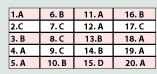
Greetings learners, parents and guardians.
Welcome to your Visual and Performing Arts weekly lessons brought to you by your favourite newspaper, The Manica Post.
Learners are expected to have an exercise book and a pen to write work given as exercises. Parents or guardians are encouraged to assist learners with special needs.
This week we do another multiple choice revision exercise.
Learners are expected to answer all the questions in full.
Answers will be presented in next week’s edition.
1. How many primary colours do we have?
A. four B. two C. eight D. three
2. Which ones are the three primary colours?
A. red, blue and yellow B. red, green and yellow
C. red, amber and green D. red, yellow and purple
3. Mixing yellow and blue makes . . .
A. green B. velvet C. red D. grey
4. Mixing red and yellow makes . . .
A. orange B. green C. brown D. blue
5. Secondary colours are created by . . .
A. mixing water and any colour B. mixing primary colours
C. mixing secondary colours D. mixing powders.
6. The darkness or lightness of colour is called . . .
A. value B. mixture C. texture D. form
7. What is the function of colours in art?
A. to paint B. to convey messages C. to show off D. to make it bright
8. Which colour is added to a hue make tones?
A. red B. blue C. grey D. black
9. Which colour is added to a hue to make shades?
A. red B. blue C. grey D. black
10. Complementary colours are colours that are considered . . . on a colour wheel.
A. opposite B. similar C. primary D. secondary
11. One criteria for analysing artworks is . . .
A. composition and originality B. line and value C. colours and mixture D. texture and value
12. The beginning of a painting or a drawing on paper is called . . .
A. point B. ending C. starting D. line
13. The size of artworks is called . . .
A. line B. point C. shape D. proportion
14. Three dimensional shape on a flat surface depth is created by . . .
A. perspective B. depth C. point D. horizon
15. Works of art are displayed at . . . for promotion.
A. home B. the shops C. schools D. galleries
16. Visual arts records the . . . of the people.
A. emotions B. historical period C. space D. names
17. The Musi o Watunya Falls is a . . . art form.
A. man-made B. copied C. last D. natural
18. The art of producing painting by splashing paint using brushes is called
A. spatter painting B. brushing C. colouring D. printing
19. A collection of songs passed from generation to generation is called . . .
A. an album B. a recording C. a repertoire of songs
D. a masterpiece
20. Implied texture is . . .
A. real B. false C. rough D. smooth
Answers to previous week’s questions:


 Online Reporter