Chronicle Editor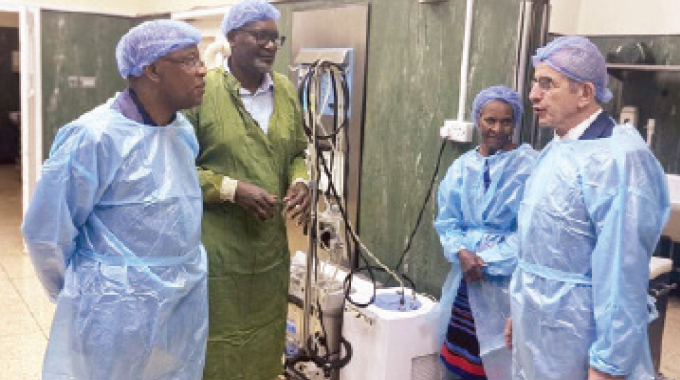
Sifelani Tsiko, Harare Bureau
ZIMBABWE cardiac specialists at the Parirenyatwa Group of Hospitals in Harare have so far managed to conduct 40 open heart surgeries this year as the team continues to make incredible progress to meet a target of 60 operations this year.
Veteran cardiovascular and thoracic surgeon Dr Wilfred Muteweye, told our Harare bureau that his team has gained more ground in its quest to realise its 2024 target of 60 patients.
“We are pleased to announce that our open-heart surgery programme continues to make significant strides. To date, we have successfully performed surgeries on 40 patients,” he said.
“Two weeks ago, we operated on our oldest patient to date, a 65-year-old woman diagnosed with a large heart tumour known as atrial myxoma. We are delighted to report that she is recovering well and is now recuperating at home.”
An atrial myxoma is a tumour, which grows in the left upper chamber of the heart called the atrium.
“As it grows, it can fill the space where blood is supposed to gather. It also blocks the heart valve (mitral valve) thus reducing the blood output from the heart. In addition, the myxoma can break into small pieces and if these pieces travel to the brain they can cause strokes.
“If they travel to the legs or hand they can cause gangrene and may result in someone getting an amputation,” Dr Muteweye said.
The country resumed open-heart surgery at Parirenyatwa Group of Hospitals last year in June after the service was stopped in 2018.

Zimbabwean cardiac specialists are targeting to perform 60 free open-heart surgeries this year as they scale up efforts to significantly reduce the backlog of people needing treatment.
Last year, the team conducted 22 open-heart surgeries. Out of this, three patients died while 19 recovered well.
A team of Egyptian cardiac specialists is in the country to join the team to mark the Pediatric Heart Surgery Week in Zimbabwe.
“This week, we have a Pediatric Heart Surgery Week, focusing on operating on children with congenital heart defects. A specialised team from Egypt arrived on Friday for a special joint surgical camp in Zimbabwe,” Dr Muteweye said.
“Yesterday (November 11) our open heart surgery team together with the Egyptians operated on two children, a two-year-old and a three-year-old, who both had complex holes in their hearts. Both patients are doing well and are no longer on life support. Our goal is to perform surgeries on 10 children throughout the week.”
Dr Muteweye said collaborations in the medical field could help provide comprehensive care to patients and lead to better patient outcomes and more efficient healthcare delivery.
“This surgical camp marks a significant milestone, as it is the first instance of collaborating with an external team since the resumption of cardiac surgery in Zimbabwe. The participation of the Egyptian specialists represents a valuable Africa-to-Africa technical interaction. We look forward to a fruitful exchange, hoping to learn and benefit from their expertise and skills transfer.”
Two international organisations, the Rotary Club and The Gift of Life, supported the surgical camp. The National Oil and Infrastructure Company of Zimbabwe is also a major funding partner for the country’s open heart surgery programme.
Before the resumption of the open–heart operations in Zimbabwe, patients in need of open-heart surgery had to fork out huge sums of money to seek treatment in South Africa, India, Kenya, Italy, Sudan and other countries.
A heart operation in India costs anything between US$8 000 to US$15 000, depending on the complexity of the case. The surgeries being conducted in Zimbabwe are done free of charge.
The country has between 500 and 600 adult patients with rheumatic heart disease awaiting surgery, while every year about 4 000 children are born with congenital heart deformities that need open-heart surgery.


 Online Reporter