

 admin
admin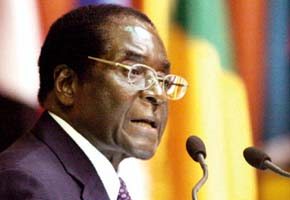
towards preventing and controlling NCDs.”
Cde Mugabe said although Zimbabwe supported a political declaration on the prevention and treatment of NCDs that the two-day meeting was expected to endorse, there was need to fully address the major challenges developing countries faced in dealing with the epidemic.
The declaration essentially outlines a collective attempt to finding a solution to the diseases.
“We, therefore, call upon developed countries to make concrete commitments that are time-bound so as to ensure access to medicines, appropriate technology transfer and further training for our health personnel on NCDs.
“My delegation is concerned that in the quest to protect trade related aspects of intellectual property rights, a human face is lost.
DISCUSS THIS STORY ON FACEBOOK
“There is a tendency to forget that this is a situation of life and death to our affected people. We reiterate that human survival must be more important than anything else.
“My delegation calls upon the international partners to grant flexibilities that will allow pharmaceutical companies in countries of the South to manufacture generic drugs that treat NCDs just as they did for HIV and Aids drugs in the past few years.
“We believe that this would go a long way in ensuring availability and affordability of treatment.”
The Head of State and Government and Commander-in-Chief of the Zimbabwe Defence Forces said the latest World Health Organisation projections that NCDs would affect 52 million people by 2030 should spur world leaders to take mitigation measures.
The majority of new cases are likely to be recorded in the developing world, he said, adding that this would further strain health delivery systems in the affected countries.
“As leaders, we have for a long time focused our attention on other diseases such as HIV and Aids, TB (tuberculosis) and malaria and in the process, have overlooked the growing threat posed by NCDs to humanity.
“Our meeting today awakens us to the reality that NCDs have now surpassed HIV and Aids as the leading cause of death worldwide. We are alarmed by the statistics from the World Health Organisation that NCDs are expected to affect 52 million people by 2030.
“. . .Undoubtedly, this will further strain our already overburdened health delivery systems in the developing world and this, I am afraid, will scuttle the realisation of one of the main objectives of the Millennium Development Goals.
“The scourge of NCDs in developing countries places an enormous social and economic burden on the fragile health delivery system. Consequently, the availability of drugs to our people is compromised and inevitably, the rate of mortality increases.”
President Mugabe said while tobacco and alcohol abuse contributed to the incidence of NCDs, unbalanced diet precipitated by poverty in developing countries, was largely to blame.
“Global food agencies such as the World Food Programme and Food and Agriculture Organisation have noted that many families in developing countries suffer from lack of balanced diet, rendering them susceptible to NCDs.
“Yes, many developing countries, including Zimbabwe, have had their challenges with abuse of tobacco and alcohol, but such factors are only attributable to a small percentage of any country’s population.
“The major challenge in many of our countries is to reduce poverty, which restricts many families to a rigid and unbalanced diet.”
He said that Government was already making efforts to combat NCDs through raising awareness of the scourge. He said authorities have also put in place training programmes for NCD health services personnel, while a second NCD risk factor surveillance would be conducted next year to augment an existing data base.
“We expect the surveillance to complement our yearly NCDs awareness campaign targeting the diseases under the four main NCDs whose modifiable factors include; raised blood sugar level, high blood pressure, obesity, excessive alcohol and tobacco consumption, unhealthy diets and lack of physical exercise,” he said.
The high-level meeting is expected to formulate a co-ordinated global strategy to deal with NCDs, which are defined as medical conditions that are non-infectious.
Yesterday, UN Secretary-General Mr Ban Ki-moon, said the diseases were a threat to economic development.
He said a collective global effort similar to approaches taken against HIV and Aids would ensure success in the fight against them.
WHO director general, Dr Margaret Chan, also advocated lifestyle changes, saying conditions such as obesity could lead to individuals developing some of the diseases.
The meeting continues today with roundtable discussions expected to tackle the rising incidence and socio-economic impact of NCDs and their risk factors.
Also to come under the spotlight will be methods of strengthening the national capacities and policies of member states to address their prevention and control.
The meeting is expected to ultimately adopt an action oriented outcome document. In 2008, NCDs accounted for more than 60 percent of global deaths.
WHO projects the burden of the diseases to increase by 17 percent globally and that the greatest increase of 29 percent is expected to be in Africa. In 2005, Zimbabwe conducted its NCD risk factor assessment, which established prevalence rates of 10 and 27 percent for diabetes and hypertension, respectively.
The WHO Global Status Report on Non-Communicable Diseases in Zimbabwe revealed “an estimated age standardised death rate for all in 2008 to be 697, 8 per 100 000 for males and 533, 4 per 100 000 for females”.



 Online Reporter