Chronicle Editor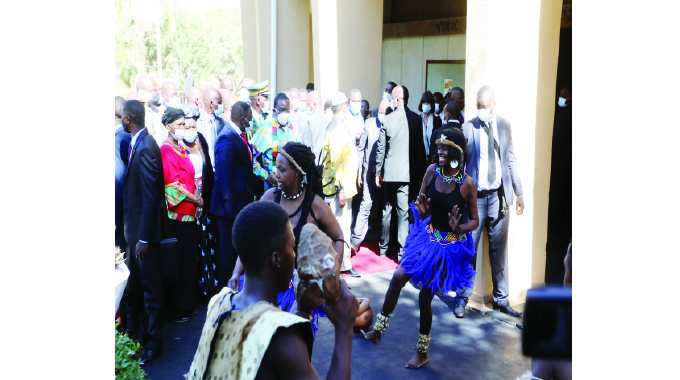
Bongani Ndlovu, Chronicle Reporter
THE Heritage Corridor is a chance to market Bulawayo’s cultural, artistic and heritage through tourism by getting people to visit various urban historical sites in and around the city.
The Heritage Corridor is a walking and driving route in urban and rural areas relating to cultural heritage. The heritage can be built architecture, or it can be a cultural heritage narrative. In most cases, it is in a public space.
The nature of the trail can be seen to be beneficial for community development, community participation, for discovering community heritage and for involvement by community in developing the routes.
On Thursday, President Mnangagwa took on the heritage corridor tour where he visited various historical places around Bulawayo.
The Heritage Corridor trail started at the Inxwala Grounds (found on corner Joshua Mqabuko Street and Masotsha Ndlovu Avenue). This is a place where the Ndebele State, under King Lobengula, held the festival of the first fruits. Inxwala is a sacrificial ceremony of giving the first fruits in a harvest to the ancestors, who are believed to be responsible for the abundance of food. Traditionally, it marked a time of prosperity in the good harvests experienced after the seasonal agricultural period. It also brought the nation together, unifying it at a time of merry-making and quashing fears of famine.
President Mnangagwa, accompanied by his Vice-President Constantino Chiwenga visited the Hanging Tree, some metres away from the Inxwala site, headed south on Joshua Mqabuko Street with revered historian Pathisa Nyathi as the tour guide.
The tree has been fenced and is of cultural significance. Nyathi narrated to the President how nine Ndebele warriors were in 1896 hanged by colonialists thereby crushing Imfazo II or Umvukela to resist colonial occupation. The Ndebele warriors had, Nyathi said, surrounded the colonialists in the present-day City Hall but the tide changed when reinforcements arrived from England.
Some of the warriors were captured and jailed at Grey Street Prison — now Bulawayo Prison — before they were taken to the hanging tree a few metres from the Inxwala Grounds, as a move to desecrate the place.
The trail also took the President to the iconic Joshua Mqabuko statue in the middle of Joshua Mqabuko Street and 8th Avenue in the CBD.
The statue stands on the very spot where colonialist Cecil John Rhode’s statue once stood and was removed after Independence. He also visited the St Mary’s Cathedral Basilica Parish that is found at 9th Avenue and Lobengula Street. The Vatican conferred the status of a Minor Basilica to St Mary’s Cathedral in 2013 in recognition of its history, architectural beauty and the formation of faith. It is the first Minor Basilica in the Sadc region.
The President went on to tour the Joshua Nkomo Memorial Museum along Aberdeen Road in Matsheumhlophe, some 8kms from the CBD. The last leg of the President’s Heritage Corridor tour was at Natural History Museum (corner Park Road and Leopald Takawira). The museum contains exhibits illustrating the history, mineral wealth and wildlife of Zimbabwe, including the second largest mounted elephant in the world. It is one of the five national museums nationwide and the only natural history museum in Zimbabwe.
Zimbabwe Tourism Authority spokesperson, Godfrey Koti, said the President’s visit was unprecedented as he took time to go around a lot of stops in the city.
He said the Heritage Corridor trail by the President was not the only one that Bulawayo has, as there are many other historical sites in the city and also around the country.
“We need to market these heritage corridors as there are plenty of them. This corridor stretches for many kilometres, from Pupu-Shangani and Amagugu. The start of this in Bulawayo is a very significant step in realising and recognising the importance of our heritage and the telling of our story.
“There’s no one who can tell our story better than us and owning our narrative. So that’s what we’re looking at. We hope this can assist us in reincarnating our heritage and ubuntu of the entire block of Matabeleland,” said Koti.
He said the Heritage Corridor in its simpler terms, is the appreciation of the culture and artistic nature of the people of Bulawayo.
“We try to appreciate and tell the story for touristic, culture and heritage preservation purposes. Nhimbe Trust under Josh Nyapimbi and Saimon Mambazo Phiri had this in mind for a long time as they wanted to tell the story of Bulawayo and bring it to life in an artistic way.
“We felt intrigued that if they can bring it to life artistically, why not bring it back in a touristic way. This is why we decided that the Heritage Corridor take part within the Bulawayo Arts Festival. This gave us the impetus to market and tell the story of the people of Bulawayo with financial and social benefits,” said Koti.



 Online Reporter