Online Reporter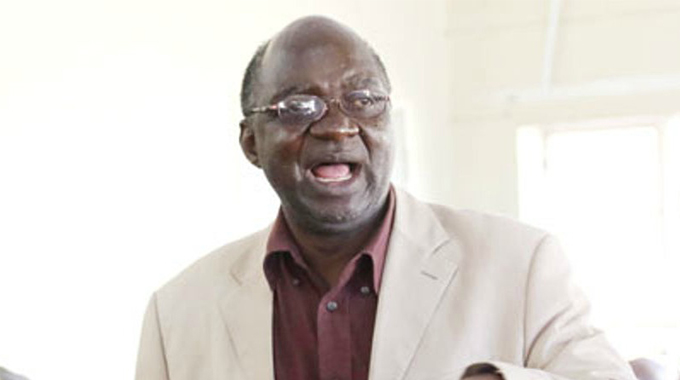
AS Zimbabwe prepares to celebrate Heroes Day on August 11, Zimpapers Politics Hub Senior Writer, Joseph Madzimure(JM) sat down with Zanu PF Secretary for War Veterans, Cde Douglas Mahiya (DM), to discuss the significance and relevance of this important day. Here are excerpts of the interview.
JM: Cde Mahiya, Heroes Day is just around the corner. Can you tell us the meaning of Heroes’ Day and why we need to commemorate it?
DM: Zimbabweans are a society that, despite being victims of colonialism, did not lose their identity. They remained united against imperialism. This is evident in the generation that joined the liberation struggle; they carried both Shona and Ndebele names. These names symbolise how the people of Zimbabwe, after colonisation, reorganised themselves and made a collective pledge. Each family committed to contributing to the formation of a new army against imperialism, which ultimately became ZANLA and ZIPRA, leading to the establishment of Zimbabwe.
JM: So is it generally the bravery of the people of Zimbabwe that must be celebrated on Heroes’ Day?
DM: Indeed, it’s not just about individual contributions, but the collective bravery of the people of Zimbabwe. They organised and took up arms against imperialism, which is what we should truly commemorate on Heroes’ Day. It’s a celebration of unity in the face of strong imperial forces.
JM: And what does that mean to the current generation?
DM: The current generation must understand that without bravery and being principled, it is difficult to meet your objective, it is difficult to determine your destiny, to be identified with your people, your identification, people without a history, people without a history do not have a future. So unless people of Zimbabwe give value to the bravery of the people of Zimbabwe by organising an army against imperialism, then they cannot be identified as Zimbabweans. So their identity comes from the bravery, the capacity to unite against the common enemy, which should be done even now, because it now becomes a principle that together we are able to do it. Hence the President says, Nyika inovakwa nevene vayo, igotongwa nevene vayo.
It is the bravery that is more important, and this is where the bravery issue comes in.
And those who participated during the liberation struggle demonstrated their will to maintain the Zimbabwean society’s values, which is self-determination.
JM: What do you expect as war veterans on the day?
DM: On this important day, we must recognise and honour our living war veterans. It’s crucial to reflect on what is required to ensure they are respected and celebrated by society.
We need to talk more about the contributions of our war veterans and the sacrifices they made. They deserve our admiration, respect and gratitude. War veterans are the embodiment of heroism; they sacrificed for national independence, often without expectation of reward.
JM: As war veterans, is the spirit of the liberation struggle still binding you?
DM: It appears that some individuals are trying to create division among war veterans. Such discord can undermine the unity and support essential to these groups. It’s important to address misunderstandings constructively and foster open dialogue. By focusing on shared goals and strengthening communication, we can maintain solidarity and purpose within the community.
For seasoned war veterans like myself and others, the topic of knowledge systems collusion is familiar. The European imperialist knowledge system, which began its narrative of barbarism and colonisation, significantly impacted Africa until the Berlin Conference of 1884.
Africa has historically engaged with knowledge systems in a more harmonious manner compared to the often radical and hostile approaches seen in Western frameworks. This divergence led to a collision at a revolutionary level, where the oppressed rose against their oppressors.
Today, we see two distinct knowledge systems coexisting. Some individuals have been socialised and educated within a revolutionary context, emerging with ideologies aimed at self-development and the advancement of African and Zimbabwean society. Conversely, others have been shaped by the imperialist knowledge system, which continues to wield influence.
Understanding and continuously defining these principles is crucial for addressing internal conflicts. The real challenge lies in uniting these differing viewpoints to effectively confront adversaries, particularly those from within the same society who may not align with the revolutionary ideals.
This situation reflects the complexities of Zimbabwean society, where the fight for self-determination is intertwined with educational and ideological divides.
JM: Taking you back, what mechanisms are in place to monitor the rehabilitating of provincial Heroes Acres?
DM: This is particularly important for those who lie in Provincial Heroes Acre and National Heroes Acre. On this day, our nation should visit these sites to pay tribute to those who gave their lives for our liberation. Just as families visit the memorials of the world wars, Zimbabweans should express their gratitude for the heroes who helped us break free from the grip of imperialism.
Recognising these individuals is crucial. We must acknowledge their contributions and uphold their legacy, ensuring that their sacrifices are never forgotten.
It is essential to honour those who fought for our independence, as their sacrifices remain significant even after their passing. Their value cannot be diminished by death; instead, we must continue to respect, honour, and recognise them.
JM: But do you have a programme for them during the Heroes Day?
DM: At the national level, the spirit of remembrance is strong. There is a persistent desire to honour this legacy, and such gatherings have become a regular occurrence in the country.
People come together at both national and provincial levels to commemorate and show respect. Additionally, the issue of national heritage sites is crucial for preserving our history.
JM: What do you think needs to be done to ensure heritage sites can be accessed by the current generation and they can be visible?
DM: I believe the Government should allocate more resources to the maintenance and construction of significant historical sites. Among these are Dzapasi, Dendera, Kilo, Lima, Juliet, Golf, Echo, Delta, Charlie, Bravo, Alpha, Papa, November, Quebec, Mike, Hotel and Romeo Assembly Points
It is crucial for future generations to visit and appreciate these sites, allowing them to understand our nation’s history. These locations represent a pivotal stage in our revolution — the transition from reclaiming political power to entering the economic phase of that struggle. Therefore, it is essential to develop and preserve these heritage sites for generations to come.
To ensure that historical or cultural artefacts are accessible and visible to the current generation, several steps can be taken, to create high-quality digital versions of artefacts, allowing easy online access. This includes virtual tours of museums and archives.
We should develop engaging and interactive displays that utilise technology, such as augmented reality or virtual reality, to enhance the visitor experience. Also, we can organise outreach programmes and workshops in schools and communities to raise awareness about the importance of these artefacts.
Another option is to present diverse perspectives in exhibitions to reflect different cultures and histories, making the content relatable to a wider audience.
Platforms such as Instagram, TikTok, and X should also be used to share stories and visuals of artefacts, reaching younger audiences where they are most active.
Partnerships with educational institutions and organisations are also important to create programmes that connect artefacts with contemporary issues.
JM: Last but not least, we have seen the President initiating empowerment programmes for War Veterans. Any comments?
DM: We are grateful that the President, a war veteran himself, has remembered us. It’s exciting to see that something is finally happening. Although quantifying economic disparities is challenging, it’s evident that the President is taking steps forward. He has a vision that may be hard for ordinary people like us to fully understand, but we appreciate the progress being made.
We are happy that President Mnangagwa launched empowerment programmes for war veterans, including a farm mechanisation initiative and a US$2 million kitty that goes towards the Presidential War Veterans Empowerment Revolving Fund, to be shared equally among all the country’s 10 provinces.
The President also extended his generosity with another US$2 million to war veterans dependants, war collaborators, non-combatant cadres and ex-political prisoners and detainees. The funds will be shared among the four categories, with each receiving US$500 000.