admin
admin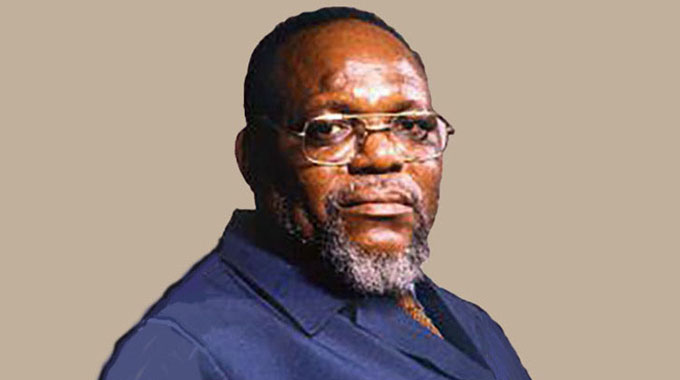
Lovemore Chikova Assistant Editor
Every second Monday of August, Zimbabweans come together to celebrate those whose who sacrificed everything, including their lives, to fight for the liberation of the country from colonial exploitation.
It was a fight worth it, for it resulted in the country gaining freedom and the people taking charge of their affairs once more.
This year, Heroes Day falls on Monday, August 14, exactly one week and two days before the country holds its harmonised elections on August 23.
This makes the celebrations unique in that rarely does the country have such important events falling within such a short period of each other, considering that the harmonised elections come once in every five years.
The last time in 2018, Heroes Day and the harmonised elections took place more than two weeks apart.
But this time around, the gap is narrowed to only one week, making the two unique days fall within a shouting distance of each other.
Voting, especially one-man-one-vote, is one of the issues which formed the top grievances that drove thousands of Zimbabweans to take up arms to fight for independence.
These are the heroes that will be celebrated on August 14, a week before the country goes through one of the important events which they sacrificed their lives for.
This means in the month of August, Zimbabweans will have two important tasks to complete — attend Heroes Day celebrations in their large numbers and then put the icing on the cake by voting in their droves for Zanu PF, the only party that produced the heroes they would have celebrated a week earlier.
This link between Heroes Day and harmonised elections is quite interesting, especially as the country moves to consolidate the gains of independence through a much accelerated development programme.
This unprecedented development programme, being spearheaded by President Mnangagwa under the Second Republic, is cause for celebration, and it is important that two occasions have been presented in August — the month of heroes — for Zimbabweans to show detractors that the country will never revert to colonialism.
Equally important is the Zimbabwe Defence Forces Day that falls on August 15, the day after Heroes Day.
In anticipation of Heroes Day, it is important to have a look at the lives of the country’s heroes and their sacrifices for independence and freedom.
The late former Vice President Simon Vengesayi Muzenda is one such national hero whose life deserves to be continually celebrated, for he played an extraordinary part in the liberation struggle.
On Sunday, the Second Republic organised an all-night musical gala at Nyika Growth Point in Bikita, Masvingo, in honour of Cde Muzenda, which was attended by thousands of villagers at Gwindingwi High School grounds.
The gala was dubbed the “Mzee Bira Music Gala” and took place in the evening of the day when President Mnangagwa and Zanu PF attracted a record 124 000 people at a rally at Chinorumba High School in neighbouring Zaka district.
Cde Muzenda was affectionately known as Dr Mzee and liked his traditional dances during bira celebrations, hence the name Mzee Bira Music Gala.
Various musicians belted out their tunes, including Sulumani Chimbetu, Enzo Ishall, ZRP Police Band, Chief Hwenje, Sebastian Magacha, Mathias Mhere and ZCC Mbungo Brass Band.
This was meant to celebrate the life of Cde Muzenda, who died on September 20, 2003 at the age of 80 and was buried at the National Heroes Acre on September 24.
The late former Vice President Muzenda served as the inaugural Deputy Prime Minister of Zimbabwe from 1980 to 1987 and as Vice President from 1987 to 2003 when he died.
He was a towering figure on the national political landscape, his name reverberating throughout the continent of Africa and beyond.
Speaking on the 19th anniversary of Cde Muzenda last year, President Mnangagwa described him as a revolutionary and fearless freedom fighter who devoted his entire adult life to the liberation of his motherland from the shackles of colonial bondage.
He said Cde Muzenda played a pivotal role in uniting and building a nation emerging from a protracted liberation war.
“A revolutionary and fearless freedom fighter and revolutionary who devoted his entire adult life to the liberation of his motherland from the shackles of colonial bondage, Cde Muzenda, as the Vice President was fondly known, played a pivotal role in uniting and building a nation emerging from a protracted Liberation War,” said President Mnangagwa.
“Soul of the Nation’ and a down-to-earth politician who always championed practical solutions to challenges, Cde Muzenda preached unity, peace and love across the length and breadth of the land of his birth.
“Our memories of VaMuzenda as a cultural icon will always inspire current and future generations to cherish their freedom and identity, and to relentlessly work for the betterment of mankind.”
In honour of Cde Muzenda as a cultural icon, Government has since designated his residence in Masvingo’s Mucheke suburb as KwaVaMuzenda Heritage Site, also meant to celebrate the life of the veteran nationalist.
His former residence in Mucheke A suburb during the formative days of black resistance against the racist Rhodesian colonial regime in the late 1950s was turned into a heritage site after his demise.
Cde Muzenda residence comprises two huts and various other paraphernalia he used during his stay in Masvingo.
Government, through the Zimbabwe Tourism Authority, designated KwaVaMuzenda Heritage Site as a tourist attraction in honour of the late VP.
Cde Muzenda was given freedom of the city of Masvingo during his lifetime and there have been calls for the erection of his statue in the country’s oldest town and his home town of Mpandawana in Gutu as a way of remembering him.
To show the iconic nature of Cde Muzenda, in 2021, his family handed over some of his artefacts to the Institute of African Knowledge (INSTAK) for display at the Museum of African Liberation, which is taking shape in Harare.
The artefacts, which included walking sticks, axes and a saw, were used by Cde Muzenda during and after the liberation struggle.
The museum is a continental project meant to document, preserve, protect and promote the continent’s liberation history.
According to authentic biograph of Cde Muzenda, he had a huge dose of humour, humility and steadfastness that propelled him to become an epitome of happiness and peace in the country.
He was born on October 28, 1922 to a family of peasant farmers in Headman Ndawi’s area in Gutu at the height of British rule.
He went to Nyamande Primary School at the age of 14 and then proceeded to Gokomere Mission, and afterwards to Domboshawa in 1944 where he trained as a teacher.
As early as 1945, Cde Muzenda demonstrated a high degree of political consciousness when he turned down a farming scholarship to train as an agricultural demonstrator, arguing that the career would require him to supervise the killing of cattle belonging to his fellow African people under the colonial government’s countrywide de-stocking programme.
He taught at Empandeni Mission where he met a young school teacher, Robert Mugabe, and started a friendship that though set to blossom years later, would at first be nothing more than a fleeting encounter.
His passion for education made him to enrol at Marianhill College in South Africa for a three-year diploma in carpentry.
After completing the course in 1948, he taught at Mazendo Catholic School, Mayville, Durban until 1950 when he returned home where he was soon to marry his childhood sweetheart, Moudy Matsikidze, before settling in Bulawayo.
In South Africa, Cde Muzenda was inspired politically by the activities of one Reverend Michael Scott, who was fighting the Group Areas Act in then apartheid republic. Then, he was in the congenial company of several fellow Zimbabweans, notably George Silundika, James Dambaza Chikerema and Mutero, all of whom were later to play vital roles in the fight and subsequent overthrow of the unjust, racial and colonial white rule.
About this time, controversy raged over the proposal to create the Federation of Northern Rhodesia, Southern Rhodesia and Nyasaland. Alongside the efforts of other nationalists, the notion and reality of a Federation was to be the target of young Simon’s political struggles.
Armed with political experience earned from his sojourn in South Africa, Cde Muzenda got involved in burgeoning trade unionism in Bulawayo.
His first employment was as a clerk in a plywood factory before moving on to furniture factories, Modern Furniture and later Wilfred Mart.
It was not very long before he opened his own workshop in Barbourfields, an African township that was a citadel of trade unionism.
During that period, Cde Muzenda became enmeshed in the activities of the Barbourfields Tenants Association, which was one of earliest bodies established in the country to articulate and champion the concerns of the black African urban dwellers.
In 1953, Cde Muzenda came to national prominence when he was elected Secretary-General of the British African National Voice Association, better known as “African Voice”.
The legendary Benjamin Burombo was the President of the African Voice. From those early days of the struggle until his accession to one of the highest offices in the land at Independence, Cde Muzenda has been an integral part of the liberation movement.
Cde Muzenda later moved to the Midlands town of Umvuma (Mvuma) in 1955, where he stated a carpentry business. In 1957, the late Vice President was involved in the Southern Rhodesia African National Council (SRANC) as it opened its branches in the then Southern Province (Fort Victoria).
Whilst in Umvuma, he was one of the guiding personalities who were instrumental in the formation of National Democratic Party (NDP) in 1960. He became chairman of the Umvuma Branch of the National Democratic Party (NDP) in 1961 and was subsequently elected as the Organising Secretary of the Victoria Province at its Congress held in Bulawayo the same year.
When the NDP was banned on December 9, 1961 by the Edgar Whitehead settler regime, it was succeeded by the Zimbabwe African People’s Union.
Again, Cde Muzenda, unrelenting as ever in his revolutionary drive, soon took his place in the structures of the new party as administrative secretary of Fort Victoria.
In 1962 Cde Muzenda was banned from entering the African Tribal Trust Lands after he had recited the African prayer “Nehanda Nyakasikana”.
He challenged the ban in the High Court in Fort Victoria where he was defended by another great son of Zimbabwe, the late Cde Herbert Chitepo.
That same year in 1962, Cde Muzenda was arrested at Shabani (Zvishavane), for what the colonial authorities alleged had been a seditious speech, blamed for igniting riots in the small mining town.
He was sentenced to 12 years in prison but served only two years at Salisbury Prison, a time he used productively.
After his release, he attended ZANU’s first Congress in Gwelo in 1964, where he was elected Deputy Organising Secretary. He was arrested soon after his election, when the colonial regime’s law and order minions detained him for possessing a small starter pistol.
He was convicted of the alleged offence and served his term at Wha Wha Prison in 1964 and later at Sikombela where he reunited with other nationalists.
Around that time – the mid-60’s, Cde Muzenda had started recruiting young Zimbabweans for military training in Ghana, China and other friendly countries.
When ZANU was outlawed, Cde Muzenda was placed under detention and restricted to within a 10-mile (16 km) radius from Umvuma Post Office.
But he got the better of the regime by arguing that as a carpenter, he needed free movement to secure timber.
He was allowed a radius of 62 miles (99,7 km) and used this concession to mobilise the people in Fort Victoria, Que Que (Kwekwe) and Gwelo.
More spells of detention came and he was taken to Wha Wha in Gwelo, Sikombela and Salisbury, together with other liberation fighters.
Eager to further his education, Cde Muzenda, while in detention pursued private studies and passed 8 O-Levels and two A-Levels.
He also took the London Chamber of Commerce Examinations and passed the Intermediate Certificate level in English and the Higher Certificate level in economics.
Cde Muzenda was released in 1971 during the Anglo-Rhodesian negotiations which culminated in the infamous Pearce Commission.
Once out of detention, he again engaged in the struggle, mobilising the nation against accepting the Pearce Commission proposals. The British-sponsored constitution was resoundingly rejected by the people.
That same year, he was elected Secretary for Law and Order for the African National Council. He was posted to Zambia in 1972 as Deputy Administrative Secretary of the ANC on a mission to unify the liberation forces under the Zimbabwe Liberation Council.
In 1974, he organised young recruits in the camps in Zambia and Tanzania, and then visited other camps to co-ordinate guerrilla fighters’ activities.
In 1975, he moved to Zambia and later to Mozambique.
In 1977, Cde Muzenda was elected Vice President of ZANU (PF) at its Congress-in-Exile held in Chimoio, Mozambique.
On the diplomatic front, Cde Muzenda attended the Geneva Conference in 1976. The talks were preceded by the formation of a political pact between the two main liberation forces confronting the white minority government, ZANU and ZAPU.
Cde Muzenda also attended the Anglo-American proposal talks in Malta and Dar es Salaam.
During the same period, Cde Muzenda suffered a personal tragedy when he lost one his children during the Chimoio attack, where innocent and defenceless Zimbabweans were attacked by the murderous Rhodesian soldiers.
With the struggle intensifying and the Patriotic Front on the verge of overrunning the regime, the Lancaster House talks were convened in 1979 and once again Cde Muzenda played his part.
Relentless pressure from the Patriotic Front resulted in the Lancaster House Agreement which ushered in political independence in 1980.
In recognition of his selfless and unparalleled contribution to the liberation struggle, Cde Muzenda was appointed Zimbabwe’s first Deputy Prime Minister and Minister of Foreign Affairs in 1980.
Following the signing of the Unity Accord between PF-ZAPU and ZANU (PF) on December 22, 1987, Cde Muzenda and Dr Joshua Mqabuko Nyongolo Nkomo were in 1988 appointed Vice Presidents.


 Online Reporter