Online Reporter
Kundai Marunya-Herald Correspondent
THE idea of a nationalised healthcare system run by black Zimbabweans was once a distant dream in colonial Rhodesia, where black people were relegated to second-class citizens and denied access to quality education.
At first there were challenges to those determined to pursue careers in the medical field.
Firstly, fewer black students would get secondary education due to bottlenecks imposed by the settler system, which meant fewer candidates would get into fields like medicine.
Then there was the absence of medical schools, long before the establishment on the University of Rhodesia and Nyasaland in the 1950s.
The university only established a medical school in 1963, which was affiliated to the University of Birmingham in the UK.
It took extraordinary courage, sacrifice and defiance for the first black medical professionals to navigate through these barriers.
They had to travel to train in foreign lands such as South Africa and Europe — only to return and serve a population systematically denied proper healthcare.
The first black Zimbabwean doctor was Tichafa Samuel Parirenyatwa, who, after graduating with a BSc in Hygiene from Fort Hare University in 1950, proceeded to study medicine at the University of Witwatersrand.
Though on a bursary, and with some financing from an American benefactor who funded his upkeep, his path was not smooth sailing.
At some point, his bursary was revoked due to his involvement in student political activism and his work with the Youth League of South African National Congress.
As a qualified doctor, he started working at the Old African Hospital in the then Salisbury before moving to Harare Hospital when it was opened, and was later appointed Government Medical Officer.
He also worked at Antelope Mine in Matabeleland, where he would face a great challenge of winning over white patients who were skeptical about being attended to by a black doctor. But even that challenge was not too hard for him to overcome.
When he finally left public service to open a private practice, popularity followed him at his surgeries in Highfield and on Kingsway (now Julius Nyerere Way).
He would juggle the pressure of running a private practice, being on the Selection Committee for further training of nurses and subsequently being ZAPU vice-president when it was formed.
Unfortunately, he did not live on to continue his valuable contributions in both the medical fields and political arena, passing on in 1962 at the age of 36.
Dr Herbert Ushewokunze was another pioneer in the field, also studying in South Africa before returning home to join the Rhodesia Railways as a medical officer.
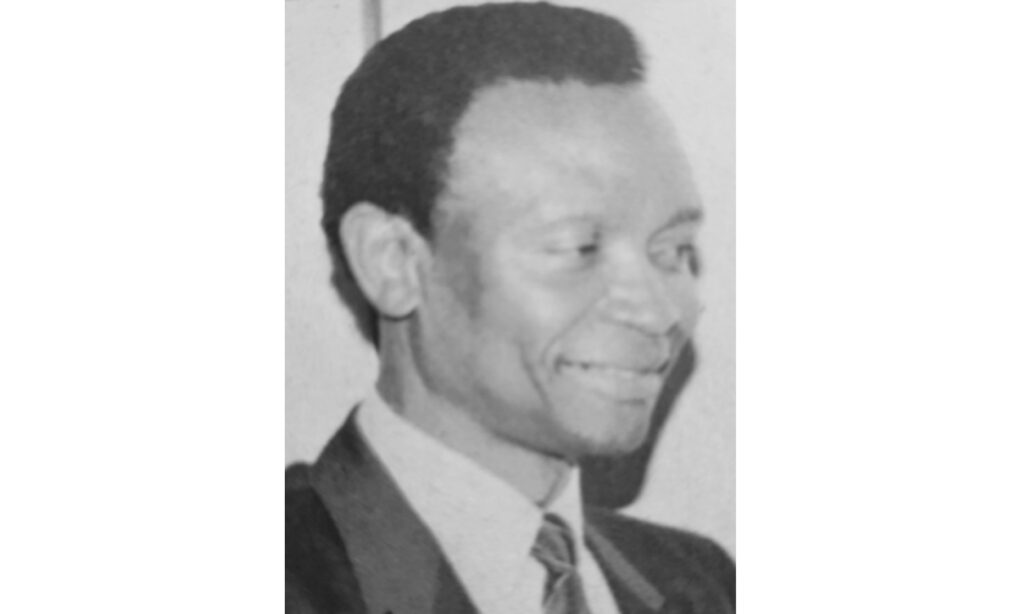
The late Dr Herbert Ushewokunze
In 1966, he entered private practice as the first black general practitioner in Matabeleland.
He established the Marondera Polyclinic in Bulawayo in response to an appeal by the local population who wanted better access to quality healthcare.
Dr Ushewokunze also opened a charity clinic in Gokwe District to cater for those in the remote, underdeveloped area.
He is also celebrated for incorporating traditional medicine when curing some ailments.
This subsequently led to the official recognition of traditional medicine in modern day Zimbabwe, and the formation of organisations like the Zimbabwe national Traditional Healers’ Association (ZINATHA).
During the liberation struggle, he led the ZANLA Medical Corps as the overall commander working with Dr Sydney Sekeramayi and Dr Felix Muchemwa.
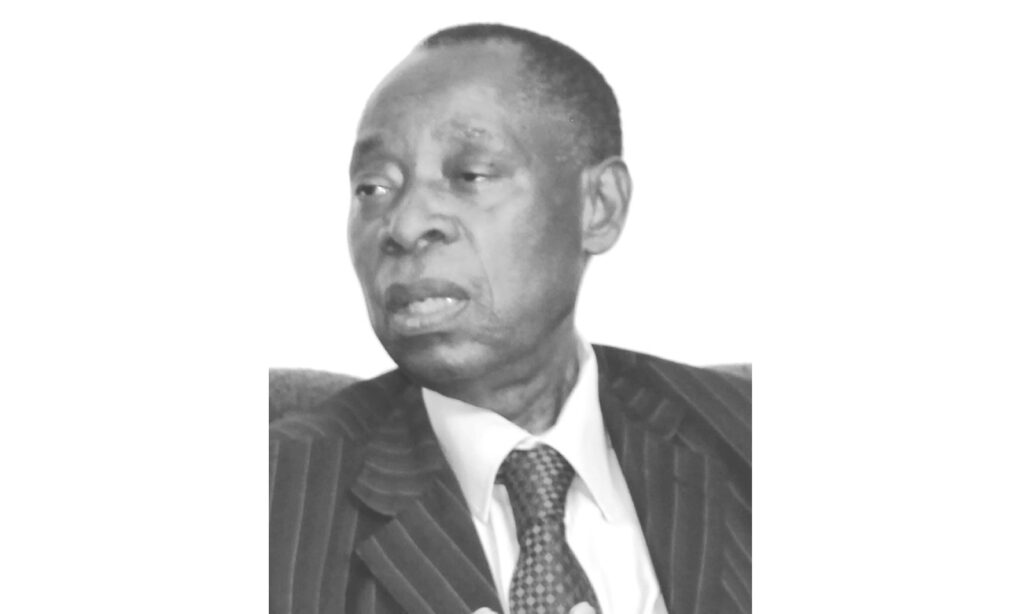
The late Dr Felix Muchemwa
Dr Muchemwa is yet another hero in the medical field whose names seem to have been subtly forgotten with the passing of time.
He was one of the first black medical students at the University of Rhodesia, but finished his degree at Birmingham University having been expelled for leading a strike at the institution as a student leader.
His expulsion garnered international attention, leading to a subsequent strike in Birmingham, which left authorities there with no option but to take him in.
After graduation, he went to Mozambique to become part of the ZANLA medical corps.
Dr Simon Mazorodze is another big name in the pre-independence medical field, having studied at the University of Natal.
He worked at Mpilo Hospital before moving to Harare Hospital, and subsequently Ndanga Hospital, where he was appointed Government Medical Officer.
Just like Dr Parirenyatwa, Dr Mazorodze also opened a private practice in Fort Victoria (now Masvingo), in 1974.
It is then that he became more active politically, giving assistance to injured liberation fighters, something that led to his arrest several times in 1979.
Charges were later be dropped as preparation for elections to elect the first black Government began.
The pioneering doctors and others, whose medical nationalism is only subtly remembered, did not enter medicine for prestige.
They were responding to a great need, only trained black medical professionals would address, their motivation was to help kith and kin facing accessing healthcare.
White people had access to first class health services at modern facilities like Andrew Fleming Hospital, now Parirenyatwa Group of Hospitals.
“A medical health report shows that, as elsewhere, the bias is heavily in favour of European service,” wrote the 1962 Central African Examiner.
“There are, for instance, despite a much larger African population, seven European, one Asian, and two Coloured clinics compared with three African clinics.”
These circumstances forced health professionals to join the nationalist movement both as professionals and in the political sphere.
These doctors did not just treat patients — they joined the liberation struggle.
They abandoned comfort which came with their new found black elite status to treat guerrillas in caves, set up underground clinics, and risked arrest to provide care where the colonial system had failed.
Their fight was not just against disease — it was against a system designed to let black people die.
Some of these pioneers later entered government, but their medical contributions were overshadowed by their political roles. In that respect, their medical heroism is rarely celebrated.
The pioneering health professionals paved way for equally competent people in Zimbabwe’s healthcare sector who have achieved great milestones we ought to celebrate.
In the early 1990s, a team of Zimbabwean doctors performed the country’s first local open-heart surgery at Parirenyatwa Hospital led by Dr Christopher Chigumira, with Dr David Chimuka as anesthetist and Dr Simangaliso Ndlovu as cardiologist.
Their names have been allowed to fade into obscurity and three decades down the line Zimbabwe sending heart patients to India or South Africa.
One wonders why have we not built on their legacy and developed reputable institutions within Parirenyatwa Hospital to become the referral institution to take in heart patients from across the region?
Instead, Parirenyatwa Hospital, like many other public healthcare facilities, is now synonymous with neglect and poor service delivery.
From nurses who sell drugs from handbags in clinics like Ruwa, to critically ill patients being forced to bribe for basic attention, public health workers no longer seem to care.
This is not a Government problem — it is our collective moral failure.
The pioneers worked in mud huts and caves, with barely any supplies, yet they saved lives. If they could do so much with so little, why can’t we?
We may be facing many challenges which will be addressed in due course, now that President Mnangagwa has seen the health sector decay first hand, but his reach is not superhuman that he can fix our moral compass. This is something we have to work on as a people to complement the President’s efforts in fixing the rotten system.
Beyond fixing our ethos, we must also celebrate and support today’s emerging talents. Dr Solomon Guramatunhu, a visionary ophthalmologist, has restored sight to thousands. Dr Agnes Mahomva, a public health strategist, leads Zimbabwe’s HIV/TB programmes.
Dr Tinashe Gede, one of Zimbabwe’s few neurosurgeons, is training future specialists. Dr Portia Manangazira was a frontline warrior in Zimbabwe’s Covid-19 response.
These are the modern-day Parirenyatwas and the national assignment is whether we are going to uplift them, or let their efforts fade into obscurity, too.
The challenge before us is clear. We must honour our medical pioneers by naming hospitals, scholarships and awards after them.
We must reject corruption in the healthcare value chain. We must invest in local talent and stop outsourcing complex treatments when we have skilled doctors.
There must be a national acknowledgement that complex procedures need modern technology. An instance of such an investment is the Avenues Clinic, that now boasts some of the most advanced medical technology in the region from a tiny fraction of US$1,2 million investment.
Above all, we must restore the spirit of service. Love, not greed, must drive our healthcare workers.
The pioneers fought colonialism with stethoscopes and scalpels. Their legacy demands that we fight indifference with the same determination. – The Patriot


 Peter Tanyanyiwa