Online Reporter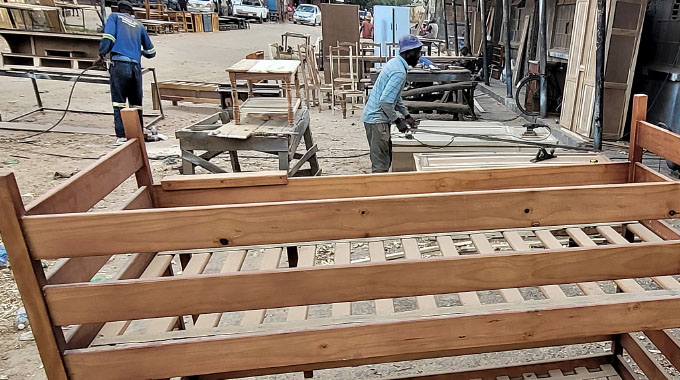
Alphina Ndlovu, [email protected]
Zimbabwe’s economic story is often framed through crisis. Discussions about the national economy frequently focus on inflation, structural adjustment, currency instability and unemployment. While these realities cannot be ignored, they do not capture the full picture of economic life in Zimbabwe.
Beyond the headlines lies a quieter but powerful phenomenon: an adaptive economic ecosystem created by ordinary Zimbabweans responding to structural challenges with remarkable resilience and creativity.
Across the country and throughout the diaspora, Zimbabweans have developed systems that allow trade, trust and survival to continue even when formal institutions struggle to keep pace. These systems may not always appear in official economic statistics, yet they sustain households, support communities and keep small businesses operating.
At the centre of this ecosystem are small and medium enterprises (SMEs).
From cross-border traders travelling between Zimbabwe and neighbouring countries, to informal retailers selling goods through WhatsApp groups, to small manufacturers supplying local markets, SMEs form the backbone of economic activity for millions of Zimbabweans. These enterprises operate within a network of relationships, trust systems and informal co-ordination that together create what can best be described as an evolving economic ecosystem.
In many ways, Zimbabwe’s entrepreneurs have been forced to innovate out of necessity.
Where formal access to capital is limited, communities have relied on rotating savings groups, informal lending arrangements and family-based financing systems. These mechanisms, often organised among women and close community networks, have historically played a vital role in sustaining household livelihoods and enabling small-scale entrepreneurship.
Similarly, where traditional marketing and distribution channels are expensive or inaccessible, social media platforms have increasingly become vital commercial tools. Platforms such as WhatsApp and Facebook are no longer used solely for communication; they have evolved into informal marketplaces where goods and services are promoted, orders are negotiated and trust is established between buyers and sellers.
These platforms have effectively lowered the barriers to entry for many small businesses. Entrepreneurs can advertise products, communicate directly with customers and build reputational trust within digital communities without the need for costly infrastructure.
Another important component of Zimbabwe’s economic ecosystem is the role of diaspora remittances.
Every year, Zimbabweans living abroad send substantial financial support back home to their families.
Estimates suggest that remittance inflows approach US$1 billion annually. Across Sub-Saharan Africa, diaspora remittances are even more significant, forming one of the largest sources of external financial inflows to the region.
For many households in Zimbabwe, these remittances provide essential support for school fees, healthcare, housing and daily living expenses. However, remittances also frequently serve as informal capital injections into small businesses.
A family member abroad may help finance the purchase of stock for a retail business, contribute to the start-up of a transport venture or provide funds that allow a household to diversify income-generating activities.
Despite the scale of these flows, diaspora capital remains largely fragmented and underutilised as a strategic driver of SME growth.
The issue is not the absence of economic activity. Zimbabwe’s economy is vibrant, dynamic and highly adaptive at the grassroots level. Rather, the challenge lies in the absence of co-ordinated systems capable of harnessing and integrating these activities into broader development strategies.
In other words, the ecosystem exists — but it is not yet fully recognised, supported or structured in ways that allow it to reach its full potential.
Much of Zimbabwe’s economic policy discourse continues to treat informal economic activity as a temporary response to economic difficulty. Yet the persistence and scale of this activity suggest that it may be more accurate to view it as a long-term adaptive system that has evolved in response to structural realities.
When formal institutions struggle to provide stable access to credit, entrepreneurs turn to community lending structures.
When traditional retail infrastructure is limited, digital platforms become marketplaces.
When domestic capital markets are constrained, diaspora networks provide financial lifelines.
These adaptive mechanisms demonstrate a level of economic creativity that is often overlooked in policy discussions.
Recognising these realities does not mean romanticising informality or ignoring the importance of strong institutions. Rather, it highlights the need for a more nuanced understanding of how economic ecosystems function in contexts where volatility and institutional constraints are persistent.
For policymakers, financial institutions and development partners, this raises several important questions.
How can diaspora capital be better structured to support SME expansion rather than only household survival?
How can digital platforms that already facilitate trade and trust be integrated into broader economic development strategies?
How can informal financial mechanisms that communities rely upon be supported without undermining the trust networks that sustain them?
These questions are particularly relevant as Zimbabwe looks towards long-term national development goals such as Vision 2030 and the broader continental aspirations articulated in the African Union’s Agenda 2063.
Across Africa, there is increasing recognition that SMEs are critical engines of employment creation, innovation and inclusive growth. In Zimbabwe, this reality is already visible. The entrepreneurial spirit that drives small businesses across towns, rural communities and digital spaces demonstrates that economic energy is not lacking.
What is needed is greater ecosystem co-ordination.
This includes improving access to appropriate financing mechanisms for SMEs, strengthening digital infrastructure that enables small businesses to reach wider markets, and developing policy frameworks that recognise the role of diaspora networks and informal financial systems in supporting entrepreneurship.
Zimbabweans have consistently demonstrated the ability to adapt under challenging conditions. The informal economic networks that have emerged over the past decades are not signs of economic failure; they are evidence of resilience and ingenuity.
The next stage of economic development may therefore lie not in replacing these systems, but in understanding how to strengthen and integrate them into a more co-ordinated national ecosystem.
Sometimes the most powerful economic innovations are not the ones imported from outside, but those already emerging within communities — quietly sustaining livelihoods and building the foundations of future growth.
l Alphina Ndlovu is a researcher, entrepreneur and advocate for inclusive economic ecosystems.



 Bongani Ndlovu