Online Reporter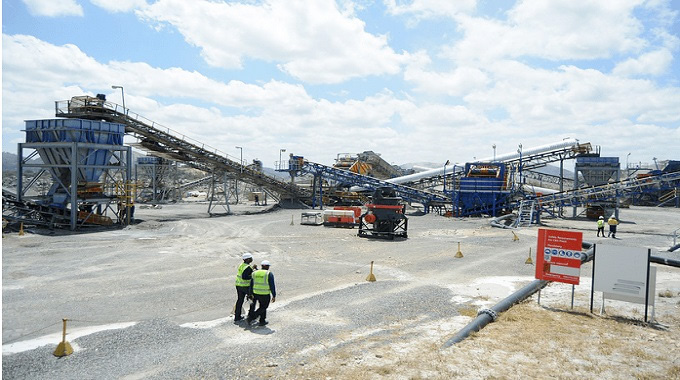
Martin Kadzere
THE High Court has dismissed an application to place RioZim Limited under corporate rescue, with the presiding judge branding the union spearheading the bid a “busybody” and describing the entire legal action as an “abuse of the court process.”
In legal terms, a “busybody” refers to a person who interferes in the affairs of others without possessing a legitimate or direct interest.
Justice Gibson Mandaza handed down the ruling on Tuesday, finding that the Zimbabwe Diamond and Allied Minerals Workers Union (ZDAMWU) lacked the legal standing required to institute proceedings against the mining company.
ZDAMWU brought the application together with two individuals, Precious Mwanza and Owen Kapeta, arguing that RioZim was facing severe financial distress.
The applicants claimed that the company’s liabilities exceeded its assets and that the “tragic death of the majority shareholder” had left the Zimbabwe Stock Exchange-listed miner without adequate capital injection or shareholder support.
They further argued that corporate rescue was necessary to preserve jobs and protect the company’s assets, including the Renco and Cam and Motor gold mines and the Murowa Diamond Mine.
RioZim opposed the application, submitting that ZDAMWU was a general industry body and not a registered trade union representing RioZim’s own employees.
The mining company further contended that the applicants had failed to properly notify all “affected persons”, such as creditors and shareholders, a mandatory procedural requirement under the Insolvency Act.
The law defines an “affected person” as an individual or entity with a direct legal or financial interest in the company concerned.
Justice Mandaza centred his ruling on the issue of legal standing. He noted that while the Insolvency Act permits trade unions to initiate corporate rescue proceedings, it expressly requires that the union represent employees of the specific company involved.
The judge cited Supreme Court precedent arising from a case involving Metallon Gold, which established that being a general mining industry union is insufficient to meet the statutory threshold for a particular corporate rescue application.
“The Insolvency Act does not provide for a registered trade union in the industry, but specifically provides for one representing employees of the company. I hold that the first applicant lacks locus standi to pursue these proceedings.
“The first applicant is just a ‘busybody’ in the strictest sense of the word. It has no direct and substantial interest in the matter. It does not fit into the definition of an affected person as contemplated by the Insolvency Act. The application is an abuse of the court process,” Justice Mandaza ruled.
Before considering the merits of the case, the court also dismissed several points in limine raised by the applicants.
The union had sought to have RioZim’s opposition struck off, arguing that the company’s board resolution was invalid and that its directors were divested of their powers once the rescue application was filed.
Justice Mandaza rejected these submissions, affirming that a company retains a fundamental right to defend itself against an application seeking to place it under supervision.
Despite securing a favourable ruling, the court declined to grant punitive costs against the union.
While RioZim argued that the application was “frivolous and vexatious”, Justice Mandaza held that the matter raised important legal questions and that access to justice should not be discouraged through the imposition of punitive financial penalties.
He directed that each party bear its own legal costs.
RioZim’s operational performance has been constrained by a challenging macroeconomic environment, characterised by limited local lending capacity and difficulties in accessing offshore credit due to perceived country risk.
A key challenge for RioZim arose from a geological transition at its flagship Cam & Motor Mine. In 2019, the orebody shifted from oxide to refractory sulphide ore, necessitating a substantial capital investment of US$35 million for infrastructure upgrades that the company was unable to self-finance.
Despite extensive efforts to secure long-term funding from both domestic and international sources, the company was unsuccessful.
Local financial institutions offered only short-term facilities, while external funders were deterred by limited understanding of local conditions and heightened perceptions of country risk, even where funding was backed by gold exports through an agreement with Fidelity Gold Refineries.
The reliance on short-term financing for a capital-intensive programme significantly disrupted the company’s working capital cycle and diverted focus from critical ancillary infrastructure development.
Although new BIOX and flotation plants were commissioned in April 2022, funding constraints prevented essential pit optimisation and upgrades to vital supporting infrastructure, including crushers, mills, tanks, pumps and associated piping.
This imbalance resulted in inconsistent ore feed, declining productivity, accelerated equipment wear and tear, and increased maintenance requirements.
In addition, sustained funding limitations curtailed normal mine development, exploration programmes, and efforts to expand the resource base and extend mine life, ultimately contributing to declines in ore grades and metallurgical recoveries.
In response to these capitalisation challenges, RioZim has initiated a capital-raising programme aimed at recapitalising the business and stabilising production, and has since reported improved output at some of its gold operations.