Online Reporter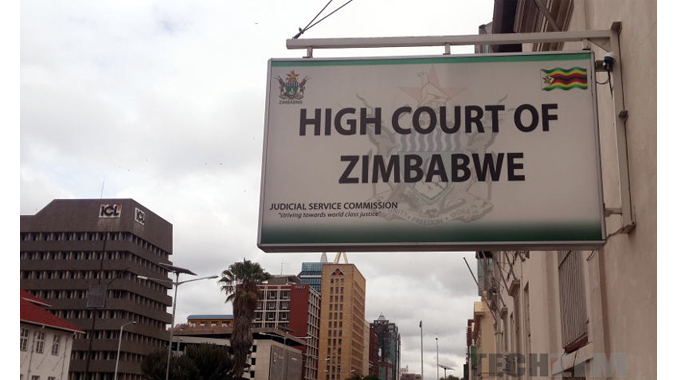
Online Reporter
The long-standing legal dispute over development rights at Swallowfield Estates in Norton has resurfaced following a High Court ruling reinstating a previously dismissed case involving rival land developers.
On Friday, High Court Judge Justice Chikowero, granted an application to reinstate Case HCH7709/22.
The matter, originally dismissed on February 26, had been brought by Swallowfield, to challenge the development agreement involving Capevalley Construction (Pvt) Ltd, which had claimed legal ground to begin work at Swallowfield Estates after obtaining an Environmental Impact Assessment (EIA) certificate from the Environmental Management Agency (EMA).
The order, issued under Case No. HCH978/25, means that the core of the dispute over development rights and contract validity will now proceed to full trial, reopening legal battles between Drowack, Capevalley, and Swallowfield.
The dispute came back into the spotlight earlier this year when EMA issued an EIA certificate to Capevalley Properties on April 1, a move that Capevalley interpreted as greenlighting its long-awaited development at Swallowfield.
The company had previously celebrated the February dismissal of cases HCH7709/22 and HCH7555/22 as judicial confirmation that their development agreement remained valid and binding.
Capevalley’s managing director, Ms Primrose Chakuchichi, had stated that her company invested over US$4 million into the project before being abruptly sidelined in October 2023, allegedly by one of the landowners under the influence of a party not listed on the title deed.
“We said, you cannot cancel the contract without giving back our money. Honour us for what we have done,” she said in their company’s newsletter earlier this year.
Capevalley publicly posted that the February ruling cleared their legal path, but Swallowfield strongly disagreed, arguing that the EIA certificate was issued despite the unresolved legal status of the land and citing an earlier arbitral award in their favour (HCH1692/24), as well as ongoing litigation (HH2222/25).
In an interview with this publication last month, Swallowfield’s representative, Mr. Isaac Chiduku, insisted that “court processes must take their course before anything else takes place on the ground,” highlighting past High Court decisions (HH214/23, HH215/23) and a Supreme Court ruling (SC219/23) that had restricted Capevalley and its affiliates from acting on the land.
With Friday’s court order now officially reinstating HCH7709/22 for trial, both parties are supposed to return to court to determine the substance of their competing claims. The judgment specifies that each party will bear its own legal costs, possibly in recognition of the case’s convoluted history.
The Environmental Management Agency, which had been drawn into the dispute for issuing the EIA certificate, has been clear about its role.
In a recent interview, EMA spokesperson Ms. Amkela Sidange reiterated that the issuance of an EIA certificate is “purely for environmental and social impact management in project implementation” and does not confer land ownership or replace decisions made by land authorities.
Sidange also noted that the certificate, originally issued in 2020 and renewed in 2025, must not be transferred or reassigned without the express permission of the EMA Director-General, in accordance with Section 103 of the Environmental Management Act (CAP 20:27).
She added that while the certificate remains valid, the agency will respect the outcome of ongoing legal proceedings.