

 admin
admin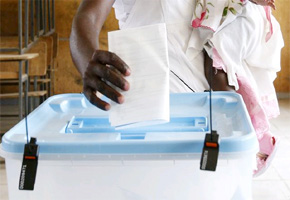
Election officials said turnout was 55.5 percent as of 18:00 (16:00 GMT), the highest level at that time since 1999.
Before the vote, analysts had said high turnout would help centre-left parties.
Polls suggest Mr Netanyahu’s right-wing Likud-Beitenu alliance will still win, despite having recently lost ground to a new rival party, Habayit Hayehudi.
First results are expected overnight, although the process of forming a government may take several weeks.
Unlike in previous elections, the parties’ campaigns have focused largely on social and economic issues, rather than the prospects for a permanent peace agreement with the Palestinians.
There have been unprecedented protests against the rising cost of living and a recent report said nearly one in four Israelis lived in poverty.
More than 5.65 million people are eligible to vote, and 10 131 polling stations were scheduled to stay open until 22:00 (20:00 GMT) yesterday.
Preliminary results were expected about two hours after voting ended, while the final outcome should be known by this morning. For the first time the public will be able to follow the counting of ballots in real time on a government website.
Thirty-two parties are competing under a system of proportional representation for the 120-member Knesset. Parties must win at least 2 percent of the total national vote to secure seats.
The Central Elections Committee said 46.4 percent of Israelis had voted as of 16:00, a 4.7 percentage point rise in turnout compared with the last general election in 2009.
A high turnout has in the past benefitted centre-left parties, who often struggle to persuade their supporters to vote, and worked against smaller religious parties which could struggle to reach the 2 percent threshold.
Prime Minister Netanyahu has issued numerous calls to Likud supporters to go out and vote, amid reports that turnout in traditionally pro-Likud areas has been low.
According to final opinion polls, the joint electoral list of Mr Netanyahu’s Likud party and the ultra-nationalist Yisrael Beitenu party of his former foreign minister Avigdor Lieberman will win about 32 seats.
That would be 10 fewer than the two parties’ combined total from 2009 but still enough to form a coalition with other right-wing and religious groups that would have a majority of about 63.
Voting early yesterday at a polling station in Jerusalem with his wife and two sons, Mr Netanyahu told reporters: “We want Israel to succeed, we vote Likud-Beitenu… The bigger it is the more Israel will succeed.”
After reports emerged in the afternoon that turnout had been low in traditionally pro-Likud areas, the prime minister issued a plea to his supporters, telling them to “drop everything and go vote”.
Likud-Beitenu’s right-wing dominance has been challenged by Habayit Hayehudi, led by millionaire businessman Naftali Bennett — Mr Netanyahu’s former chief-of-staff.
He has advocated annexing large parts of the occupied West Bank and rejected the idea of a two-state solution to the Israel-Palestinian conflict. Mr Bennett said he was confident of a strong result adding: “Something new is starting for the people of Israel.”
Habayit Hayehudi is forecast to take up to 14 seats and become the third-largest party in the Knesset.
The second-largest party is expected to be Labour, which currently has eight seats but is predicted to make a comeback with about 17, due in large part to growing anger over the rising cost of living.
Labour’s leader, Shelly Yachimovich, has ruled out joining a coalition led by Mr Netanyahu.
After casting her vote in Tel Aviv, Ms Yachimovich urged Israelis to reject Likud-Beitenu.
“This is not a dream, this can be done,” she told reporters. “A few more mandates and Bibi (Benjamin Netanyahu) will not be prime minister.”
The new secular centrist party, Yesh Atid (There is a Future), led by TV personality Yair Lapid, and centrist Hatnua (The Movement), led by former foreign minister Tzipi Livni, are also set to do moderately well. Both leaders have said they would consider joining a Netanyahu-led coalition.
Ms Livni was greatly encouraged by the high turnout. She told the Haaretz newspaper: “Suddenly people are coming out of their homes. Maybe there will be a revolution here.”
Turnout among Israel’s 1.5 million Arab citizens — about 20 percent of the population — is expected to be lower than in the last election.
Many are said to have become increasingly frustrated by Arab politicians’ focus on the stalled Middle East peace process rather than domestic issues such as crime and poverty. There has also been a social media campaign by a group of young activists calling for a boycott. — BBC.



 derick.khumalo
 Online Reporter