Precious Manomano
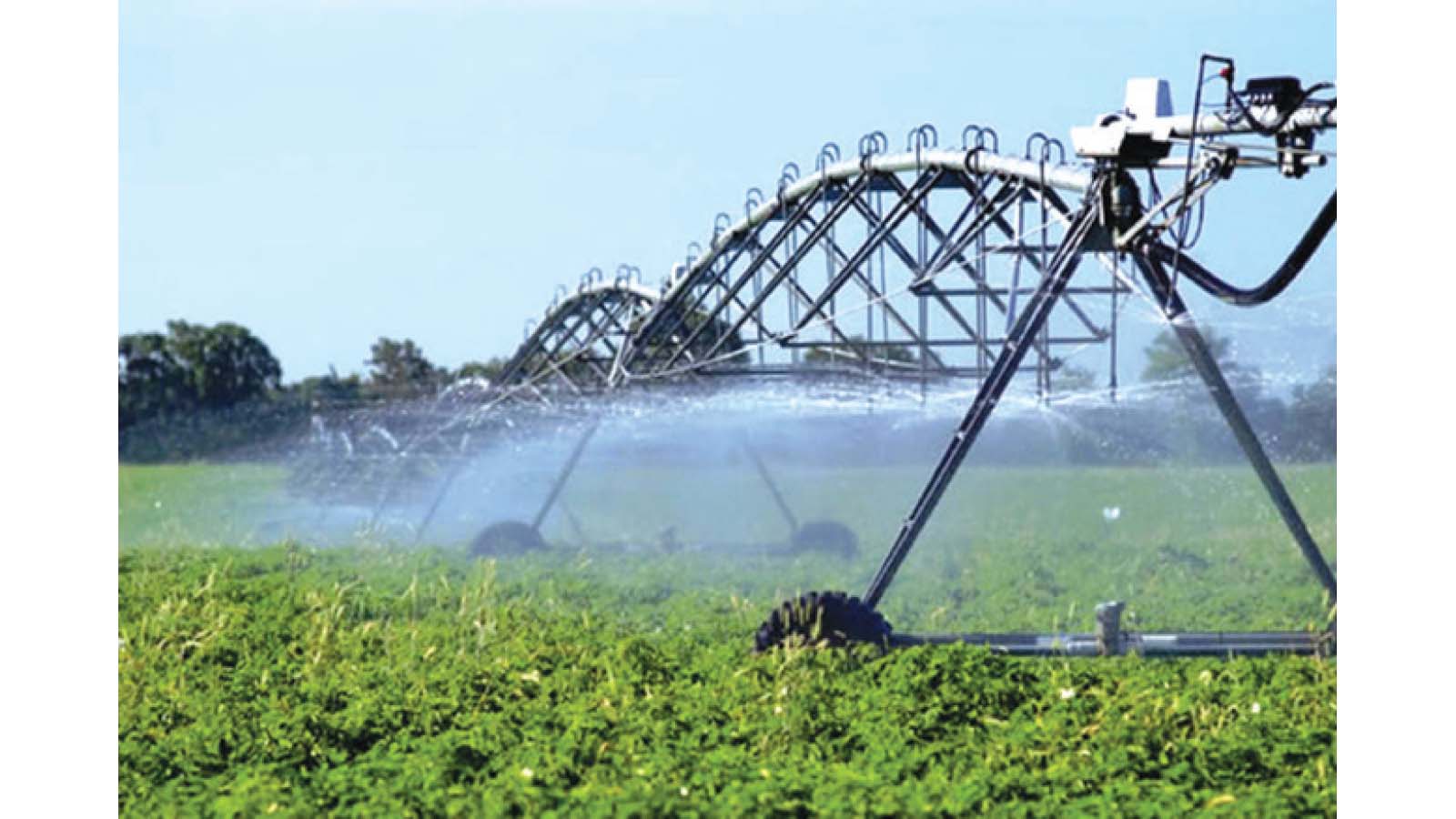
ZIMBABWE has recorded its biggest annual expansion in irrigation capacity after bringing 67 129 hectares (ha) under this mode of farming this year, in a major climate-proofing drive aimed at reducing the country’s dependence on increasingly unreliable rainfall.
The historic milestone comes as the Government intensifies efforts to rehabilitate dormant irrigation infrastructure, develop new schemes and harness the country’s water resources to strengthen national food security.
This year’s expansion brings the country’s total land under irrigation to 305 121ha, with the Government targeting 496 000ha by 2030.
Permanent Secretary in the Ministry of Agriculture, Mechanisation and Water Resources Development Professor Obert Jiri said the 2026 expansion represented significant progress in the country’s efforts to climate-proof agriculture.
“On irrigation, we have made record progress in climate-proofing, developing a total of 67 129 hectares of irrigation in 2026, the highest annual increase in our history,” he said.
The achievement comes through a combination of rehabilitating underutilised irrigation infrastructure and developing new schemes.
More than 35 irrigation schemes have been revived this year using resources channelled through the Grain Import Levy. The levy, which is imposed on imported grain, provides a funding mechanism for supporting domestic agricultural production, with part of the resources being directed towards restoring irrigation infrastructure and expanding the country’s capacity to produce food locally.
The rehabilitation programme is expected to restore productive capacity at existing schemes, improve agricultural output and create economic opportunities for thousands of households in rural communities.
Among the schemes being rehabilitated are Mutema and Nyanyadzi in Manicaland; Silalabuhwa and Wanezi in Matabeleland South; Exchange in Mashonaland Central; Chivhu in Mashonaland East; Bulawayo Kraal in Binga and Craigengower in Mazowe.
The Government has also commissioned several new irrigation developments this year, including Romsely Irrigation Scheme in Makoni South, Nyakomba Irrigation Scheme in Nyanga and Wanezi Irrigation Scheme in Insiza.
Romsely Irrigation Scheme, commissioned in March, has the capacity to irrigate 384ha and is expected to benefit approximately 330 farmers.
Nyakomba Irrigation Scheme was commissioned by President Mnangagwa on April 1, while Wanezi Irrigation Scheme was commissioned in June, alongside the Wanezi Dam and piped water development.
The projects are expected to expand agricultural production while improving
access to water and strengthening livelihoods in surrounding communities.
Other rehabilitation projects expected to benefit farmers include Mutema Irrigation Scheme in Chipinge, which is linked to close to 400 households, and Nyanyadzi, which serves approximately 670 households.
Silalabuhwa has about 845 beneficiaries, while Exchange Irrigation Scheme has approximately 982 farmers.
This year’s progress in developing irrigation infrastructure builds on remarkable investments made since the advent of the Second Republic.
Before this year’s milestone, the country had experienced a historic expansion from 2017 to 2025, when functional irrigated land rose from 171 000ha in 2017 to 258 773ha by last year.
Prof Jiri said Zimbabwe had considerable water resources which, if fully harnessed, could strengthen agricultural production.
“For us to put it into perspective, we have more than 10 600 water bodies. A lot of these are actually large dams with the capacity to irrigate more than two million hectares.
“If you look at Tugwi-Mukosi Dam, it has the capacity to irrigate over 40 000 hectares, Marovanyati Dam can irrigate more than 5 000 hectares and Gwayi-Shangani Dam, which is coming up, can irrigate up to 10 000 hectares,” he said.
The country, he added, needed at least 350 000ha under irrigation to guarantee cereal self-sufficiency and reduce vulnerability to drought.
This makes the current 305 121ha a significant step towards the country’s irrigation targets, although further investment in water storage, distribution infrastructure and irrigation equipment will be required to unlock the full potential of available water resources.
The Government is complementing irrigation development with the construction of major dams intended to provide water for agriculture, domestic consumption and industrial development.
Recently completed projects include Tugwi-Mukosi, Muchekeranwa, Marovanyati and Chivhu dams, while construction is progressing at Gwayi-Shangani, Kunzvi, Dande, Mbada, Bindura, Defe, Tuli-Manyange, Semwa and Vungu dams.
Gwayi-Shangani Dam, which is more than 83 percent complete, is expected to support irrigation development covering up to 10 000ha, while also supplying water to Bulawayo and surrounding areas.
Similarly, Kunzvi Dam, which is approximately 74 percent complete, is expected to improve water supplies for Harare and surrounding communities while supporting irrigation development.
Prof Jiri said the Government’s focus was extending beyond dam construction to ensuring that water infrastructure generated economic activity and improved livelihoods.
“Constructing the dam wall is the easier part. The important thing is converting every water body into an economy that supports irrigation development, fisheries, hydropower generation, livestock production and water reticulation for surrounding communities.
“If we do that, we improve livelihoods around the dam. We develop industries around the dam and create centres of economic activity, employment and prosperity,” he said.
The growing irrigation capacity is expected to provide an important buffer against potential rainfall deficits, allowing farmers to sustain production even when seasonal rains are inadequate.
The Zimbabwe National Water Authority recently reported that national dam levels were averaging 82,6 percent, despite high temperatures and continued water abstraction by farmers and local authorities.
The Government is also complementing the expansion of irrigation infrastructure with the Presidential Rural Development Programme, which seeks to drill 35 000 boreholes — one for each village — to improve access to water for domestic and productive purposes.
More than 5 000 villages have already had boreholes drilled under the initiative.