Online Reporter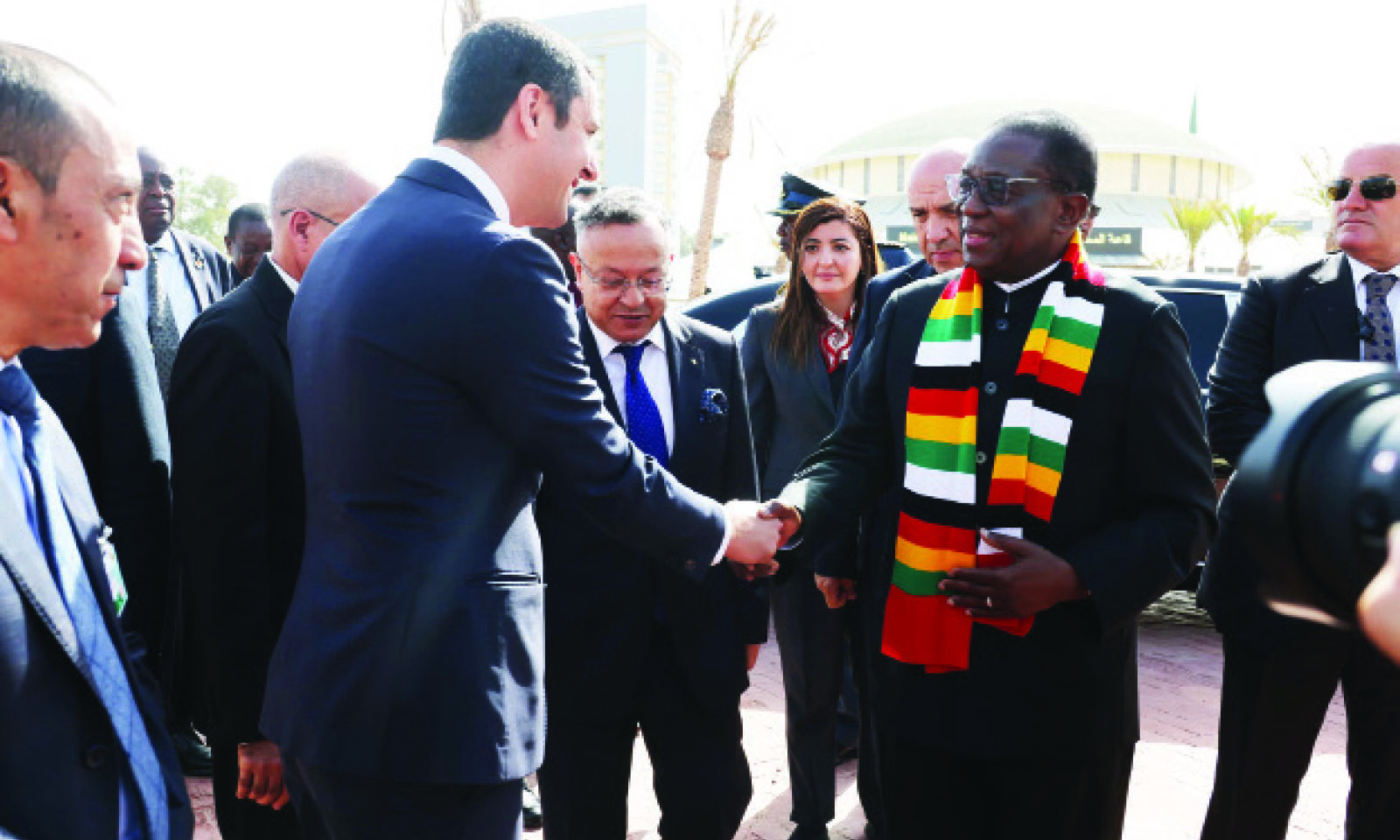
Fungi Kwaramba in ALGIERS, Algeria
FOR centuries, diplomacy, the art of conducting dealings between nations, has been a cornerstone of international relations.
From the ancient civilisations of Greece and Rome to modern-day diplomatic efforts, nations have employed diplomacy to foster cooperation, resolve conflicts and advance their interests.
Even pre-colonial Africa was no stranger to diplomacy as empires like Mutapa thrived on diplomatic engagements, both at a regional and international level.
Thus, the origins of diplomacy date back to ancient times, when emissaries and ambassadors were sent to negotiate treaties, trade agreements and forge alliances between nations.
Over time, diplomacy has evolved to encompass a wide range of activities, including economic diplomacy, cultural diplomacy and public diplomacy.
Today, diplomacy plays a critical role in shaping international relations, promoting peace and stability and addressing global challenges.
And Zimbabwe has been, under the leadership of President Mnangagwa, on a diplomatic charm offensive that has opened new frontiers of cooperation, both on the political and economic fronts.
In the last few years, the country has been pursuing its engagement and re-engagement with all international players, as it cultivates its foreign policy stance of being a “Friend to all and enemy to none”, itself a commitment to peaceful coexistence, diplomacy, cooperation and good neighbourliness.
This has, in the past few years under the leadership of President Mnangagwa, fostered stronger international relationships, promoted trade and investment and multilateralism.
The President was recently in Algeria, on a two-day State visit, that was preceded by the Joint Permanent Commission between Algeria and Zimbabwe.
During his visit, six Memoranda of Understanding were signed between the two nations.
Zimbabwe could soon be selling its products directly to a new market of no less than 43 million people.
On the agenda was trade, economic and education cooperation and even collaboration in the hydrocarbons field, seeing that Zimbabwe recently discovered huge quantities of gas in the Muzarabani area.
For perspective, Algeria’s GDP was approximately $266,8 billion in 2023, driven largely by oil and gas, which accounts for a quarter of the country’s GDP; as such, synergies with Algeria in the sector could help accelerate the country’s advancement in the production of gas from Muzarabani.
Zimbabwe can import petrol, oil, gas and lubricants.
By-products of petrochemicals that are useful in the ongoing road construction efforts can also be procured from Algeria.
President Mnangagwa, at a joint press conference with his Algerian counterpart Abdelmadjid Tebboune, called on the two countries to implement the 2023 MoU on Energy Cooperation, so that it translates to investments and partnerships in power generation, gas and renewables, among other aspects that could accelerate the country’s march towards energy self-sufficiency and security.
It is common cause, then, that Zimbabwe stands to gain a lot of experience in terms of our exchange of expertise and co-working with our counterparts in Algeria in this field.
Apart from hydrocarbons, there are a lot of opportunities for trade between the two countries, especially in the agriculture sector, which remains the mainstay of Zimbabwe’s economy, contributing 11 to 14 percent to the country’s GDP and employing 60 percent of the country’s population.
Anchoring the agriculture sector is tobacco, the golden leaf that earned Zimbabwe over a billion US dollars in the 2025 marketing season.
But the figure could be higher, for instance, sidemarketing and middlemen rip off farmers and the country.
Zimbabwe’s Virginia tobacco is a favourite in Algeria, but it arrives here through third parties.
Because of sound relations and President Mnangagwa’s latest diplomatic offensive, an Algerian company has agreed to buy its tobacco supplies from Zimbabwe directly.
Apart from tobacco, opportunities abound for horticultural products as well as tea, coffee and cotton, which Zimbabwe produces and can now export directly because of the opening of new trade routes.
For years, Algeria, which trained some Zimbabwean freedom fighters, notably the late ZIPRA Commander Alfred Nikita Mangena during the liberation struggle, has been training Zimbabwean students in various fields of education, arming them with a modern arsenal to confront emerging threats spawned by the Fourth Industrial Revolution.
The two countries have been working together in the area of higher education, science and technology and during his visit, the President oversaw the signing of agreements in the sector.
Over the years, more than 600 students have been educated in Algeria, and currently 343 students are studying at universities in the North African country.
Zimbabwe is seeking to bolster its human capital base in the critical fields of science, technology and emerging technological disciplines like Artificial Intelligence by collaborating with willing countries like Algeria.
“By expanding our cooperation in areas such as science, technology, engineering, medicine, STEM and more recently the emerging cutting-edge disciplines such as cybersecurity, artificial intelligence and nanotechnology, we have bolstered Zimbabwe’s human capital base,” said the President during an engagement with the students after touring the National School of Artificial Intelligence.
Adopted under the Second Republic, the Education 5.0 model represents a significant paradigm shift in the country’s school system, addressing both societal needs and national economic priorities.
This framework is built on five critical pillars: teaching, research, community service, innovation and industrialisation. It aims to produce graduates equipped to drive industrial growth and tackle real-world challenges.
Algeria has provided fertile grounds for nurturing and equipping the youth with skills that are in demand, not only in Zimbabwe but globally.
Algerian companies are leading in the manufacturing of agricultural equipment and pharmaceuticals.
With agriculture still anchoring the country’s economy, directly and indirectly, the President yesterday visited the National Company of Agricultural and Fishing Equipment, which expressed its willingness to partner with Zimbabwe as it consolidates its food security and sovereignty through the adoption and application of customised scientific farming methods.
After his brief stop at the National Company of Agricultural and Fishing Equipment, the President made yet another brief stop at the Saidal Group, a leading Algerian pharmaceutical company specialising in the production of generic medicines, which are cheaper yet offer the same medicinal value as established brands.
This could be critical in the country’s ongoing reconstruction of its health sector, enabling access to drugs in every part of Zimbabwe.
Another agreement was signed in the tourism industry with Zimbabwe seeking to attract not only tourists from Algeria, but also provide special packages to tourists who wish to travel to either country.
Therefore, this renewed diplomatic engagement between Zimbabwe and Algeria, countries that made the past together, holds great promise for the future.
By leveraging each other’s strengths and expertise, the two countries can foster economic growth, promote cultural exchange and enhance regional stability.
“Accelerated socio-economic transformation is receiving our shared priority through the people-to-people and Business-to-Business Exchanges.
“In this regard, the signing of the Agreement establishing the joint Zimbabwe-Algeria Business Council is a significant step in the right direction,” the President said.
Under this mechanism, the two countries agreed to identify and promote the export of products, taking advantage of the African Continental Free Trade Area.
Towards that end, Zimbabwe’s trade agency, ZimTrade, was here in Algeria to identify areas of cooperation.
Zimbabwe has a principle in its foreign policy that is regional and continental in its outlook, meaning that the country prioritises Africa. This is also enshrined in the country’s Constitution, which emphasises unity, solidarity and cooperation among African states.
The two-day State visit provided a signal to the people of Zimbabwe and Algeria that they are one and must move together towards shared prosperity for a better destiny for Africa.
Said the President, “This State visit has, therefore, allowed our two countries to reaffirm our shared commitment to multilateralism and a rules-based global order.
“The need to ‘Silence the Guns’ in Africa, by ending war and conflict as well as the scourge of terrorism, is still urgent and of critical importance.
“Zimbabwe reiterates, unwavering solidarity with the people of Western Sahara in their just struggle for self-determination. We support the route of dialogue to end the conflict in Palestine and the need to address the dire humanitarian situation affecting the people of Gaza.”
This is a foreign policy position for Zimbabwe, which resonates with the African continent at large, emphasising respect for sovereign states and rejecting unilateralism and neocolonialism that pose a threat to global peace and security.
As the international community continues to grapple with complex challenges, the diplomatic efforts between Zimbabwe and Algeria serve as a shining example of the power of cooperation and mutual benefit in international relations.