admin
admin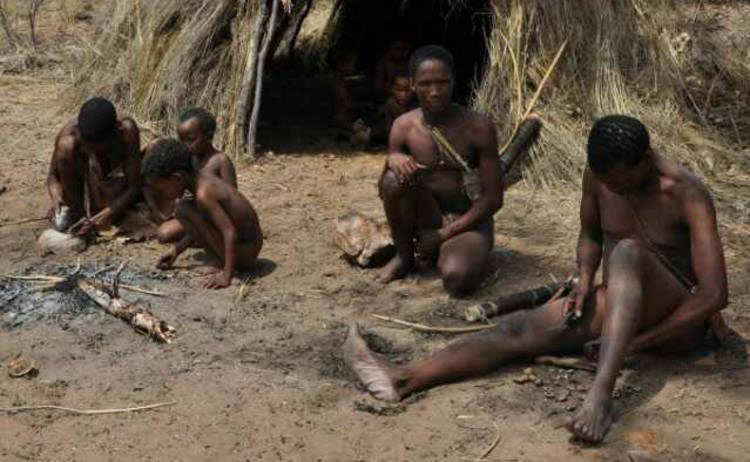
The earliest hunter-gatherers in southern Africa were the San people. They mostly survived by hunting Gemsbok and other antelope and gathering plants. Hunter-gatherer societies hunt, fish and gather wild plants to survive. They also move around from place to place, following a nomadic way of life.
The San invented their own type of bow and arrow in order to hunt effectively.
They used a hand-bow and arrows with poisoned heads. After carefully stalking the animal whose tracks they have been following, they prepare to shoot. They shoot only once within shooting range.
After hitting the animal, the narrow shaft of the arrow falls on the ground but the poisoned head remains in the wound, slowly sedating the animal.
The poison penetrates through the blood system. The time needed to sedate the animal varies with the place where it was hit and the size of the animal.
It could take days of tracking before the animal collapses. Once the animal starts to weaken it can be approached. Further suffering is stopped by using spears for a final blow. This way, San can successfully hunt any animal, no matter what the size.
Hunter-gatherers did not live in permanent houses, but in shelters made of materials they could find around them, like thin branches and tall grass. Women were responsible for building shelters and could do so very quickly.
They never settled in the same camp-site, but used the same waterholes as they moved around. This also ensured that the land did not become exhausted.
The San also believed that no individual owned the land and that everybody had the right to use it. Like many groups that depend on the land for survival, they regard it as sacred and respect it as a gift of God.
The most important part of the San’s lives is fire. The men are responsible for making fire and use two fire sticks that they carry with them at all times.
They would rub the two sticks together until it made a spark to light some dry grass. Their lives revolved around their fire because it provided warmth, light and a way to cook food.
The family would also hang their possessions in bushes close to the fire. Water was also very important in the dry Kalahari Desert and the San stored their precious liquid in the shell of an ostrich eggs under the ground where it would stay cool.
The San’s clothing was very simple and made from available materials like leather from the game they caught.
Children sometimes only wore beads and the men short leather pants, while women wore their karosses, or leather cloaks, made of the whole skin of an antelope.
San children were not forced to work when they were young and mostly played and copied the things their parents did.
The boys would play with little bows and arrows while the girls learnt how to dig up food and carry it home, just like their mothers.
The San culture allowed more than one wife and three or four families lived together in a group or band.
This could be anything from 15 to 40 people. The band’s territory is called the n!ore, which is the place that the people lived, came from and belonged.
The San had no chiefs or leaders and nobody was given special importance. A young person’s first wedding was normally arranged by his or her parents.
At the wedding the young man would have to bring an animal that he had killed as proof to his in-laws that he could provide for their daughter. The bride’s mother would adorn her daughter with the fat of this animal and mix it with red powder to draw lines on her cheeks. The groom would then move in with the families of his wive’s to serve them. — sahistory.org.za



 Online Reporter