admin
admin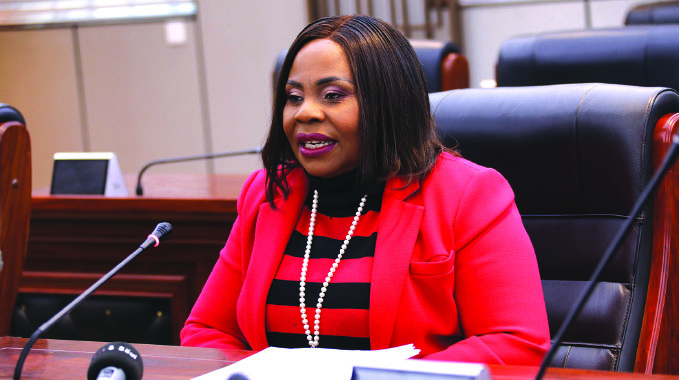
Farirai Machivenyika Senior Reporter
HIV and Aids contributed greatly to the high incidence of poverty among women and inhibited their participation in development, Women Affairs, Community, Small and Medium Enterprises Development Minister Monica Mutsvangwa told the African Union Commission on the Status of Women (CSW) 68 pre-consultative feedback meeting recently.
The CSW is a UN body mandated to promote issues of gender equality and empowerment and will have its 68th meeting in New York in March next year.
The AU recently held its consultative meeting to come up with a common African position ahead of this meeting.
Minister Mutsvangwa yesterday said she had pushed for the inclusion of the effect of HIV and Aids and its effect on women empowerment.
“During the consultative meeting, I managed to push for the issue of HIV and AIDS and the accountability of non-state actors for financing for gender equality to be included in the common Africa position,” she said.
“Noting that HIV and AIDS was one of the pandemics that inhibited the participation of women and exacerbating issues of poverty to women.
“I also highlighted that as a country we have made great strides in responding to HIV and AIDS and has achieved 92-92-95 percentage targets close to the target of 95-95-95 percentage target.”
The pre-CSW68 meeting found women’s poverty could be understood as a process of deprivation and depletion shaped by structural inequalities in the household, labour market, and State institutions, and exacerbated by women’s experience of intersectional discrimination.
The disproportionate amount of care and domestic work performed by women limited their time, access to decent work, quality education and health care.
“This deprivation can also be seen in women’s unequal access to land and productive assets, finance, and in the restriction of their ability to participate fully and meaningfully and be included in policy decision-making processes, including on issues of financing,” said Minister Mutsvangwa.
He said it was imperative to “look beyond level and growth of national output and income, employment and inflation” to address issues of well-being and human rights.
“This would require actions including measuring the value of unpaid care and domestic work to the economy, increasing investment in critical social infrastructure, and ensuring universal access to affordable, quality care services,” said Minister Mutsvangwa.
“To transform the status and condition of women, there must be a recognition of the need to transform policies and services of public institutions with a view to promote transparency and access to information, which is both timely and accessible, so that people, including women living in poverty, can act based on knowledge of their rights.”
In her remarks, UN Women representative, Dr Loveness Makonese, told the meeting that of “all the challenges that women are facing, the underlying issue is poverty,” adding poverty had also resulted in women and girls bearing the brunt of the HIV and Aids pandemic and a rise in child marriages among girls.
“When poverty becomes chronic, its strips you of your dignity as a person so this is the time to push for the allocation of more resources to fight poverty, especially among women,” she said.


 Online Reporter