

 Online Reporter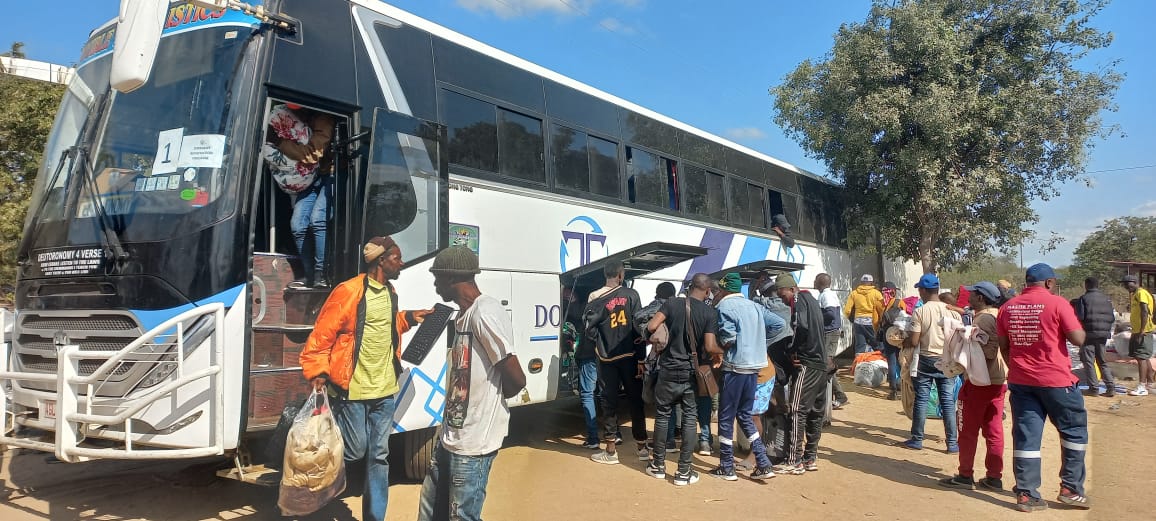
Thupeyo Muleya, [email protected]
HOME was not part of the plan for many Zimbabweans living in South Africa. Some had jobs, businesses and children in school. Others had spent years working to build a better future for their families. But as xenophobic attacks and anti-migrant violence spread through parts of South Africa, safety became more important than everything they had worked for.
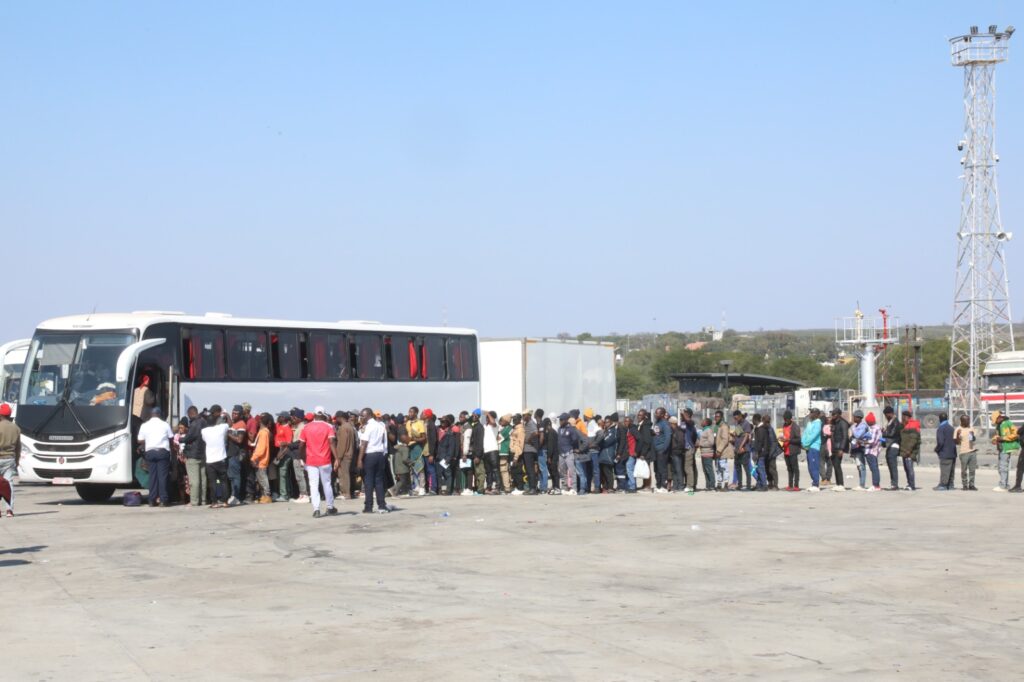
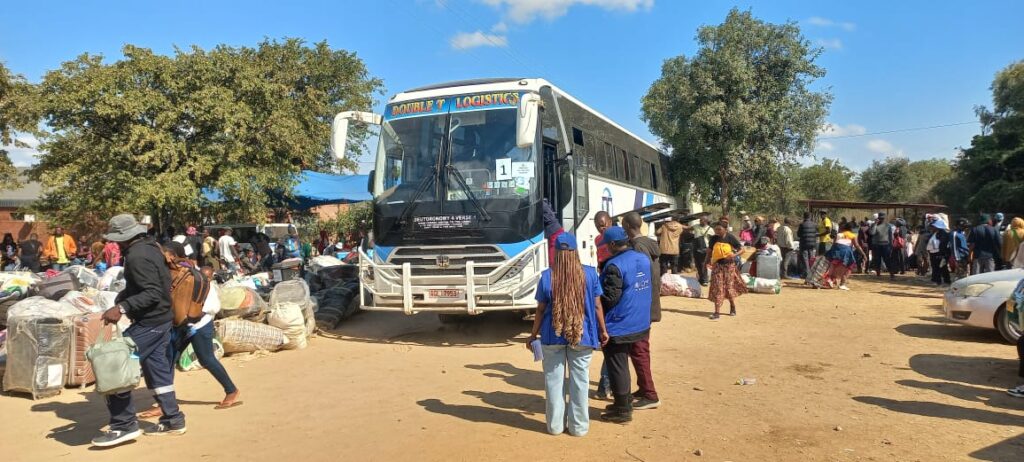
Now buses are arriving at Beitbridge Border Post carrying exhausted families, frightened children and workers forced to abandon lives they spent years building. Grateful simply to be safe, they are returning to Zimbabwe with hopes of reuniting with loved ones and starting again.
Many fled with only a few belongings after xenophobic attacks and anti-migrant protests swept through communities in areas such as Mossel Bay and parts of KwaZulu-Natal. Yet despite the trauma, their return has also become a story of homecoming, resilience and communities preparing to welcome their own.
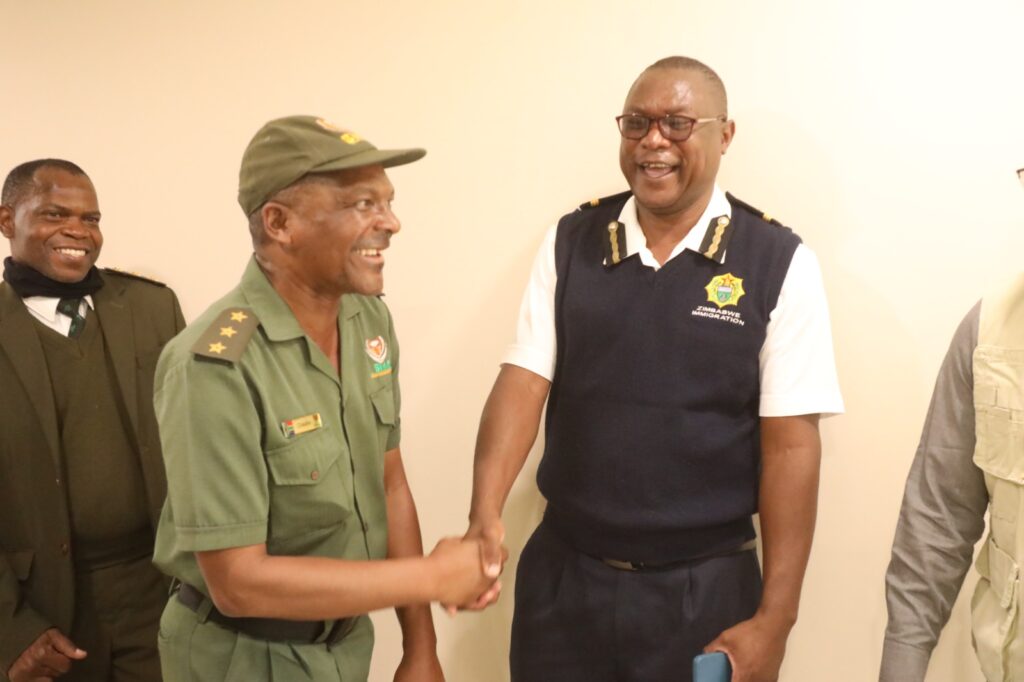
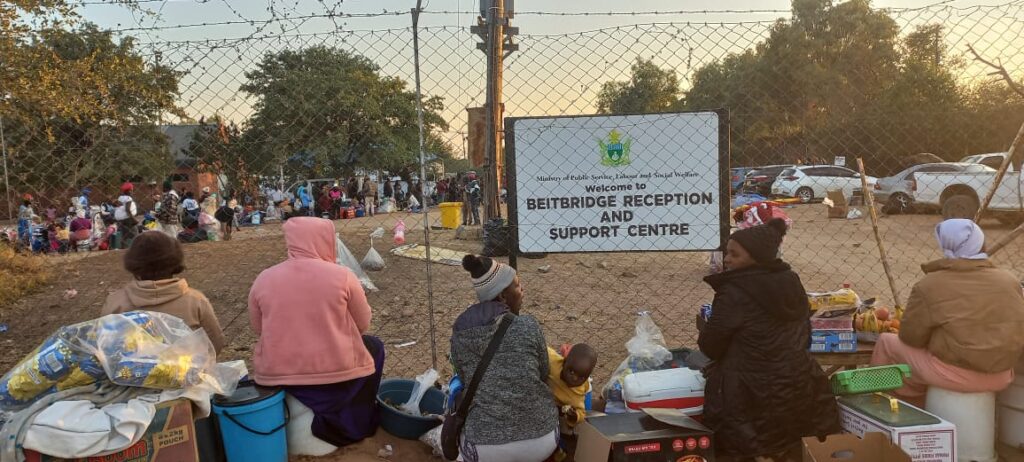
The Government has established a reception and support system at Beitbridge to assist returnees, providing transport, food, counselling, medical care and help with onward travel.
For many of those arriving, one word best describes the experience: humane.
“I am grateful to Government. South Africa became difficult for us. When we heard that Zimbabwe was bringing people home, we had hope. The buses, the food and the way we were received here shows that the Government cares,” said Mr Ernest
Runhare, 38, who arrived from Durban on Wednesday and is heading to Chiredzi.
His sentiments were echoed by many at the Government-run Reception and Support Centre, where officials, humanitarian organisations and volunteers are working around the clock to process and assist returnees.
Escaping violence
For many caught up in the unrest, leaving South Africa became a matter of survival.
Mr Elijah Chikwenya, a truck driver from Mossel Bay, fled with his two children aged 10 and six after witnessing homes belonging to migrants being set alight.
“The situation is very tense and mobs are fighting migrants regardless of their immigration status,” he said in an interview at the Beitbridge centre.
He spent more than two weeks sheltering in a municipal hall guarded by police before assistance arrived through Zimbabwe’s embassy.
Miss Theresa Sibanda, who had worked as a domestic worker in Mossel Bay for three years, said her family was given little time to leave.
“The mob stormed our house and gave us one hour to pack and leave. For our safety, we complied and carried a few items and sought refuge at a local council hall where we stayed for three days before being assisted by officials from our embassy,” she said.
For Mrs Benhilda Mudzviti, years of sacrifice disappeared in a few terrifying moments.
She and her husband had lived in Mossel Bay since 2016, where they were raising their two young children.
“My husband was employed as a driver and we were left with no choice after the mob stormed our house and ordered us to get out and leave for our country,” she said. “After which they torched our shack while myself, my two children aged three years and one year and three months, and my husband watched helplessly.”
Her story reflects the experiences of many women who found themselves shielding children from violence while trying to escape to safety.
Starting over
Many returnees spent years building lives in South Africa. Some worked in transport, domestic service, construction and agriculture, while others operated small informal businesses.
Mr Soul Sanangura, who is heading to Bikita, said he rushed to collect his children from school after hearing reports of attacks in his neighbourhood. His wife operated a small fruit and vegetable business before the family decided to leave.
Like many others on the journey home, they now face the challenge of rebuilding their livelihoods from scratch.
Some hope the skills and experience they gained in South Africa will help them establish businesses, return to farming or find new opportunities in Zimbabwe. Others are relying on family networks and community support as they begin again.
For many, the trip home is not only about escaping danger, but also reconnecting with relatives they have not seen for years.
Returning to family
Beyond the statistics and border procedures are deeply personal stories of reunion.
Some children who grew up in South Africa are now travelling to districts and villages they know only from family stories. They face the challenge of adapting to new schools, different communities and a stronger connection to their Zimbabwean identity.
Parents are uncertain about what the future holds, but many say being reunited with family and surrounded by familiar support systems outweighs the uncertainty.
At the reception centre, counsellors are helping returnees process the trauma of displacement while preparing for reintegration into their communities.
Faith leaders, social workers and humanitarian organisations are also providing emotional and psychological support to families carrying the scars of violence and sudden displacement.
A coordinated response
The Government has activated a whole-of-Government response to support returning citizens.
Embassy officials were deployed to affected areas in South Africa to document Zimbabweans and facilitate voluntary repatriation. Thousands have since returned through state-assisted transport, with Beitbridge serving as the main entry point.
District Civil Protection Committee chairperson Miss Sikhangezile Mafu said Government departments and partners had mobilised to ensure a smooth process.
“We have met with all State actors and agreed on the need to ensure a seamless process. We are using the whole Government approach so the process becomes seamless. All sub-committees have been activated for health, transport, resource mobilisation and social protection,” said Miss Mafu.
Upon arrival, returnees are registered and profiled before receiving assistance tailored to their needs. Services include health screening, documentation support, counselling, food and water.
“Everyone arriving is assessed and provided with social support to help them reintegrate with their families. We have handled more human traffic before and we will continue using the same strategies. We are ready to absorb any amount of pressure and make processes seamless,” said Miss Mafu.
Special attention is being given to women, children, older persons and people living with disabilities.
Restoring dignity
For many returnees, the support being provided at Beitbridge has helped restore a sense of dignity after weeks of fear and uncertainty.
“I appreciate the transport, the food, the counselling and the moral support. It was not easy leaving behind everything, but at least we are not coming home empty-handed. The officers and volunteers spoke to us with respect. That alone gives us strength,” said Ms Lena Mutanda, who is travelling from Chatsworth in KwaZulu-Natal to Masvingo.
Miss Shamiso Dhliwayo, who is returning to Cheche, also praised the assistance being provided. “I thank the multi agencies and Government, especially for food and hygiene kits for men, women and children. The kits are helping families to start well. We were treated like people who matter,” she said.
Meanwhile, Mr Cephas Mareya sees hope beyond the hardship.
“I am happy that Government brought us home safely. My message to those arriving and those still to come from South Africa is to stay calm. There is help at Beitbridge. We will rebuild from here.”
Communities ready to welcome their own
Most returnees are heading far beyond Beitbridge, with destinations including Chiredzi, Masvingo, Bikita, Bulawayo, Mutare, Harare, Gweru and Kwekwe. In many communities, relatives, churches and neighbours are preparing to receive family members arriving home with little more than the clothes they carried from South Africa. Family networks, places of worship and local support groups are expected to play an important role in helping returnees recover from their experiences and settle back into community life.
The return of these families presents challenges, but it also highlights the resilience that has long defined Zimbabwean communities. Across Matabeleland, Masvingo and other provinces, local support networks are expected to help returnees find accommodation, reconnect with relatives and begin rebuilding their lives.
For now, buses continue to leave Beitbridge carrying families towards uncertain futures, but also towards familiar faces and the comfort of home.
For people like Mr Runhare and thousands of others, home may not immediately replace all that has been lost. Yet after fleeing violence and fear, returning to Zimbabwe offers something many thought they might never have again — safety, belonging and a chance to start over.



Those who were living in South Africa must be reminded that they were committing an offence by staying in that country illegally. We must never sanitise such behaviour by focusing on the way South Africans are chucking these illegal migrants out of their country. They voluntarily skipped the border and comfortably established themselves when they knew well they were doing something illegal. These are the same people who lied about Zimbabwe in order to gain sympathy in South Africa. While it is a noble gesture to welcome them back with open hands, they are our own in any case, they don’t deserve the sympathy that they are being accorded. If they failed to invest back home when they were still in South Africa, whose fault is it? By living in South Africa illegally, where did they think that was going to end up? They broke the law and should face the consequences,period!