
Liberty Dube
Tourism Correspondent
TUCKED into the mist-laced mountains of Zimbabwe’s Eastern Highlands, Honde Valley represents one of the country’s most underleveraged tourism and agro-investment corridors.
Blessed with year-round rainfall, rich volcanic soils and a tropical climate that sustains consistent high yields, the valley represents, not just a scenic paradise, but a strategic business hub capable of contributing significantly to Zimbabwe’s Gross Domestic Product.
Honde Valley is more than a scenic retreat.
It is an economic ecosystem where agriculture feeds industry, tourism fuels services and community enterprise drives sustainability.
As Zimbabwe seeks to diversify its economy and accelerate GDP growth, investing in this low-hanging fruit could yield transformative returns.
For decades, the valley has quietly powered agricultural production in Manicaland Province. Bananas dominate the landscape, with nearly every household cultivating the crop for local and regional markets. The valley’s prolific banana plantations are a testament to both climate advantage and community resilience. Yet beyond fresh produce lies untapped value addition.
The sheer volume of banana production presents immediate investment opportunities in fruit processing — drying, pureeing, packaging and juice extraction — all critical in reducing post-harvest losses and increasing export earnings.
But bananas are only part of the story. The valley’s fertile soils nurture pineapples famed for their sweetness, alongside established high-value export crops such as macadamia nuts and tea.
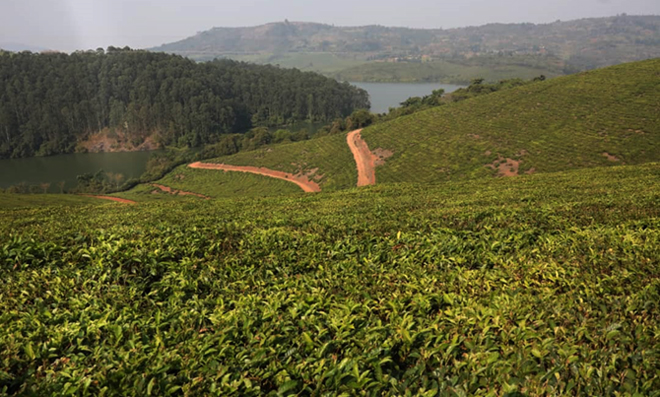
The rolling estates feeding into the renowned tea factories paint a picture of agro-industrial potential waiting to scale further.
Supported by smallholder farming initiatives such as the Pfumvudza programme, which enhances productivity and climate resilience, Honde Valley possesses a strong agricultural foundation capable of attracting agro-processing plants, cold chain logistics hubs and export-oriented partnerships.
Yet the area’s economic promise does not rest solely in agriculture.
Tourism in the valley is equally majestic, defined by dramatic mountain silhouettes, mist-covered plantations and waterfalls that cascade into emerald pools. It is a destination that seamlessly merges adventure, eco-tourism and cultural immersion.
The towering Mutarazi Falls, which is Zimbabwe’s highest waterfall, lies within reach, drawing thrill-seekers for skywalks, ziplining and breathtaking vistas. The nearby Pungwe River offers kayaking and canoeing adventures, while tea plantation tours reveal the intricate process behind one of the country’s most celebrated exports.
Hiking trails snake through landmarks such as Mahwemamisike and Hwahwazira Mountains, while the mystical Masimike Pinnacles and tranquil Nyamombe Falls provide postcard-perfect scenery. In November last year, the valley’s profile rose further with the NetOne Albun Honde Valley Marathon, which has evolved into more than a race.
The 2025 edition became the first cross-country race in Manicaland to be certified by the World Athletics Board, making it a qualifier for global races such as the Comrades Marathon. What began as a test of endurance across five kilometres, 10km, 21km and full marathon categories quickly transformed into a tourism showcase. Athletes who came to conquer the valley’s winding hills often stayed to embrace its serenity. For many, the finish line marked the beginning of exploration.
However, accommodation was not enough to house more than 1 500 athletes who attended the event, most of whom had wanted to spend a night or two there.
International attention has further amplified Honde Valley’s allure. The iconic trio — Jeremy Clarkson, James May and Richard Hammond — a few years ago, visited to film an episode of their motoring show, introducing global audiences to the valley’s dramatic landscapes. Travel blogger Noraly Schoenmaker, known worldwide as “Itchy Boots,” also rode through the valley, sharing its mystique with millions of followers.
Such endorsements underscore what locals have always known: that the place is one of Zimbabwe’s best-kept tourism secrets.
Despite these abundant assets, the valley faces a glaring gap: inadequate accommodation infrastructure. While charming options exist, including self-catering units such as Shambazuva Tourism near Mutarazi Falls, the rustic elegance of Aberfoyle Lodge set within tea estates, scenic retreats like RockyHills Cottage, Letsatsi Village Villa and various eco-friendly Airbnb rentals, the overall bed capacity remains limited. Most facilities are self-catering, solar-powered or off-grid, offering intimate and authentic experiences. However, they cannot adequately meet growing demand from local, regional and international visitors, particularly during peak events such as the marathon or holiday seasons.
The shortage of diversified accommodation, from boutique hotels and eco-lodges to conference-ready resorts, represents a significant investment opportunity.
With improved infrastructure, Honde Valley could host corporate retreats, international sporting events, agro-tourism expos and adventure tourism packages at scale. Accommodation development would not only enhance visitor experience but stimulate job creation, boost supply chains and generate multiplier effects across hospitality, transport and retail sectors.
Government intervention is therefore critical. Strategic incentives, public-private partnerships and infrastructure upgrades — particularly road networks and digital connectivity — would unlock investor confidence. At the same time, local and international investors should recognise the rare alignment of factors present in Honde Valley: natural beauty, agricultural abundance, climate advantage and growing global visibility. Few destinations offer such integrated potential across both primary production and experiential tourism.
The symbolic Flamboyant Tree perched atop a hill in the valley captures this promise. With its umbrella-shaped canopy overlooking tea factories and the Mapokana Hills, it stands as a beacon of resilience and quiet grandeur. Beneath its shade lies the story of a region ready to flourish.