Online Reporter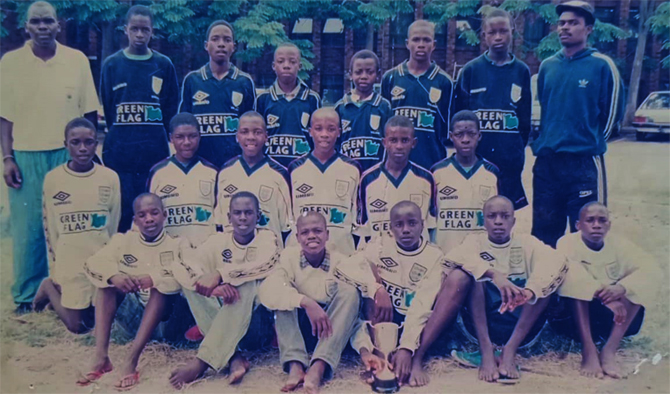
Ray Bande
Senior Reporter
JUST as Africa is hailed as the cradle of mankind, La Sakubva has become the cradle of football talent in Mutare.
For the past 24 years, the junior football academy has stood the test of time, nurturing raw talent and producing players who went on to represent the national team.
From its humble grounds, future stars have risen to shine at major clubs such as Kaizer Chiefs, SuperSport United, Dynamos, Highlanders, and CAPS United.
Yet, despite its proud legacy, La Sakubva finds itself in a dire state. After more than two decades of hard work, the academy has little to show in terms of resources or recognition.
Its ZIFA Manicaland Division Two outfit now faces exclusion from the 2026 season — not because of poor performance, but because it has failed to raise a mere US$600 affiliation fee.
It is a sobering reality for a project that has given so much to Zimbabwean football, raising and nurturing players who went on to grace the country’s biggest stages.
Talking about the big names that benefited from this project, names such as former Warriors captain, Willard Katsande, Washington Arubi, Onsimo Bhasera, and Liberty ‘Leeman’ Ndadzungira, among many others, quickly come to mind.
As the academy turned 24 years last week, Post Sport engaged the face of La Sakubva, coach, Timothy ‘Sicho’ Masachi, a passionate and dedicated junior football mentor, who chronicled the highs and lows of the project since its formation.
“I think we have removed some kids away from the dangers of the streets. We have educated the kids from an early age about the dangers of HIV and Aids. We have created employment opportunities through football, as some of the kids that we trained are now living luxurious lives through football.
“The country, Zimbabwe, and the world at large, have benefited a lot from players we groomed and channelled out of the project,” said the soft-spoken Masachi.
Turning to what the project has benefited its architects, Masachi, said: “On our returns from the project, while a lot of players have benefited a lot and some of them are now living large, the La Sakubva project in general, and we, the personnel running the project in particular, have no returns to talk about. The club and we, the directors of the club, are yet to benefit.”In its humble beginnings, La Sakubva was birthed on February 25, 2002 at 5pm when Masachi and Stephen ‘So-Stavo’ Chinhengo saw no future at ZUPCO Mutare, where they were coaching, and on that particular day, decided to move away with all the players to start their own thing.
Back then, it was known as Deportivo La Sakubva, taking the prefix of their name from Spanish giants of the time, Deportivo La Coruna, but later changed it to La Sakubva in 2003.
That is when they enlisted the assistance of the current Manica Diamonds chairman, Masimba Chihowa, since the two had no idea how they would fund the operations of the project.
Chihowa agreed and joined them as their sole financier.
Later, veteran coach, Jimmy Muhala, was also roped in to bolster the technical clout of the project.
For some reason, La Sakubva remained viable in producing talented players, but their finances never improved at all.
Masachi said the project does not afford to foot the bill of securing their rights over players that they have groomed.
“That is an area that needs to be looked into. The world seems to have been cruel to us on that one. Sponsorship has been the hindering factor, especially with the introduction of the online FIFA Connect registration. We do not have finances to register most of our products, hence many of them are taken away for free because they are not “fenced”. We will be grateful to have someone out there who can support us on this. We also want transport in the form of a kombi or bus for our travelling to and from matches.
“We also need sponsorship on affiliation fees, juniors, our Division Two, Academy registration fees with ZIFA. If funds were to come our way, we need to have a La Sakubva Centre [complex] where all functions will be done, including training grounds, offices, schooling and other amenities.
La Sakubva right now should be playing Premier League football because we have produced so much talent that is now playing top-flight football, but the hindering factor has been finance,” he said.
In its current management structure, Muhala is the chairman, while former goalkeeper and Mai Hondo tournament chief associate, Blessing ‘Jah B’ Mutsaka, is the vice-chairman. Lispoh Rugaro is the secretary, Happison Mangezi has the treasurer’s post, Godfrey Ndiringepi is the welfare manager, and Kevin Mangoro is the administrator.
La Sakubva Legends executive chairman is Tatenda ‘Gede’ Matiringe, while Major Gutukunhuwa is the parents’ representative executive chairman.
It is no secret that La Sakubva FC faces several challenges, including structural issues, limited full-time staff, and inadequate private-public partnerships, with most of the people doing work on a part-time volunteer basis.
The club also struggles with documentation, contracting, and infrastructure development, leading to no returns on player purchase for development fees. Financial resource mobilisation is another significant hurdle, compromising registration, affiliation, equipment, workforce, and technical team welfare. Tying down players and getting their dues for player development has not been easy for La Sakubva over the years.
“Getting what we deserve for nurturing players has not been easy. From all those big names that you know came out of the project, very few, if any, at all, are supporting us financially. It is a very sad scenario. Especially those who are now living large through football, I thought they should be supporting the project. I thought, in Shona, they say: ‘Chirere chizokurerawo or Nzombe huru yakabva mukurerwa’, but for us, it has not been the case. The same with parents of children that we groom. When we demand our dues from clubs that intend to sign them, you actually have heated arguments with the parents. The parents argues that you cannot deny my child this chance,” said Masachi.