Online Reporter
Trust Freddy
FOR Ms Violet Muchape, a resident of Budiriro 1, Harare, the announcement of the impending rollout of prepaid water meters brought a rare flicker of hope.
After a decade of not receiving water from the council — yet being billed monthly — she believes the new system could bring the much-needed relief.
“This is a huge burden off our shoulders,” she said.
“No more unfair bills. We have been paying water vendors a dollar for five buckets. Maybe now, with prepaid meters, we will finally have consistent supply.”
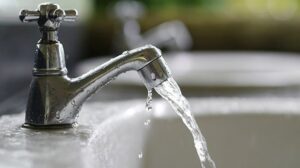
Her optimism is shared by many others in Harare’s high-density suburbs who have endured erratic water supplies and questionable billing systems for a long time.
Inasmuch as the rollout of prepaid water meters promises improved service delivery, there are also fears the poor will be excluded.
The initiative, part of a broader build-operate-transfer (BOT) agreement signed between the Government, the City of Harare, Hangzhou Liaison Technology Company and Helcraw Electrical, will see the installation of 600 000 prepaid meters across five cities.
Of these, 320 000 are earmarked for Harare, with the remainder going to Bulawayo, Gweru, Mutare and Victoria Falls.
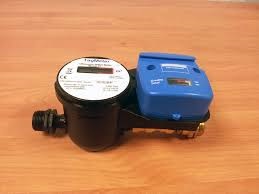
The scope of the project also includes revamping the raw water purification, distribution, billing and wastewater management system.
In essence, it privatises much of the city’s water service infrastructure.
Local Government and Public Works Minister Daniel Garwe last week announced that the prepaid meter rollout will begin in selected Harare suburbs within two weeks.
The goal, he said, is to enhance water usage efficiency and improve revenue collection in a system plagued by billing disputes and non-payment.
For residents like Mr Jacob Karimanzira from Budiriro 2, the switch to prepaid water meters could finally bring sanity to a broken billing system.
“We receive water only four times a month, usually at midnight,” he said.
“But our bills suggest we have daily supply. It doesn’t add up. This new system might finally reflect reality.”
Some believe paying upfront will promote responsible water use.
Mrs Vivian Mushawatu of Glen View noted that an effective and efficient billing system might force residents to fix water leaks on their premises.
Sceptical
However, the Harare Residents’ Trust (HRT), an organisation that advocates for the effective representation of residents of Harare Metropolitan province in local governance issues, is unconvinced.
HRT director Mr Precious Shumba was particularly scathing of the City of Harare, accusing it of sidestepping public consultations and prioritising profit over service.
“Given the deliberate failure by the local authorities, especially the City of Harare, to secure a functional, transparent and accountable enterprise resources planning system, it is prudent to initially invest in plugging the leakages and illegal water connections along the water distribution network to reduce non-revenue water,” he said.
“The private companies being brought in by the national Government to provide the prepaid water meters and be involved in the whole water value chain are interested in profit and not improving service delivery.”
Some Local Government experts have also questioned the logic of installing meters without first ensuring consistent water supply.
One expert, who declined to be named for professional reasons, noted that Harare’s primary water source, Lake Chivero, is heavily polluted and treatment capacity is outdated.
“Let’s prioritise completing Kunzvi Dam and upgrading the Morton Jaffray Water Treatment Plant, which was designed for a smaller population,” he said.
“Only then can we consider rolling out smart meters.”
While social justice concerns linger, researcher Mr Innocent Mukuvaza said the authorities must draw lessons from South Africa, where vulnerable households receive 200 litres of water free per day.
“Zimbabwe can take a leaf from South Africa, and much focus should be on installing meters for the biggest consumers of water and charging them at a commercial level,” said Mr Makuvaza.
“In the CBD (Central Business District), water is being used in bulk, and if you look at low-density suburbs where people are forking out US$25 for 1 000 litres of water from private suppliers, it means if the council is to improve its supplies, the amount it collects from low-density suburbs and commercial areas will be enough to subsidise someone in Mbare, for example.”
Contacted for comment, Harare Mayor Jacob Mafume defended the prepaid model, likening it to existing systems in other sectors.
“You prepay before you talk on your phone; you prepay before you go on the internet; you also prepay before you go into a school,” he said. “So everything is paid for in advance in order to make it available and to collect the revenue. So, there is no inherent contradiction to prepay for a service.”
Mafume acknowledged the need for special considerations for the disadvantaged.
“In any event, should there be indigent residents, we will come up with mechanisms to deal with those indigent citizens.
“But providing water costs money, and those who use it must contribute so we
can provide for more people, more affordably.”


 Online Reporter