Online Reporter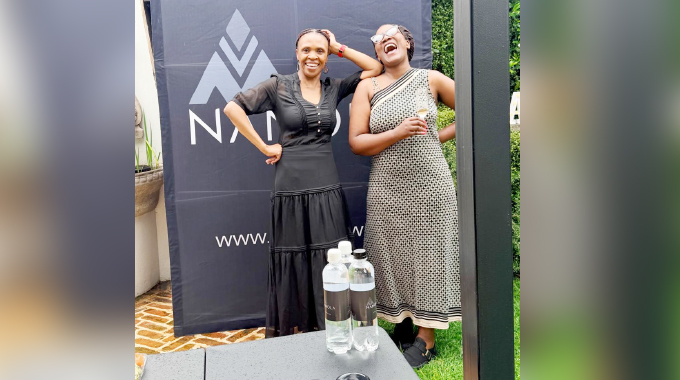
Vusumuzi Dube, Deputy Radar Editor
IN the midst of the 2020 Covid-19 pandemic, when many were forced to pause and reconsider their futures, Sithabiso Sibanda found herself standing in an aisle of a bottle store in South Africa.
It was there that a chance encounter with a stranger would alter the course of her life.
Sibanda met Silindile Zuma in that very aisle.
Their conversation sparked a partnership that transformed a lifelong passion into Nanola Wines, an award-winning brand now gaining recognition in the wine industry.
Sibanda’s story begins in Nkulumane, Bulawayo where she grew up before entering the hospitality sector.
Starting as a waiter, she rose to management but soon realised the toll of the demanding hours.
“The restaurant industry has an expiry date,” she said in an interview with Sunday Life. “At 35, you still don’t want to be working the crazy hours.”
This realisation led her to the Cape Wine Academy in South Africa, where she qualified as a sommelier.
“After I met Slie at that bottle store aisle, we started reaching out to wine farms,” Sibanda recalled. “But we didn’t want a white label, a practice where a company rebrands products made by others, we wanted to be part and parcel of the winemaking process, seeing we had the skills for it.”
Months of searching ended when they found their “prince charming”, a farm in Franschhoek, South Africa, where their wines are now produced.
Their flagship wine, Stylus, is a red blend of Merlot, Shiraz, and Cabernet Sauvignon.
“We called it Stylus, derived from the writing apparatus, because we were starting to write our legacy,” she explained.
The Stylus Red Blend received the Golden Award for Excellent Value at the Price last year, marking a significant milestone for the young brand.
The range has since grown to include Rose: Forever and a Day, a blend of Grenache, Syrah, and Cinsaut, designed for any day ending with a “Y.” The X and Y wines, named with nods to chemistry and genetics, the chemical formula for alcohol and the X and Y chromosomes, feature Merlot and Sauvignon Blanc grapes sourced from Stellenbosch.
Perhaps their most distinctive offering is The Crown, an MCC Brut and Brut Rosé fermented on lees for 24 months — twice the usual period, a process that sets it apart from other sparkling wines. Their newest release, 302 Cabernet Franc, is crafted from grapes grown in Elgin, South Africa’s coldest wine region.
Sibanda describes Nanola Wines as approachable yet sophisticated.
“Our wines are very versatile. Even if you’re a beginner, you can try our Stylus. For a connoisseur, it’s perfect, especially in the early evenings. It’s your everyday drinking wine.”
The brand’s ambitions extend beyond South African borders. Nanola Wines has begun supplying markets in Gabon and Zimbabwe, with a five-year plan to establish a global presence. Yet, at its core, the venture remains deeply personal.
“I was born at Pelandaba Clinic, went to Mafela Primary, grew up in Nkulumane, and attended Sizane High School. Then I went to South Africa, hoping for greener pastures,” said Sibanda.
The name Nanola, she explained, is a unique fusion of two terms of endearment used by their fathers, symbolising feminine strength, a fitting tribute to the two women behind the brand.
“Nanola Wines is 100 percent black women owned. It carries elements of personal story, family, culture, and origin. Being of Nguni descent, the inspiration for our logo was drawn from Zulu beadwork, mostly triangular in design.
The Nanola logo is, in part, a geometric representation of a Zulu love letter, ‘ibheqe.’ In this context, it symbolizes an outpouring of love from the goodness of the soil, the grapes, and into your glass, the exact qualities embodied in our wines,” she added.