Online Reporter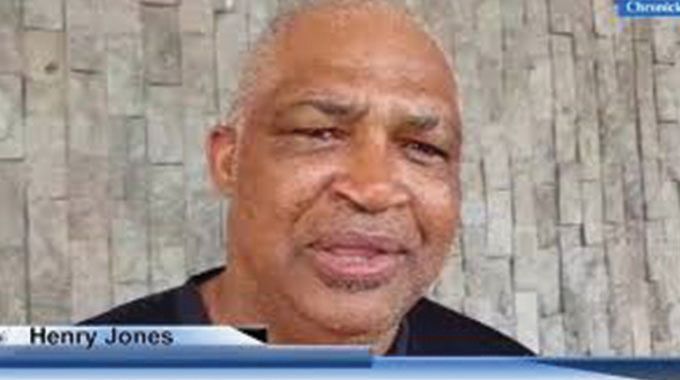
HENRY JONES still speaks about Highlanders the way men speak about something they once carried in their chest, heavy, personal and impossible to explain to people who were not there.
He is 25 years into a life in New Zealand now, a long way from Barbourfields, a long way from the noise, the dust, the hard winters and harder tackles. But mention Bosso and he does not drift into nostalgia. He sharpens.
He remembers names. He remembers faces. He remembers the feeling of walking into a dressing room where you were either going to earn your place or be swallowed whole.
Jones wants to be remembered for one thing and he says it plainly.
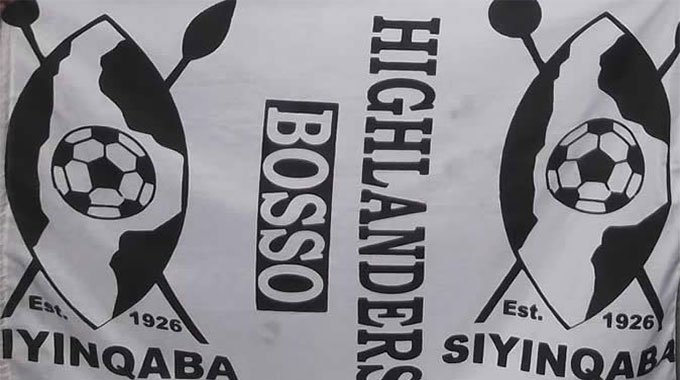
“I fought for the badge, I gave it all to the club and my teammates every time I wore the Highlanders jersey. That was the expectation one had to deliver always and whenever I was on the field, it was no fun time but business,” said Jones, who has been living in New Zealand for the past 25 years.
He knows what people called him. He has heard it enough to anticipate it before you even ask. The word “bonecrasher” follows defenders from that era like a shadow, as if their job was to injure rather than defend. Jones does not deny he was hard. He denies the cheap label. There is a difference, he insists, between violence for its own sake and a defender who refuses to be moved.
He arrived at Highlanders in 1981, a time when the club was rebuilding and the jersey was not something you wore lightly. There were older heads, established names and a culture that did not hand you anything because you looked the part. Jones joined as part of a group of six invited from Rangers and other lower division clubs, but he was the only one who made the grade.
Cedric “Siya” Green would rise later, carving out his own journey at Zimbabwe Saints before moving to Chapungu, then known as Airforce of Zimbabwe, in the old Super League that came before the Premier Soccer League’s birth in 1993. Jones, though, was immediate. He did not need a season to settle in.
“I made the starting line-up within a few days of joining the club and we were away to Wankie, now Hwange. My first casualty was David Zulu, I gave him a hard kick and for years his kneed troubled him until he quit the game.
“They had Nyaro Mumba, a big fellow in attack, he felt my presence on the pitch, because I was tough,” said Jones.
The rightback position suited him. No nonsense. Hard and firm in the tackle. He could overlap when space opened, send in a cross when the moment demanded it and when the chance came, he could hit a shot that reminded people he was more than a stopper. But his reputation was built on the part of the game that does not make highlight reels, the part that wins you respect in the tunnel and fear on the touchline.
Even at training, there were tests.
Jones says his first real introduction to his teammates came in that first week and it involved Madinda Ndlovu, the club’s rising poster boy, a winger with speed and swagger and a growing sense of himself after time with the national team.
“Lawrence wanted to see how I would deal with Madinda Ndlovu who was a very fast winger. He also wanted to see how Madinda could contain cheeky wingbacks. Madinda had returned from the national team with a bit of arrogance putting on Warriors colours. I took him on in a manner that did not amuse him. Teammates were surprised and I overheard Madinda ask where I had been acquired from. Madinda described my play as that of a rugby player,” said Jones.
There is a small laugh in the way he tells it now, but there is also pride. In football, especially in a club like Highlanders, you had to show your teammates you could be trusted. Not with words, but with what you were prepared to do when the game got hot and the opponent got brave.
Asked if it was deliberate to play the “tough nut” on the field, Jones does not dress it up.
“I had to get the better of opponents hence I was very tough, always wanting the club to win and fighting for the badge I loved,” said Jones.
He talks about opponents the way a former soldier talks about old battles. Not with hatred, but with clear memory. Bulawayo Wanderers, for example and a winger called Boy Ndlovu, who he describes as a nuisance when in possession, a player with “sublime skills and petite dribbling skills” that made wingbacks look foolish.
Jones remembers one moment so sharply you can almost hear the terraces.
“I went for him in full flight but could not get him, after missing him there I was sprawling on the turf with Boy on my chest. The incident caused an uproar on the terraces as that was a near miss, I would have taken him to the cleaners,” said Jones.
That is the thing about those days. Football was not just football. It was theatre. It was pride. It was the crowd responding not only to goals but to collisions, near misses and the feeling that the match belonged to them too. A full-blooded challenge could lift a stand as much as a shot on target.
In the Eastern Lowveld against Hippo Valley, Jones says he delivered what he calls a “double dosage,” the kind of story that sits on the edge of humour and brutality, told now with the distance of time, but still rooted in the belief that defenders had to set the tone.
“The first player went for a high ball and I gave him a headbutt. He was substituted and the guy who came in was becoming a nuisance and I took him out. My coach Lawrence Phiri was ever happy when he saw me dealing with opponents,” said Jones.
It is hard to explain that era to modern eyes. Today, you speak about tactics, shape, data and discipline. Back then, the shape was also psychological. You wanted opponents to feel you early. You wanted them thinking about you when they received the ball, not just about what they planned to do next.
Jones does not pretend Highlanders had it easy. He admits CAPS United were a good side, loaded with talent.
He names Stanford “Stix” Mtizwa and Shaky Tauro, players who could shift a game with a touch, with movement, with the kind of football intelligence that forced defenders to stay awake for 90 minutes.
Jones describes Tauro as fast and cheeky towards goal. He calls Mtizwa a ball artist, the type who could appear on the left side of midfield and make you look slow even if your legs were fine.
“In one match Dougie (Mloyi) invited me to the centre to deal with Tauro and he was not amused with how I dealt with him. My business was to preserve the Bosso badge and not respect any player on the field who was not my teammate.
“Stix was giving us all sorts of problems on the left wing. I got him once, forcing him to go and play lying deep in midfield, Lawrence had shouted that I should stick to him. I drove a sense of fear among opponents, they knew the Bosso defence was not a manga manga business when I was there with British,” said Jones.
He says it without apology. Fear was part of the job description. It was not about being a thug. It was about protecting your team, your space, your badge. Jones also insists he did not allow teammates to be bullied. That part matters to him, maybe even more than the tackles.
“There was one match against Zimbabwe Saints. Gibson Homela wanted to beat Madinda Ndlovu and after the match as if running away all my teammates raced off the field and I boldly stayed around convinced that Homela would not do anything to me or Madinda. We had to protect each other as teammates.”
The names keep coming. Dynamos. The late Edward Katsvere. The kind of rivalry that was not just a fixture but a national mood. Jones remembers a weekend where Highlanders played on Saturday, then boarded a train to Harare for another match the next day. It sounds impossible now, but it was normal then. Footballers travelled like working men, tired and sore, carrying their clubs on their backs.
“We played a game on Saturday and got into the train to Harare for a match the following day. It must have been some cup final, Independence or something, as we were marching on to the field, I overheard Katsvere say ‘nhasi ndichamakwa neMkharadi.’ He got his heavy dosage too on the field as did July Sharara who also went into hiding in midfield and I followed him as per Lawrence Phiri’s instructions, those were some of the great days of local football,” said Jones.
There is warmth when he says “those were some of the great days.” Not because everything was perfect, but because the game felt raw and close to the people. The players were accessible, the rivalries were personal and the badge meant something that could not be measured in contracts.
Jones’ own story carries a twist that still lands heavily. He lost one of his legs to a horrendous tackle in New Zealand at the age of 40. It happened after he decided to return to competitive football once he got there, a decision driven by the same restlessness that made him throw himself into challenges in the first place. It is a cruel detail, almost too sharp, the hard man brought down by the very thing that built his identity.
Even with that, he does not speak like a victim. He speaks like a footballer who understands risk and who has lived long enough to carry the scars without begging for sympathy.
He says he enjoyed his time at Highlanders, even if it only lasted two years. It ended not with a falling out, but with life pulling him away, an apprenticeship opportunity with CMED in Gweru cutting the stint short. That is another truth about those days. Players had jobs. They had futures to chase beyond football. The badge was everything, but it did not always pay the bills.
Jones will be home in July, and you can almost picture him walking back into Bulawayo, a man returning to a place that still knows his name. He will be older now, living on the other side of the world, carrying a life that moved on. But some things, he makes clear, never moved.
He fought for the badge. He protected his teammates. He made sure opponents felt Highlanders.
And if people remember him for that, he says, then they will remember him correctly.