Veronica Gwaze-Zimpapers Sports Hub
RUFARO STADIUM trembles with noise. Scottland have just dismantled Herentals 3-1 on matchday 26, and the stands heave with song.
Supporters surge towards the tunnel, their chants echoing against the concrete, jostling for selfies with the heroes who have lit up the league.
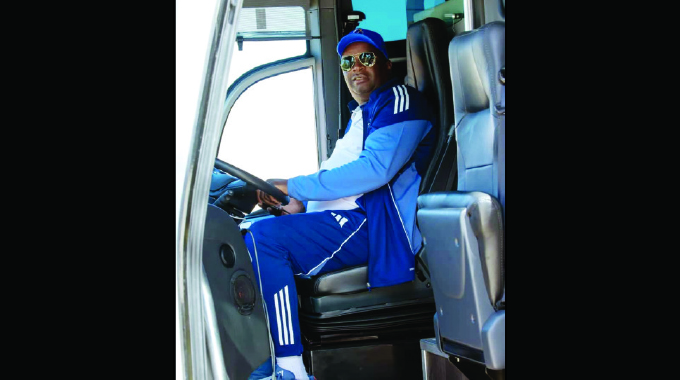
Yet, as the players duck into their luxury bus, the spotlight shifts, not to Khama Billiat or Knowledge Musona, but to a tall man in a tailored suit standing sentinel by the door.
He is no star striker, yet he holds the keys to them all.
This is Edmore Maswera, the man who drives Scottland, literally. He is the one who steers the most expensive squad in Zimbabwean football to its battles, who shoulders their safety.
The man has lived a story that runs deeper than the roar of any crowd.
Maswera’s story begins far from the glamour of Premier Soccer League (PSL) match days.
In Mahusvu, Chivhu, his childhood was measured in kilometres, 12 of them each way, every day, barefoot, to and from school. Meals were rare, lunch boxes unheard of. Education, he remembers, felt like a fragile privilege his family could barely afford.
When he was not in class, he was in the fields, alongside his parents and siblings, labouring for meagre earnings that scraped together the term’s fees.
“Once a young boy in rural Chivhu, I used to trek roughly 12 kilometres barefoot daily to and from school, with neither a proper meal nor packed lunch,” Maswera recalls.
For years, this was his reality, until fate intervened — his father secured a job in Harare.
With his first salary, he made a decision that would change the family’s path: He enrolled Maswera at Nyadire High School.
He sat his O-Level examinations in 1998. Soon after, his father helped him acquire a driver’s licence.
That piece of paper opened his first door.
He joined Zimbabwe United Passenger Company (ZUPCO), starting with minibuses, before earning a promotion to the bigger city buses. This meant more responsibility and more pressure, a situation that instilled confidence in him.
Driving through Harare’s crowded streets honed his focus and skill.
“Within a short time, my hard work stood out and I earned a promotion to drive the big buses,” he says.
After seven years, Maswera decided to branch out on his own. His gamble paid off. From one kombi, he had two, then 10, until at his peak he commanded a fleet of 17 commuter omnibuses.
They became a common sight across Harare, symbols of his grit and ambition.
As money flowed in, he reinvested. He rebuilt his parents’ rural homestead and secured properties in the city. It seemed the boy from Mahusvu had conquered the odds.
But another twist lay ahead.
One day, almost by accident, he wandered into a Prophetic Healing and Deliverance Ministries service. There he met Walter Magaya, a connection that shifted the course of his life.
Unlikely as it seemed, Magaya appointed him head of construction for the Heart Stadium.
Overnight, the bus driver became a project manager of a 3 000-strong workforce.
“At first I thought it was a dream, I had never been in construction before and I was asking myself how I would manage the building of a whole stadium,” Maswera chuckled.
“Being a man of stubborn faith, I told myself that I could do it. The vision of me conducting the ground breaking ceremony is still fresh in my mind.”
It was in those years, through his work with Magaya, that he met gold dealer and football benefactor Pedzai “Scott” Sakupwanya. When Scottland secured their place in the PSL, Sakupwanya made the call. Maswera would not only lead the construction of Mabvuku Stadium, but also drive the team’s bus.
“I had never imagined myself driving a football team someday, let alone one made up of stars like Knowledge Musona, Khama Billiat and Terrence Dzvukamanja,” he says.
“I knew these guys from television, but God had a different script for me and now I see, talk and laugh with them almost daily.
“At first I could not believe that I was indeed driving Billiat and then came Dzvukamanja, but my major highlight was the arrival of Musona.”
The glamour of the team might have suggested egos, but Maswera found the opposite.
“In fact, I assumed that I would be met by egotistical personalities, yet the so-called ‘big names’ were surprisingly humble and courteous,” he says. “Their characters made me feel at home. Now I look forward to every ride, I feel like I am part of the Scottland family.”
On the surface, his role is simple: Get the team from point A to point B. But Maswera knows it is more than that.
Whenever he grips the wheel, he carries with him memories of barefoot treks to school and nights of hunger.
He carries the pressure of fans who expect victory, the weight of a squad whose names dominate headlines and his own pride in delivering them safely.
At a club where ambition runs high and pressure never eases, his composure and focus become part of the team’s armour.
For the players, every ride is a step towards chasing silverware. For Maswera, every kilometre is proof of how far he has come; a reminder that the boy from Mahusvu, once lost in the dust, now drives dreams.