Chronicle Editor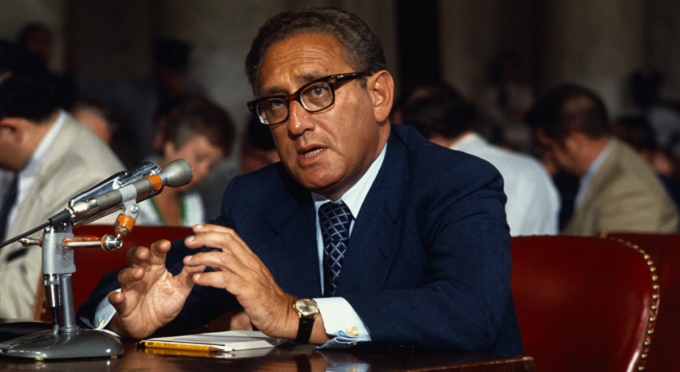
Pathisa Nyathi
In the context of ZPRA’s armed struggle, the year 1974 was significant in more ways than one. It was the year Ethan Dube was abducted and killed. It was the year when the Southern Front (SF) was opened. At the same time, the struggle was beginning to pick up pace after a lull since 1969 when ZAPU went through an internal crisis which resulted in its split into three factions.
There were also international events that had a bearing on the conduct of the struggle. The first was the coup in Portugal led by General Spinola. The coup led to the two Portuguese colonies, Angola and Mozambique, being firmly on the road to independence. The two did get their independence the following year.
The West got into a panic mode. They were extremely alarmed with the prospect of the Soviet Union and her Warsaw Pact allies establishing a strong foothold within the geopolitically strategic southern African region. From the Indian Ocean to the Atlantic Sea the socialists, countries that the West had a mortal fear of, were going to get entrenched. Western political and economic interests were going to be in real jeopardy.
The response to the threat was the ushering of Détente whose repercussions were far reaching in terms of the struggle in southern Africa. The shuttle diplomacy was spearheaded by US Secretary of State Dr Henry Kissinger. Its intended results were the slowing down of the pace of war and work out strategies to reduce or completely eliminate Soviet influence in the immediate, medium and long term. The measures taken were two fold, in the broadest of terms to release the detained nationalists and set them against the armed wings of their parties which, in ideological terms, had embraced Marxist-Leninist ideology.
ZAPU had, after the split started reorganising and adopted the Ideological Concept and Political Program which George Silundika in charge of.
It was anticipated, and correctly so, that there were going to be tensions between the two. The second measure was to physically eliminate the radical elements or the ideological pillars of the struggle within the armed wings. When that happened, the first measure would confuse and confound the situation and shift blame from the real culprits and project it as struggles within the struggle. This was an accurate calculation based on a meticulous study of the politics of the liberation movements and Rhodesian at large.

As will have become apparent, on the ZPRA side the stage had been set for the elimination of these perceived radicals and key drivers of the liberation struggle. Ethan Dube, JZ Moyo, John Dube (Charles Sotsha Ngwenya) and Nikita Mangena were the victims of measures within Détente. What ought to be appreciated is the fact that the strikes had a tremendous effect on the morale of the fighters as the most senior leadership was targeted. JZ Moyo was the Commander-in-Chief of the ZPRA forces commanded by Nikita Mangena with JD as Chief of Operations. Ethan Dube was at the helm of Party intelligence.
Intelligence was important to the importation of weapons in the early stages of the liberation struggle. Initially, the weapons were obtained from the troubled Congo where there had been a rebellion in Katanga led by Moise Tshombe. Some weapons were obtained from Egypt and Joshua Nkomo the leader of ZAPU brought some, on a passenger air craft to Dar-es-Salaam, en route to Rhodesia.
From Dar-es-Salaam there were two possible routes for the weapons to take. In trucks they were packed into drums and boxes. The trucks were driven along the road from Dar-es-Salaam through Mbeya where Abraham Nkiwane was based to Tunduma on the border with Zambia. From there they were taken to Lusaka. Alternatively, the weapons found their way to Lake Tanganyika where boats were used to ferry the weapons. From a Lake Tanganyika port, the weapons were driven in trucks to the border beyond which they were taken by road to Mpulungu on the Zambian side.
One man who was responsible for the movement of the arms and ammunition was Sikhwili Moyo. He had made arrangements with Constable Dickson Netsha Sibanda who was informed when the lorries from Lake Tanganyika were coming. Sikhwili Moyo informed him as they knew each other from Solusi Mission where Sikhwili Moyo, in the company of George Nyandoro, went to address the students. Constable Sibanda who had fled Rhodesia in 1962, drove his car ahead of the convoy to make sure it was not stopped along the way.
At the time ZPRA had its own Chief of Military Intelligence, a post then filled by Tapson Nkomani Sibanda (Gordon Munyanyi) who was succeeded by Brigadier-General Abel Mazinyane, though Dumiso Dabengwa denied he ever was Chief of Military Intelligence. After that, the post of Military Intelligence within ZPRA was abolished and the new National Security and Order (NSO) under the directorship of Dabengwa was inaugurated in 1978 at a time Brigadier-General Abel Mazinyane had gone overseas. NSO took over both military intelligence and Party intelligence.
Our focus though in this installment, is on Ethan Dube. Ethan Dube came from Mtshabezi in Matabeleland South where his father Nyamazana was associated with the Brethren-In-Christ Church (BICC). In Bulawayo, he stayed in Makokoba Township where he was an active member of the Youth Wing during the days of the National Democratic Party (NDP). He rose to prominence during the time of the Sabotage Campaign, uMtshetshaphansi. He was among those who were heavily involved in the receipt and distribution of arms during the nascent stages of the armed struggle. This he did in collaboration with fellow activists such as Dabengwa, Findo Mpofu, Shadrek Nkomo, Grodon Butshe, Akim Ndlovu and Abel Tabona Siwela, among several others.
At that stage of the armed struggle there were cadres that were involved in sourcing arms, such as Abraham Nkiwane, Sikhwili Moyo, Misheck Velaphi, Joshua Nkomo and Edward Ndlovu, inter alia. Then there were others who transported the weapons from Dar-es-Salaam and other sources to Zambia. Thomas “Menu” Ngwenya, Abraham Nkiwane, Danger Sibanda were among those who transported the weapons. From Zambia there were the likes of Dabengwa, Clark Mpofu and others who brought the weapons home.
At home there was a network of couriers for the weapons. In Bulawayo Findo Mpofu coordinated their receipt and distribution. Ethan Dube, Gordon Butshe and Thomas Ngwenya were some of the operatives working on the internal distribution. The likes of Bobbylock Manyonga distributed the weapons from Bulawayo and environs, especially the Matobo Hills, to other parts of the country.
When the colonial settler regime became more and more repressive and descended on the youth with a heavy hammer, Ethan Dube was one of those who went outside the country and, in 1964, flew to the Soviet Union where he underwent training in intelligence. There were two batches of cadres that went to the Soviet Union in that year and included the likes of Dabengwa, Akim Ndlovu, Report Mphoko, Robson Manyika, Ambrose Mutinhiri and Tshinga Dube.
Following the split in ZAPU in 1971, when the Party re-organised under the leadership of JZ Moyo, Ethan Dube took charge of Party Intelligence at a time when Dabengwa had become Secretary of the War Council, only to spring back as intelligence supremo after the death of Ethan Dube and the creation of NSO.
That was at the time when intelligence went through reorganisation. That was in 1978 after the death of Nikita Mangena and after the nationalists had taken charge of the external wing, ZPRA in particular.
Now we revisit Phillip Mhlanga the man we made reference to in our last installment and shed more light on his operations after being arrested and incarcerated at Khami Prison. That was the time when white officers in the Special Branch (SB) were making bee-lines to Khami Prison with the intention of recruiting some inmates in exchange for their freedom and service to the settler regime clandestine schemes.
Once recruited, Mhlanga who worked in collaboration with Maphosa, was given training as a welder in Bulawayo.
He was to remain in that occupation till he was offered a post as driver of Wards Transport company. That was a strategic job as it would facilitate his transfer to Botswana where he based in Francistown where there were many several agents of the regime. The Selous Scouts had by then been established to set it free from the administrative and operational clutches of the British South Africa Police (BSAP) and embark upon political missions within and without Rhodesia.
Mhlanga had been appointed Party Representative before 1974. As such, whenever ZAPU officials visited Francistown to co-ordinate the Party and ZPRA operations, he was the man at hand to provide the officials with cars for use during their stay. It is well known that when Ethan Dube, in the company of Jane Lungile Ngwenya, arrived in Francistown, he did not put up for the night where he was supposed to. Instead, he went to a girlfriend’s place. Transport to facilitate that mission was provided by Phillip Mhlanga. Ethan Dube fell into a trap. He was abducted by two black agents and a white man, apparently a member of the Selous Scouts.
His movements and fate thereafter are a matter of conjecture. However, the roving guerrilla and intelligence officer during the struggle, Misheck Velaphi Ncube, had just come out of prison and was at his rural home at Seula. He got wind of what had befallen Ethan Dube in Botswana. He and four other ZPRA operatives in the Southern Front (SF) teamed up in the hope of securing his release. Bitwell Moyo, according to Velaphi was in the group of five. Mhlanga somehow knew that Velaphi possessed information about the capture of Ethan Dube. Intelligence indicated he was driven, in a Land Rover to Brunapeg Police Station in Mangwe.
Apparently, he was not kept there for long. He was spirited elsewhere. There are claims he was taken to Gwanda for intensive interrogation and his screams
were overheard there. Now we turn to the last interview which I carried out on 13 May 2019. The interviewee seemed, without doubt, au fait with the goings on in the world of intelligence during and after the war. His account of the initial stages regarding the fate of Ethan Dube tally with other accounts. He was abducted and thrown into a car with two blacks and one white man.
After that he has his own different account. The white man is identified as McGuiness, a man of Irish nationality. He served and fell out of favour with the Rhodesian authorities. He had become a member of the Selous Scouts and was keen to redeem his name. He was known to be a man who made use of strings to choke to death his captives. Only when cornered would he resort to the use of a gun. According to the informant’s account, Ethan Dube was heavily interrogated after which he was killed and his body deposited down a disused mine shaft. There was however no indication as to where the mine is.
The idea of kidnapping ZPRA cadres, especially the senior ones, was not uncommon. In 1977 Mnyamana Sibanda, also known as “Black Swine,” was abducted. His captors drove him around in a car and were all the time recording their conversations with him, unbeknown to Black Swine. Peter Stiff gives an account of the incident. Fortunately, “Black Swine” lived to tell his story. I missed an interview with him in his last days when he was hospitalised. The target of capture was Dumiso Dabengwa who was thought to be coming down to Francistown to take delivery of some cars.
Dickson Netsha Sibanda also records, in his biography which I wrote, an incident when he was flying from Francistown to Lusaka. One of the passengers aboard the air craft was Dabengwa. Apparently, the air craft was taking a different route to land in Salisbury instead of heading towards Lusaka. Dabengwa went to the pilot to rectify the anomaly. Sibanda did not know what language Dabengwa whispered into the pilot’s ear in the cockpit which ensured the plane flew to Lusaka and not Salisbury.
Mhlanga had accomplished much, after accounting for both Ethan Dube and JZ Moyo. His handlers withdrew him from Botswana in the hope to disguise his identity and involvement in the heinous acts. He was taken to the United Kingdom where he remained holed up until after independence. He came back to Zimbabwe after independence.


 Online Reporter