Online Reporter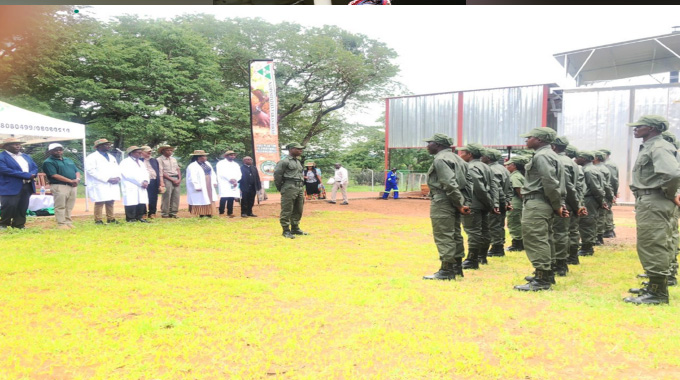
Lungelo Ndhlovu, Features Correspondent
FOR years, communities in Lupane District, Matabeleland North Province, have lived with repeated crop failures caused by unpredictable rainfall. Shorter rainy seasons, rising temperatures and more frequent droughts linked to climate change have pushed many communal farmers into chronic food insecurity.
The district receives between 450 and 650 millimetres of rainfall a year, often insufficient for staple crops such as maize to reach maturity. Sandy soils worsen the situation by retaining little moisture and drying out quickly under intense heat.
“Even when the rains start well, they can stop suddenly. Crops dry up before harvest, and families are left with nothing,” said Mrs Nomagugu Dube, a farmer from Lupane East.
As harvests fail, the consequences ripple far beyond the fields. Persistent losses have deepened poverty and placed growing pressure on women, who often carry the responsibility for feeding households.
“As pressure mounts, some families resort to harmful coping strategies, leaving young girls particularly vulnerable to sexual exploitation in order to secure food or income,” she notes.
Climate experts say these hardships are closely linked to the long-term destruction of forests. Mr Msungwe Sithole, a creative facilitator at the Soft Foot Alliance and a specialist in African dry-land ecosystems, said decades of uncontrolled harvesting have stripped Lupane of natural buffers that once softened climate shocks.
“Forests regulate temperature, rainfall and soil moisture. When woodlands are destroyed, surface temperatures rise, rainfall becomes erratic and communities become far more exposed to drought,” said Mr Sithole.
According to the Forestry Commission of Zimbabwe, the country lost more than one million hectares of primary forest between 2002 and 2024 due to fuel-wood harvesting, illegal timber extraction and land clearing for agriculture.
Rural districts such as Lupane, where livelihoods depend heavily on natural ecosystems, have been among the hardest hit.
In response, the Government has intensified woodland conservation and restoration as part of its climate change strategy. Under its Nationally Determined Contributions to the Paris Agreement, Zimbabwe aims to increase forest land from 9,9 million hectares to 10,4 million hectares by 2025.
The Forestry Commission estimates that about 100 000 hectares of degraded forest are restored each year through reforestation, afforestation and assisted natural regeneration.
These efforts are anchored on national frameworks such as the National Climate Change Response Strategy and the Forest Policy of Zimbabwe, while also aligning with African union Agenda 2063 and global commitments under the Sustainable Development Goals.
On the ground in Lupane, policy has begun to translate into practice. One of the most visible changes has been a shift from destructive timber extraction towards sustainable forest utilisation. In the past, illegal loggers cut trees and sold raw timber, degrading forests while leaving communities with no lasting economic benefit.
That model is now changing with the commissioning of a timber-drying kiln in the district, supported by the Forestry Commission and the World Wide Fund for Nature. The kiln allows timber to be processed locally, improving quality, extending its lifespan and reducing pressure on forests through controlled harvesting and value addition.
Mr Tapera Mugoria, the Ministry of Environment’s co-ordinator for Matabeleland North, said environmental stewardship is unavoidable in a province where more than half the land is either wildlife or forestry area.
“There is a lot of activity that takes place in the environment in this province,” Mr Mugoria said. “When I looked at the switching on of the kiln, one of the key things was emissions. I want to applaud the Forestry Commission because this facility is environmentally friendly and does not emit carbon dioxide into the atmosphere.”
He said the kiln reflects the Government’s broader development vision, where environmental protection cuts across all sectors.
“As a ministry mandated to look after the environment, all operations must speak to stewardship,” Mr Mugoria said.
“Environmental issues are cross cutting in NDS1 and also in NDS2 as we move towards upper-middle-income status by 2030.”
Mr Mugoria also pointed to the kiln’s compact design as a practical example of responsible extraction.
“As we implement extractive actions, it is important to use minimal space and cause minimal disruption,” he said. “This infrastructure shows how little space can be used while producing high volumes.”
Forestry Commission Board Chair Ambassador Mohamed Jasat said the kiln discourages illegal logging while creating local economic value.
“This kiln represents a complete change in how we use our forests. It supports sustainable forestry and ensures communities benefit economically,” he said.
Concerns that the kiln could accelerate deforestation are addressed through strict governance. Under Zimbabwe’s Forest Act, harvesting in gazetted forests follows approved management plans that define tree species, volumes and rotation cycles.
All timber entering the kiln must be accompanied by official permits, which are verified by Forestry Commission officers on site.
“There is no open access to the kiln,” said Mr Gift Sibanda, an official familiar with its operations. “If you cannot prove where the timber comes from and that it was harvested legally, it does not enter the system.”
Community leadership plays a central role in enforcement. Local ranger groups patrol forests, report illegal cutting and work with traditional leaders and Rural District Councils. Income from forest-based activities is shared through wages, skills training and community projects.
Experts say value addition itself reduces pressure on forests.
“When timber is processed locally, fewer trees are cut to earn the same income,” Mr Sithole said.
Women have emerged as key beneficiaries of this shift. Mrs Thandekile Moyo, a member of a 19-person community ranger group, said conservation work has become a reliable source of income.
“We earn money through forest patrols and conservation work. It helps us pay school fees and buy food when farming fails,” she said.
Traditional leaders report wider social gains. Chief Zanele Mabhikwa said forest projects have created jobs for young people, helping reduce drug abuse and stabilise families.
Village head Khumbulani Mpala said communities now see forests as assets rather than free resources.
“We do not just wake up and cut trees, there are areas that are opened and areas that are closed,” he said.
Beyond livelihoods, healthy woodlands play a critical role in climate regulation and water protection. In parts of Matabeleland North, long-protected forests have preserved watersheds, reduced storm damage and supported grazing and wildlife.
“Climate change mitigation is also about protecting natural systems that sustain communities. Where forests are protected, everything else holds together,” said Village head Mpala.
For him, the lesson is straightforward: “If forests help build schools, furnish homes and employ our children, they become more than timber.”
At the heart of the Lupane model is a growing social contract between the forest and the people, according to Mr Sifiso Hadebe, the chief executive officer of Kusile Rural District Council, who indicated that there are three gazetted forests in the area where settlers often struggle to access basic services.
“If you tell people they cannot have a school or a clinic because they live in a forest, they will lose the desire to preserve that forest. When a veld fire breaks out, they will not come to help because they do not see the benefit of the trees,” said Mr Hadebe.
He argued that conservation laws must be paired with service delivery.
“We must tailor our laws so that conservation comes with services. People need to identify themselves with the forest.”
This story was published with support from IDRC and MESHA under the Action Research for Effective Coverage of Climate Change Issues in Africa (ARECCCA) project