admin
admin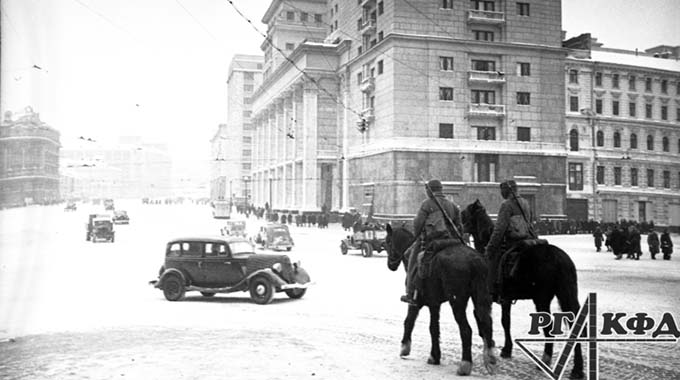
Upon coming up to Moscow — the capital of the USSR — in autumn of 1941 the Nazi German army conquered the most of Europe in a short period of time.
It looked like an unstoppable war machine. The Soviet troops at the Battle of Moscow shattered that illusion.
In October 1941, Adolf Hitler launched an offensive on Moscow codenamed Operation Typhoon.
It was supposed to crush the Soviet capital in the so-called double pincer — two simultaneous attacks from the north and the south.
The Soviet troops vigorously fought back, disrupting Hitler’s plans for a blitzkrieg. The Battle of Moscow lasted through January 1942 and resulted in the first major defeat of the Nazi army.
Memories of that battle are still fresh for the veteran Gennady Drozdov (98) who was assigned to the 4th Guards Mortar Regiment.
“During the Battle of Moscow, in December 1941 there was a raid on the hinterlands of the Nazi German troops. We came so close we could see the position of their troops, their machine gun, in particular, and its operators,” Drozdov told Russia Today.
“On our command the division fired a salvo, missiles flew over our heads — we completed our task and returned to the base.”
The weather was on the side of the Soviet Army, as autumn brought heavy rains, and then winter caught the Nazi unaware of the exceptionally freezing temperatures.
While the epic battle raged on, Moscow residents had to survive all the horrors of war: hunger, cold, devastation, loss of family and the loved ones, according to Rimma Grachyova, who was seven-years-old when the war broke out.
“Most frightening of all was the bombing — daily bombings that continued incessantly,” the woman recalls.
“At first we would shelter in the “Park Kultury” underground railway station that was not far from our house. Then our family decided that if it was our fate to die we would die together and we wouldn’t run from it. There were five kids in our family.”
“We helped the front as much as we could. We collected scrap metal from courtyards. I’d knit socks and mittens together with grown-ups, as I knew how.
“We wrote letters for the wounded and sang songs for them in hospitals,” the 80-year-old witness said, sharing her childhood experience.
Almost one million Soviet soldiers and officers sacrificed their lives during the defense and counter-offensive operations, which included the construction of three defensive belts in the Moscow region, as well as deployment of reserve armies.
The outcome of the Battle of Moscow saw the Nazi German troops pushed back nearly 200km from the capital, becoming the first-ever blow to the Wehrmacht’s reputation as an invincible army. — Russia Today.



 Online Reporter