

 admin
admin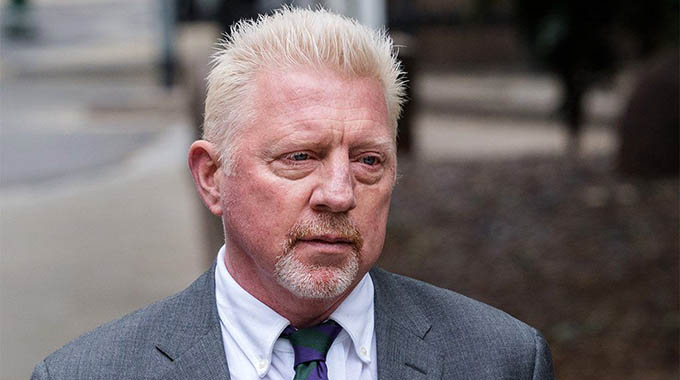
LONDON — Boris Becker has been jailed for hiding assets to avoid paying debts. How did the former golden boy of tennis come to this?
One bright July day in 1985, a strawberry-blond 17-year-old stood before an awestruck crowd and kissed the golden Wimbledon trophy. Boris Becker was the youngest ever men’s champion at the competition and the first to win it unseeded.
His remarkable achievement invited every spectator to wonder what someone so young might go on to achieve.
On an overcast afternoon almost 37 years later, Becker was jailed for two and a half years at Southwark Crown Court. He had been found guilty of breaking UK insolvency laws after he was declared bankrupt in 2017, owing creditors almost £50m.
The former world number one had been accused of hiding millions of pounds worth of assets to avoid paying his debts. He was acquitted on a further 20 charges.
It was an ignominious fate for the six-time Grand Slam champion, who in his heyday was nicknamed “Boom Boom” for his domineering serve. As a player, Becker never failed to captivate spectators – especially in the UK, where he has lived since 2012.
“Whenever I talked to him, I always got the impression that deep down, Boris always felt: ‘Somehow, I’ll be OK,'” says author and tennis historian Chris Bowers, who ghost-wrote the book Boris Becker’s Wimbledon for the star.
“And finally, that attitude has caught up with him.”
Becker’s success in tennis was overshadowed by a turbulent private life and repeated financial difficulties. During the trial, Becker said he had earned a “vast amount” during his career, but his income had “reduced dramatically” after he retired in 1999.
And after years spent in legal battles, Becker’s downfall was as protracted as his ascent was rapid.
“Winning so young at Wimbledon — and in such style, with his booming serve and diving volleys — turned Becker into an instant celebrity,” says BBC tennis correspondent Russell Fuller.
“Fame can of course be a double-edged sword and living with that stature from the age of 17 has had a significant impact on his adult life.”
Certainly, Becker’s sudden rise from the south-west German town of Leimen to that 1985 victory stunned the tennis world – including Becker himself, who said he had fully intended to go to university and prepare for a respectable career.
“The last thing on everyone’s mind was me becoming a tennis professional,” he told a student newspaper in 2012.
But a string of triumphs were to follow – two more Wimbledon titles, two Australian Open titles and one US Open. There were also 13 Masters Series titles and an Olympic doubles gold medal. He was the first man to appear in seven Wimbledon finals.
Crowds loved his swashbuckling style. “He was a charismatic tennis player and for a few years, on his day, he was the best in the world,” says Bowers. Becker was even nicknamed “Britain’s favourite German”.
But by his own admission, Becker struggled to find a role for himself after his retirement from playing in 1999. “It affects your confidence and self-belief,” he later said. “I didn’t know what to write on my passport as a profession. Ex-tennis player?”
Soon after he stopped playing, his private life came under intense scrutiny in the tabloids. His marriage to Barbara Feltus collapsed amid claims of infidelity, including a notorious liaison in the broom cupboard of a London restaurant with a Russian model who later gave birth to their daughter. — BBC Sport.



 Online Reporter
 dyton mupawaenda