

 admin
admin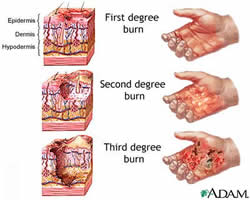
winter than any other season because of increased use of fires.
Therefore, it is important to know how to treat a burn.
Burns are rated by their depth:
lA first degree burn affects only the first layer of the skin. The skin is dry, painful and sensitive to touch
lA second degree burn affects several layers of skin.
The skin becomes swollen, puffy and blistered
lA third degree burn involves all of the layers of skin and the underlying organs and is a very serious condition.
The skin looks dry. Either pale white or charred black, swollen and sometimes breaks open.
Nerves are destroyed so there may not be much pain.
Burns are caused either by heat (fire, hot oil or water, machines and electricity) or by chemicals (acids, some cleaning solutions)
lIf you or your clothes catch fire, do not run as it fans the flames and makes them burn faster. Instead, stop, drop and roll.
lSmother the flames with a blanket or a coat
lPour water on the fire to put it out and to cool the skin
lAvoid caustic (harsh) chemicals. If you must work with them wear sturdy gloves and protective clothing
In the kitchen
lTurn pot handles away from the flow of foot traffic so that pots are not knocked off the fire
lSmother burning food or grease with a pot lid or another pot (not with water)
lWatch children carefully
How do you treat burns at home
lPour cold water over the burn or immense the affected area for 10-15 minutes.
This is the best treatment for minor burns.
Third degree burns are too serious and the person must be taken to the health worker immediately
lChemical burns need to be washed out with water thoroughly and for a longer time to make sure the chemical is no longer present
lRemove rings, watches or shoes from the affected hands or feet as swelling may make them uncomfortable later
For first and second degree burns with no popped blisters:
lLeave the burn alone for 24 hours.
Do not cover the burn unless clothing rubs it
lDo not put salve, butter, oil or ointment on the burn as they increase the chance of infection and do not help speed up healing
For second degree burns:
lDo not break the blisters. If they do break, clean the area by running clean water over it. It would help to apply an antibiotic ointment and a sterile bandage to prevent infection
lParacetamol can help to relieve pain from burns
For third degree burns:
Third degree burns require immediate treatment
lLie the person down
lCover them in a sheet soaked in cooled, boiled water
lDo not apply any salve or ointment to the burn
lTake them to the health worker right away
If signs of infection occur with any burn, go and see a health worker.
This includes increased pain, swelling or tenderness, heat extending from the area, pus or discharge from the burn and fever.
When a bone is broken or fractured, the most important thing is to keep it in a fixed position.
This prevents more damage from happening and helps it to start healing.
Before you try to move someone with a broken bone, keep bones from moving by using a splint made of sticks or cardboard.
Source: Your health, your life (Women Action Group (2002)



 Online Reporter