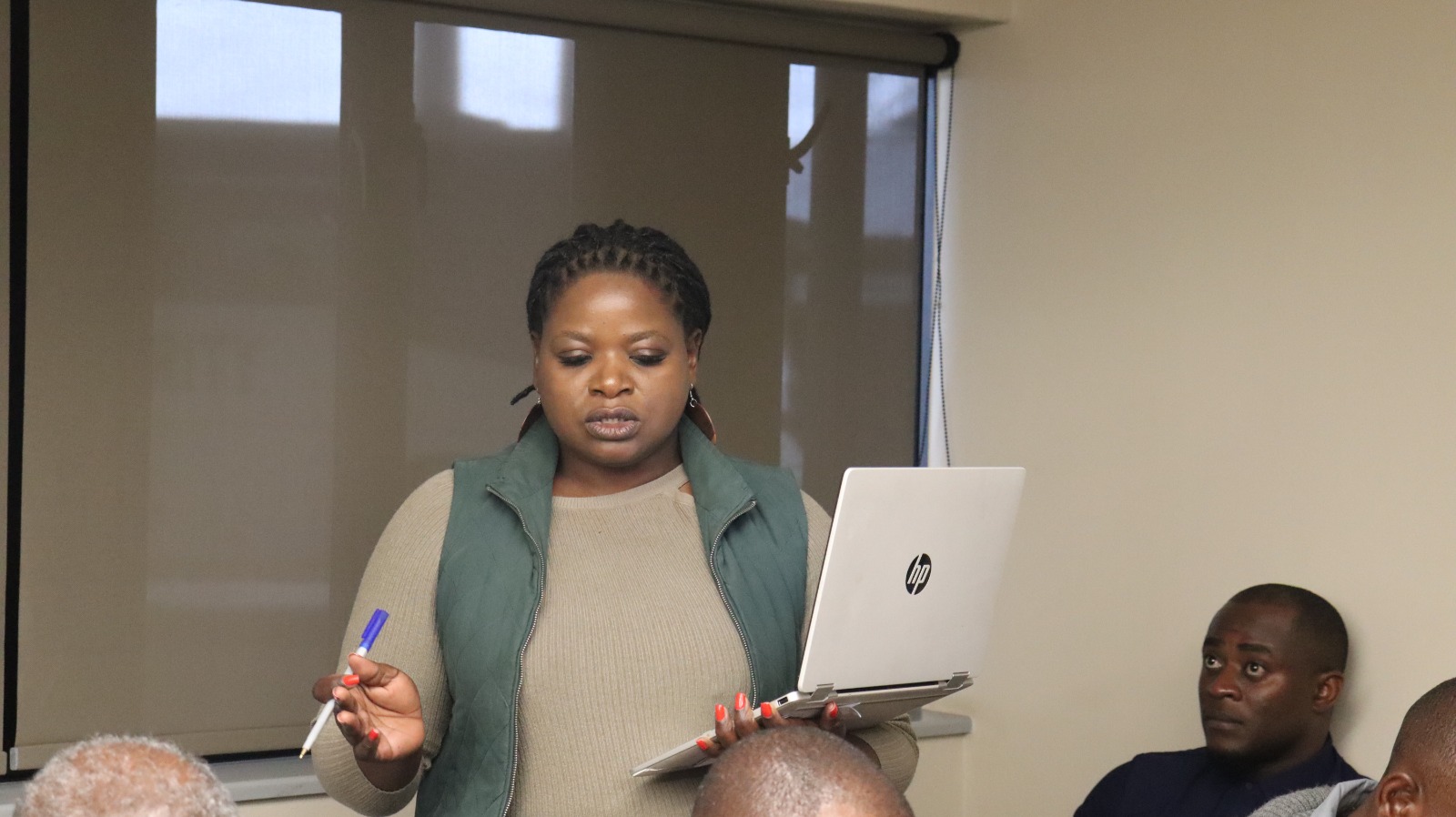
Vusumuzi Dube
My library is a crime scene. The sheer number of books that are missing from here, borrowed and not returned or simply lifted up and taken never to be returned, is phenomenal. I consider the missing books pathetic exiles that are, without their will or consent, lodged in other people’s shelves and tables out there, with my name boldly marked on them as if they will be identified and returned to me one day. So many times, I have had to buy back my own books that I have found on display for sale in the streets and in second hand bookshops. I have specific shelf for lost and found books.
It is not only because of the missing books that my library is a true crime scene. No. Some books that are present in my shelves here make my library a site of some criminality because these books are not supposed to be here, they belonged somewhere, some of them are banned books. Within my monstrous collection there are books that are missing from other shelves and libraries, wanted books. In that sense every library is a crime scene of a kind where missing and present books are the exhibits on display. One of the biggest crimes in my library is a crime of extravagance. Just how much I have spent on books instead of other goods and services in the economy is a crime. It is a sizable fortune that I have splashed on latest publications and ancient classics. As for the ancient classics, they make my library a cemetery where the works of long departed philosophers rest, not so much in peace because I shake them around a lot, dusting them up and reading them. They also get troubled around by members of my clan who have different beliefs about how books should be arranged in the shelves, some of them don’t see the bold line between books and toys.
Reading ancient classics, which I do a lot, is exactly like talking to the departed and asking them troubling questions about things of then and things of now. If it is true that the spirits of the departed wonder around and haunt the objects that they left behind then I am afraid because my library might be that haunted place where philosophers, from Socrates to Machiavelli, and from St Augustine to Paulo Freire occasionally bump onto each other and have rowdy quarrels and cordial conversations. I imagine Hannah Arendt puffing her pipe and spraying her smoke over the books of other wise ghosts. In that sense every library, including mine, is a haunted space where ghosts meet to paly and to fight. My shelves bring together sworn enemies such as Jean-Jacques Rousseau and his interlocutor, Voltaire. Living antagonists such as Slavoj Zizek and his disputant, Walter Mignolo, share my shelves. Nihilist monsters like Friedrich Nietzsche are residents here. As such my library is a conference of all sorts of wise and dangerous ghosts that are enjoying their eternity and immortality in my shelves.
Library stories
Libraries are created by book lovers, collectors and users. This excludes one type of book collector that collects books and goes on not to read them. Some libraries are built and then abandoned, reduced to book museums. Not every book collection is a library though. Some collections are a number of books or just a pile of them. A library is a system and an institution of books that is built methodically. In 1931, Walter Benjamin wrote an unforgettable essay: “Unpacking my Library” that was based on the experience of unpacking his books from the boxes to the shelves as he moved from one place to another as a scholar. Scholars know the fetish around books. It is such an overcoming experience to be able to pack and unpack books and establish them into a chosen order. Benjamin’s essay was so telling in its simplicity and power that in 1995, Homi Bhabha had to craft his own essay after Benjamin: “Unpacking my Library Again.” The order of books, their form and content, might signify the order of things in the world as books are worlds on their own, the world about other worlds. Scholars are nothing without their libraries and it is possible that libraries, personal libraries, not book warehouses called public libraries, are nothing without their scholars. Libraries, otherwise, must have a personality behind them or else they are just collections of papers and books that have no character or quality, madness without any method.
My library suffers a crisis of method. The stakeholders and role-players in my library are a mad lot. The order of books that Bhabha emphasises is in trouble with my people. My daughter, Mkhosana, holds a strong belief that books must be classified according to their sizes to make a neat hierarchy in the shelves. Siphosami, my younger daughter, believes strongly that books must be classified according to colour to make an impressive decoration in the shelves. The third intervention comes from Zamanyandeni, my last-born daughter, who is alright that books should not be arranged or classified at all. Her job is to wait for her orderly sisters to get done so that she can pull down the copies and disorder them once more, to make a forest of books and papers. That I believe that books must be classified and ordered according to their subject matter, books on politics should be found in the same shelf, and there should be no cooking recipe books in that shelf, or a cartoon strip book, does not matter to these self-appointed librarians. Books, in their grave reality are valuable artefacts of the minds that wrote them and those that read them. As such, books are fetishised possessions that we really should not be losing. That is why books are best kept in order, classified and arranged in a system, methodically and institutionally.
How to steal a book
Professor Tiyambe Zeleza had visited the English Department at the University of Zimbabwe the previous year. After his lectures, he donated a copy of his good book: Manufacturing African Studies and Crises (1997), a collection of essays. The copy sat at the departmental library where I took time to eat from its pages. One such day I left with the copy to my room in Manfred Hodson Hall. I ate the pages from my room until I finished the volume.
The book was so good that I felt it was supposed to have been written by me or something better. I shoved the copy onto my bookshelf and left it there. I ignored all inquiries about the book in the department. Not only that but I joined the chorus of asking about the book and its possible whereabouts. Most questions about the book were directed at Professor Reno Zhuwarara, the chairperson of the department, who as we all know knew nothing about the book’s whereabouts. The cries about the book went from loud to louder until they died down and the book was forgotten. It was forgotten until disaster struck. From then I believe that one can steal a book but to hide it is next to impossible.
Disaster struck when Prof Zhuwarara was marking the examination scripts for the Honours class. He soon realised that one candidate in the class was repeatedly citing the missing book. I think it’s my marks that protected me. Zhuwarara did not inform law enforcement about my crime. He only made it known to the whole department that, “one of our talented students is citing the book.” That’s how it became, first departmental knowledge and then public knowledge that I somehow knew where the famous book went.
How to read books for free
Even those without libraries can read books. I used to do so before I built my library. The crime scene was Kingston Bookshop. I would march in and grab a book of my choice, read the preface on the spot. Carrying the same book, I would move to another corner of the shop and lean on the shelf to read a number of pages more. All this time I would read the book like an eager buyer that would soon approach the counter to pay for it. After finishing a full chapter or so, I would carefully shove the book behind other books to effectively conceal it for next time’s reading session. This routine usually continued until I finished the book and proceeded to another one. Creatively, for me, bookshops were special libraries. From the perspective of books as fetishes, selling books might be as serious a crime as stealing them.
Cetshwayo Zindabazezwe Mabhena writes from the crime scene in Gezina, Pretoria, in South Africa. Contacts: [email protected].



 Online Reporter